Choosing the 2026 Best Aluminium Entrance Door Suppliers Worldwide? requires more than comparing glossy catalogues. Aluminium Entrance Door demand reflects wider construction trends, energy performance goals, and material-cost pressures. The International Aluminium Institute’s industry statistics show aluminium remains central to modern building systems, supported by durability, recyclability, and design flexibility. Its sustainability reports also stress that recycled aluminium can significantly reduce production energy compared with primary metal.
Market conditions remain complicated. The World Bank’s Commodity Markets Outlook continues to highlight volatility across industrial metals, including aluminium. This affects quotations, lead times, and long-term supplier stability. Meanwhile, reports from Grand View Research and Fortune Business Insights identify energy-efficient fenestration and premium residential construction as important market drivers. These reports are useful, but market forecasts are not guarantees. Actual results depend on region, project scale, and procurement quality.
A reliable supplier should provide tested profiles, documented alloy grades, thermal-break details, finish specifications, and realistic delivery schedules. Look closely at corner joints, drainage channels, hinges, seals, and threshold design. Small details decide whether a door feels solid after years of daily use. Standards such as EN 14351-1 and applicable local performance requirements can support responsible comparison. Yet certification alone is not enough. Factory audits, sample inspection, warranty terms, and after-sales communication reveal practical experience. No ranking is flawless. Some supplier websites still hide important limitations. This guide therefore examines global manufacturers through evidence, not marketing language, while acknowledging that price, climate, installation skill, and customer expectations can change the final choice.
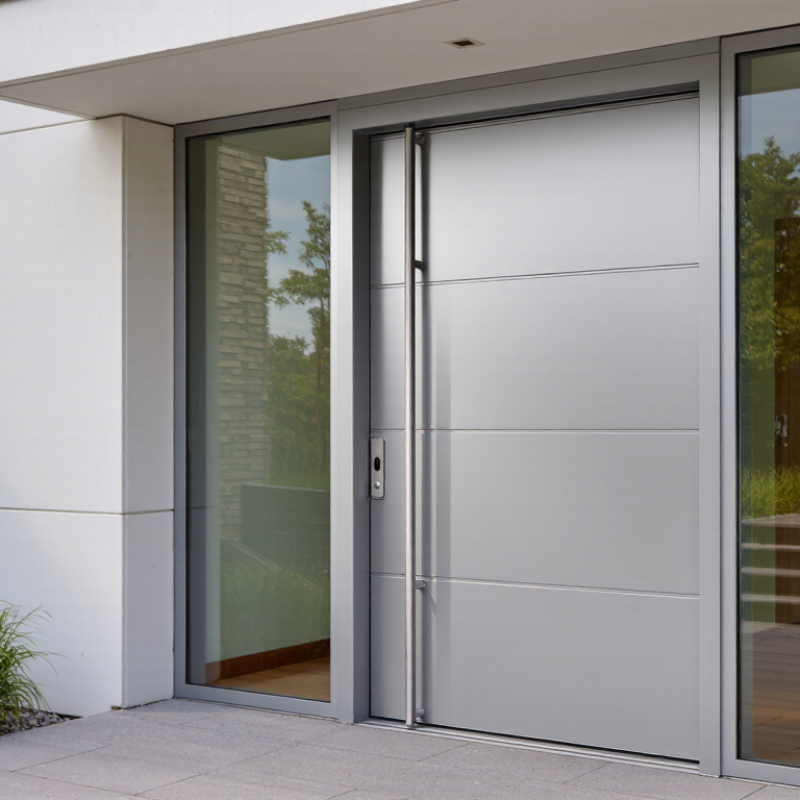
A high-quality aluminium entrance door supplier proves its ability through measurable details, not attractive brochures. Experienced suppliers explain alloy grades, thermal-break design, glazing options, and drainage paths clearly. They should provide technical drawings, installation guidance, and performance data for air, water, wind, and thermal resistance.
Details matter. A reliable supplier uses consistent powder coating, accurate corner joints, durable hinges, and properly sealed thresholds. Ask how each batch is inspected before dispatch. Request physical samples when possible. A strong supplier welcomes questions about tolerances, surface finish, replacement parts, and maintenance. Their answers should remain clear, even when the project includes unusual sizes or coastal exposure.
Site experience also reveals quality. Skilled suppliers understand that a well-made door can still fail after poor installation. They coordinate with installers and identify risks before production. Certifications and test reports add authority, but documents must match the proposed door system. Check dates, test conditions, and product specifications carefully. Lead times should be realistic, with written updates when schedules change. No supplier gets every detail right. That is worth admitting. The better question is how quickly they correct mistakes and protect the customer’s project. A dependable partner records changes, confirms final measurements, and keeps communication traceable from quotation to delivery.
For 2026 sourcing, aluminium entrance doors should be compared by design, alloy, and verified performance. Hinged doors suit compact entries. Sliding and lift-slide systems save swing space. Pivot doors create wide openings, but require precise floor drainage. Folding systems serve larger façades, though their hardware needs frequent adjustment. The International Aluminium Institute reported 70.6 million tonnes of primary aluminium production in 2023. This scale supports broad availability, but not consistent door quality.
Common frame alloys include 6063-T5 for profiles and 6061-T6 for higher-strength components. Thermal-break frames use polyamide barriers between indoor and outdoor aluminium. Insulated glass, warm-edge spacers, and low-emissivity coatings can reduce heat transfer. Yet “thermal break” alone proves little. Ask for U-value calculations, air-leakage results, and condensation assessments. The International Energy Agency’s Buildings report identifies building envelopes as important to reducing operational energy demand. Door performance still depends on installation. A perfect factory test can fail beside an uneven threshold.
Reliable suppliers should demonstrate EN 14351-1 testing in applicable European projects, or ASTM E283, E330, and E331 results for relevant North American specifications. Check tested dimensions, glass weight, wind pressure, water exposure, and hardware cycles. ISO 9001 certification indicates controlled processes, not guaranteed product excellence. Request alloy certificates, coating records, welding procedures, and independent test reports. Powder coating should state pretreatment and corrosion class, especially near coastlines. A low quote may reflect thinner walls or cheaper seals. I would not accept vague “international standard” claims. Supplier comparisons need documented evidence, sample inspection, and a willingness to question attractive numbers.
Technical comparison framework for evaluating aluminium entrance-door suppliers without relying on company or brand information
| Aluminium Door Type | Typical Aluminium Material | Common Entrance Applications | Key Performance Characteristics | Relevant International Standards | Manufacturing and Quality Checkpoints | Best-Fit Procurement Priority |
|---|---|---|---|---|---|---|
| Thermally Broken Hinged Entrance Door | 6063-T5/T6 profiles Polyamide thermal barrier Powder coating or anodized finish | Residential buildings, offices, hotels, schools, and low-rise commercial projects | Improved resistance to heat transfer and condensation compared with non-thermally broken systems. Performance depends on frame depth, glazing, gaskets, hardware, and installation. | EN 14351-1 for external pedestrian doorsets; ISO 10077-1 for thermal transmittance calculation; ASTM E283 for air leakage; ASTM E330/E330M for structural performance | Verify thermal-barrier continuity, corner-joint strength, gasket compression, drainage design, coating thickness, dimensional tolerances, and complete-system test reports. | Balanced thermal efficiency, security, durability, and cost |
| Non-Thermally Broken Hinged Door | 6063 aluminium extrusion Mechanically joined or welded frame; anodized or powder-coated surface | Warm climates, internal entrance zones, warehouses, utility areas, and budget-sensitive projects | Lightweight and corrosion-resistant, but generally provides lower thermal insulation than a thermally broken design. | EN 14351-1; ASTM E283; ASTM E330/E330M; AAMA 501.1 for field water penetration testing where applicable | Check profile wall thickness, squareness, weld quality, fastener compatibility, drainage paths, surface pretreatment, and resistance to galvanic corrosion. | Low initial cost and simpler fabrication where thermal performance is not critical |
| Aluminium Sliding Entrance Door | 6063-T5/T6 profiles Stainless-steel or aluminium rollers; EPDM or silicone weather seals | Retail entrances, transportation facilities, offices, hotels, and high-traffic public buildings | Efficient use of floor space and suitable for frequent passage. Weather resistance and thermal performance vary significantly by track, interlock, seal, and panel design. | EN 14351-1; EN 16005 for power-operated pedestrian doors where applicable; ASTM E283 and ASTM E330/E330M for tested assemblies | Confirm cycle testing, anti-derailment features, roller load rating, emergency release, threshold drainage, safety sensors for automatic units, and replacement-part availability. | High traffic, accessibility, and space-saving requirements |
| Aluminium Pivot Entrance Door | 6063-T5/T6 frame Reinforced pivot stile; concealed or floor-mounted pivot hardware | Luxury residences, hotel lobbies, showrooms, cultural buildings, and architecturally prominent entrances | Supports wide and tall door leaves with a distinctive opening motion. Structural design must account for door weight, wind load, hardware capacity, and user safety. | EN 14351-1; ASTM E330/E330M; EN 1935 for suitable single-axis hinges where applicable; local accessibility and safety requirements | Check maximum tested sash size, pivot alignment, deflection control, closing force, anti-finger-trap design, threshold detailing, and long-term hardware serviceability. | Large-format design, visual impact, and controlled architectural detailing |
| Aluminium Folding or Bi-Fold Entrance Door | 6063-T5/T6 profiles Multi-point hardware; stainless-steel hinges and rollers; insulated glazing options | Restaurants, retail storefronts, hospitality venues, residential terraces, and flexible public areas | Creates a wide clear opening when folded. Air, water, and thermal performance depend on the number of panels, interlocks, seals, and sill configuration. | EN 14351-1; ASTM E283; ASTM E331 for water penetration; ASTM E330/E330M for structural performance | Verify panel alignment, hardware cycle testing, running-track capacity, drainage, wind-load design, finger protection, and secure locking at all meeting stiles. | Maximum opening width and flexible connection between indoor and outdoor areas |
| Fire-Resistant Aluminium Entrance Doorset | Fire-rated aluminium profile system; tested fire-resistant glazing or opaque infill; compatible intumescent seals | Stairwells, escape routes, compartment boundaries, public buildings, and commercial developments | Fire resistance is a property of the complete tested doorset, not the aluminium profile alone. Ratings commonly include integrity and, where tested, insulation. | EN 16034 with EN 1634-1 fire-resistance testing; EN 13501-2 classification; UL 10C or NFPA 252 where North American approvals are required | Require a valid test or classification report for the exact configuration, including frame, hardware, glazing, seals, size limits, wall type, and installation method. | Regulated fire compartmentation and life-safety compliance |
| Smoke-Control Aluminium Doorset | Fire-rated aluminium system where applicable; smoke seals; tested glazing and hardware package | Protected corridors, stair enclosures, evacuation routes, hospitals, transport buildings, and public facilities | Designed to limit smoke leakage under specified test conditions. Smoke-control performance must be assessed separately from fire-resistance performance. | EN 16034; EN 1634-3 for smoke-control testing; EN 13501-2 classification; local building and life-safety codes | Check smoke-seal continuity, automatic closing, latch engagement, allowable gaps, threshold details, tested hardware, and maintenance requirements. | Smoke management and protected escape-route performance |
| High-Security Aluminium Entrance Doorset | 6063 or 6061 aluminium components Reinforced profiles; laminated security glazing; multi-point locking hardware | Government facilities, financial premises, data centres, laboratories, and controlled-access buildings | Security depends on the complete assembly, including frame anchorage, locks, hinges, glazing, hardware, and surrounding wall construction. | EN 1627 for burglar-resistance classification; EN 1628, EN 1629, and EN 1630 for associated testing; ASTM F588 or ASTM F476 where applicable | Confirm tested resistance class, attack tools and duration, glazing retention, hinge protection, cylinder protection, anchorage details, and access-control integration. | Resistance to forced entry and controlled access |
| Automatic Aluminium Entrance Door | 6063-T5/T6 profiles Electric operator; safety sensors; laminated or tempered safety glazing | Hospitals, airports, shopping centres, offices, supermarkets, and other accessible public entrances | Provides hands-free operation and accessibility. Safety, closing speed, sensor coverage, and emergency operation require commissioning and regular maintenance. | EN 16005 for power-operated pedestrian doors; EN 16361 for power-operated pedestrian doorsets where applicable; ANSI/BHMA A156.10 for automatic pedestrian doors in North American projects | Check operator duty cycle, sensor redundancy, manual override, emergency release, obstruction detection, accessible clear width, commissioning records, and service response. | Accessibility, hygiene, traffic flow, and hands-free operation |
| Coastal or High-Corrosion-Exposure Aluminium Door | Marine-environment powder coating or anodizing; corrosion-resistant fasteners; sealed drainage and compatible accessories | Coastal residences, waterfront hotels, marine facilities, humid climates, and exposed commercial buildings | Aluminium naturally forms a protective oxide layer, but salt, pollutants, dissimilar metals, cut edges, and poor drainage can accelerate corrosion. | ISO 9227 for salt-spray testing of coatings; EN 12206-1 for powder-coating requirements on aluminium; AAMA 2604 or AAMA 2605 where specified | Verify pretreatment system, coating class, film thickness, colour retention requirements, stainless fastener grade, isolation materials, drainage, and cleaning instructions. | Long service life in marine, humid, or chemically aggressive environments |
| Supplier evaluation note: Performance figures and classifications must be verified against test reports for the exact door size, profile system, glazing, hardware, seals, and installation method. Standards and local code editions should be confirmed for the destination market before purchase. | ||||||
2026 Best Aluminium Entrance Door Suppliers Worldwide?
Choosing a global aluminium entrance door supplier requires more than comparing catalogue prices. Start with measurable product details, including alloy grade, wall thickness, thermal breaks, hardware quality, and surface treatment. Ask for test reports, sample sections, and project references from similar climates. A reliable supplier should explain performance limits clearly, not promise everything. That honesty matters.
Price needs a wider view. Include tooling, packaging, freight, installation guidance, replacement parts, and possible import charges. A low quotation can become expensive after delays or damaged frames. Compare written quotations line by line. Check production capacity, quality inspection procedures, delivery records, and warranty terms. Video factory tours help, but they do not replace independent inspections. I once trusted polished samples too quickly; the finished batch showed uneven coating. That mistake was avoidable.
Tips: Request one complete prototype before placing a large order. Test opening force, drainage, locking alignment, and finish consistency. Confirm communication hours and response times. Keep every specification in writing. Service is often tested after payment, not before. Suppliers with trained technical staff can resolve installation questions faster, especially across languages and time zones. Still, do not assume a long warranty guarantees good support. Ask how claims are handled, who pays shipping, and how replacement parts are tracked. Expect some uncertainty. Reliable evaluation is careful, practical, and slightly skeptical.
In 2026, the best aluminium entrance door suppliers will be judged by regional performance, not catalog size. The International Aluminium Institute identifies construction as one of aluminium’s largest end-use sectors, representing about one-quarter of global demand. This supports steady investment in durable entrance systems.
European suppliers usually lead with thermal-break frames, low-U-value glazing, and documented CE performance under EN 14351-1. North American suppliers often emphasize tested air leakage, water penetration, and structural resistance under ASTM and AAMA procedures. In the Middle East, suppliers need powder coatings, reinforced hardware, and tested seals for heat, dust, and intense sunlight. Small details matter. A weak threshold can ruin a strong frame.
Asian suppliers compete through production scale, customization, and shorter fabrication cycles. Regional sourcing is especially valuable for high-rise projects and repeated door sizes. The 2024 UNEP Global Status Report for Buildings and Construction states that buildings consumed 32% of global energy and produced 34% of global carbon emissions in 2023. Better insulated entrance doors can support efficiency targets, although their impact depends on installation quality.
Africa and Latin America require suppliers with practical logistics, repair support, and corrosion-resistant finishes. Buyers should request test reports, warranty terms, recycled-content evidence, and samples before ordering. Forecasts are useful, but not perfect. Market reports often combine doors, windows, and unrelated aluminium products, which can distort comparisons. Experience at the project site still matters most.
Leading aluminium entrance-door supply regions by estimated share of global architectural aluminium door production capacity in 2026.
The figures are regional market estimates based on aluminium manufacturing scale, construction activity, exports, and architectural door production capacity. They represent regional supply concentration rather than individual company sales.
Choosing an aluminium entrance door supplier starts with project requirements, not catalogue images. Confirm opening dimensions, coastal exposure, thermal targets, glass specification, colour finish, hardware, and inward or outward swing. The 2023 UNEP Global Status Report states that buildings consume about 30% of global energy and produce around 26% of energy-related emissions. Therefore, ask for tested U-values, air leakage, water penetration, and wind-load results. A beautiful door can still perform poorly.
Request factory evidence before paying a deposit. ISO 9001 certification supports quality-control procedures, but it does not guarantee every door is well made. Check whether test reports match the proposed profile, glazing, and hardware. For North American projects, ask about AAMA/WDMA/CSA performance testing; other markets may require local conformity documentation. Verify certificate numbers independently. Small details matter. I have seen suppliers send generic reports that did not match the ordered configuration.
A written warranty should state coverage periods, finish protection, hardware exclusions, installation responsibility, and claim response times. Five years sounds useful, yet unclear exclusions reduce its value. Require production drawings and a signed approval before manufacturing. For delivery, confirm Incoterms, crate construction, moisture protection, inspection photos, lead time, and replacement procedures for damaged glass. The World Bank’s Logistics Performance Index 2023 shows wide differences in customs and delivery reliability between countries. Allow buffer time. Delays happen. A final pre-shipment inspection, barcode labels, and clear installation instructions can prevent expensive site confusion.
Hinged doors work well where floor space is limited. They need clear swing space. Sliding doors save interior room. Pivot doors create wider openings but need accurate drainage.
6063-T5 is common for frame profiles. 6061-T6 suits stronger components. Alloy certificates should confirm the stated grade. Do not rely on catalogue wording alone.
No. A thermal break alone proves little. Request U-value calculations, air-leakage results, and condensation assessments. Installation can still weaken performance.
Ask for air, water, and structural test results. Check tested door size and glass weight. Review wind pressure and hardware-cycle data. Vague claims are not enough.
Compare alloy, wall thickness, hardware, glazing, packaging, freight, and installation guidance. Include replacement parts and possible import charges. A cheap quote may hide thinner walls. Line-by-line comparisons help.
Test opening force, drainage, locking alignment, and finish consistency. Inspect the threshold closely. Small faults become expensive later. One sample is not perfect proof.
Request corrosion-resistant surface treatment and clear pretreatment records. Coastal projects need suitable corrosion classes. Hot, dusty regions need strong seals and reinforced hardware. Sunlight can expose weak finishes.
No. Ask who handles claims and pays shipping. Confirm replacement-part tracking and response times. I once trusted attractive samples too quickly. The final coating was uneven.
Choosing the right Aluminium Entrance Door supplier in 2026 requires more than comparing product prices. A high-quality supplier should demonstrate strong design capability, reliable production controls, precise finishing, and consistent material performance. Buyers should understand the differences between thermally broken, insulated, framed, and customized door systems, while checking alloy grades, hardware quality, surface treatments, testing procedures, and relevant manufacturing standards.
Global supplier evaluation should consider product quality, total cost, communication, customization, technical support, production capacity, and delivery reliability. Regional supplier comparisons can help buyers identify suitable options for climate, building style, and project scale. Before placing an order, confirm drawings, specifications, certifications, inspection requirements, warranty terms, packaging, shipping responsibilities, lead times, and after-sales service. A clear purchasing process and detailed contract can reduce misunderstandings and ensure that the selected Aluminium Entrance Door supplier delivers safe, durable, attractive, and long-lasting solutions.