Choosing an Aluminum Exterior Door involves more than matching a frame to your home’s style. The right choice should suit your climate, entryway, and daily use. Details matter. A door facing strong afternoon sun may need a durable finish, while a wind-exposed entrance calls for careful attention to weather seals and installation.
Before comparing models, measure the opening and note the wall depth, threshold height, and direction of swing. Measure twice. Then review the product specifications, not just the showroom sample. Ask whether the frame includes a thermal break, which can reduce heat transfer through the metal. Check the glazing options, drainage design, locking hardware, and finish warranty as well. Performance varies by product, and broad claims like “energy efficient” do not tell the whole story. Look for documented ratings where available, and confirm that the configuration matches your local climate and building requirements.
These seven buying tips will help you compare practical details with appearance and price. A slim, dark frame may look sharp, but it can show dust or scratches more clearly. That trade-off is easy to miss in a bright showroom. Installation matters too: even a well-made door can leak or bind if the opening is out of square or the flashing is poorly handled. Ask who will install it, what the quote includes, and how service issues are addressed. Some details remain easy to overlook until the first storm. A little skepticism is useful.
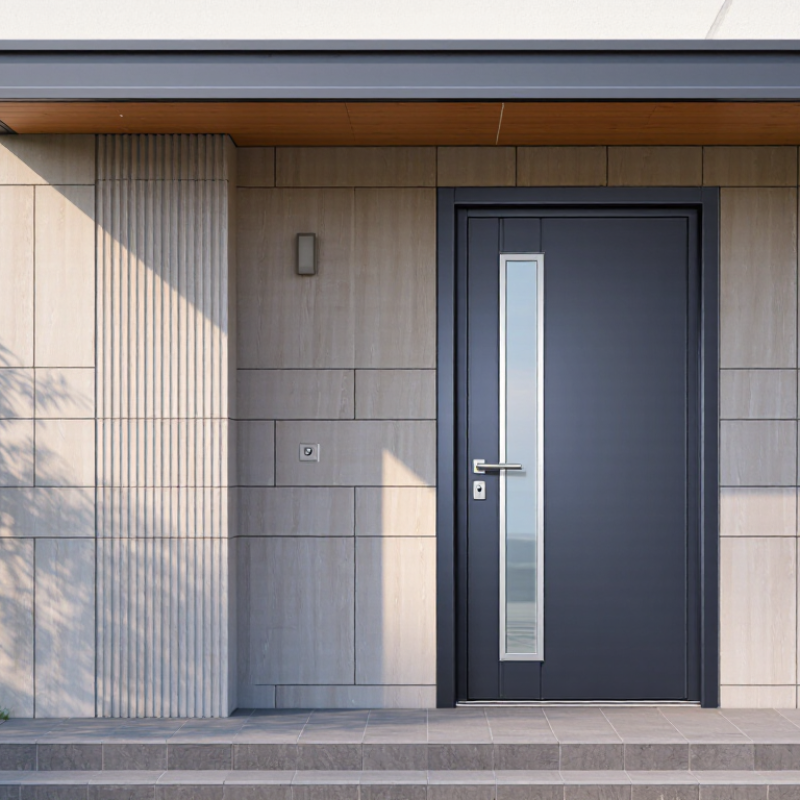
Aluminum exterior doors come in several configurations, and the right choice depends on how people move through the opening. Hinged doors suit main entrances and smaller patios because they seal against a fixed frame. Check the swing direction and nearby furniture before ordering. A door that opens into a narrow hall can become annoying every day.
Sliding doors work well where floor space is limited and a wide view matters. Their panels travel along a track, so rugs, grit, and leaves can affect movement. Keep the track easy to clean. For wide patio openings, multi-panel folding doors can create a larger passage, but they need clear space for the panels to stack. They also have more joints to inspect.
Consider the setting, not just the appearance. A sheltered porch may need different weather protection from a wind-exposed coastal wall. Thermal breaks and suitable glazing can help limit heat transfer, though performance depends on the full door assembly and installation. For a frequently used entrance, compare hardware durability, threshold height, and locking points. Small details matter. I would not choose a door from a photo alone; check its dimensions, operating clearance, and stated performance for your climate.
An aluminum exterior door can feel rigid in a showroom, yet installation details help determine how it performs at home. Check the frame’s wall thickness, corner joints, and reinforcement around lock points; a heavy-looking profile alone proves little. Ask for documented structural or impact-test data suited to your opening and local exposure. Look closely.
Aluminum transfers heat readily, so thermal breaks matter. These insulating barriers separate the inner and outer frame sections, reducing heat flow and limiting cold interior edges. Compare whole-door U-factor values, not just center-panel figures, and inspect glazing specifications if the door includes glass. On a cold morning, condensation near the frame can reveal a weak spot, though indoor humidity also affects it. Numbers need context.
For weather resistance, examine the threshold, compression seals, drainage paths, and finish quality. A well-sealed door should close evenly, without daylight at the jambs or a loose sweep brushing the floor. Ask how the assembly handles wind-driven rain, and request test reports rather than relying on phrases such as “weatherproof.” Exposure changes the answer: a sheltered porch and a west-facing coastal entry do not challenge the same finish. Even good seals wear. Check replacement availability and maintenance instructions before ordering; these details are easy to overlook when comparing samples.
Compare whole-door U-factor ranges as an initial thermal-performance guide. Lower U-factors indicate less heat transfer; actual ratings vary by door size, glazing, and construction.
Illustrative ranges only, not guaranteed product ratings. Check each door’s certified whole-product U-factor, frame thermal break, air-leakage rating, water-penetration rating, and design pressure using comparable test standards.
Glazing changes more than the view. For a street-facing aluminum door, laminated glass can help hold fragments together if the pane breaks. Tempered glass is designed to break into smaller pieces, but it does not stay in the frame. Ask how each option performs in the specific door system. A narrow glass panel beside the lock may need different protection from a large, high window. Low-emissivity glass can also reduce heat transfer, while clear glass keeps the entry bright. Small detail, big difference. Still, extra layers may affect cost, weight, and available hardware, so compare the full assembly rather than the glass alone.
Security depends on the frame, lock, hinges, and installation working together. Look for a multipoint lock that engages at several points along the frame, then check that the strike plates are firmly fixed. Exposed hinges deserve attention; security pins can make removal harder when the door is closed. Ask whether the cylinder can be replaced if keys are lost. A sturdy handle matters too, but a heavy-looking lever is not proof of strength. Test the door in person: it should close without lifting, scraping, or needing a hard shove. Not always. A small alignment problem can weaken an otherwise sensible setup, and it is easy to overlook during a quick showroom visit.
Measure the rough opening, not just the old door slab. Record width at the top, middle, and bottom, then check height on both sides. Openings are rarely perfectly square. A difference of even a few millimeters can complicate shimming and sealing. Include the frame, threshold, and finish floor in your plan; an aluminum door that clears bare concrete may scrape after new flooring goes down. Confirm hinge swing, handle clearance, and whether the wall can support the chosen frame. The U.S. Department of Energy’s Energy Saver guidance estimates that air leaks can waste 5–30% of household energy use. A well-fitted frame and continuous weatherstripping help limit drafts, but poor installation can undermine both.
Before ordering, check local energy, fire, accessibility, and egress requirements with the building authority or a qualified installer. The 2021 International Energy Conservation Code sets climate-zone-specific fenestration limits; for example, its prescriptive table lists a maximum U-factor of 0.30 for fenestration in Climate Zone 4. Confirm that your jurisdiction adopted that edition and that the rule applies to your door type. Ask for the product’s National Fenestration Rating Council label, then compare U-factor and solar heat gain coefficient rather than relying on sales language. Also clarify who handles flashing, sill-pan drainage, and the transition to the exterior finish. These details are easy to overlook. I would still recheck every measurement on site before fabrication; a careful worksheet can be wrong.
An aluminum exterior door’s purchase price is only the opening number. Compare warranty terms for finish fading, corrosion, hardware, glass seals, and labor; coverage periods can differ. Check the fine print. Ask what maintenance the warranty requires and whether repairs can replace a panel or demand a full door. Coastal salt, trapped moisture, and abrasive cleaners may affect finishes, so confirm suitable cleaning methods in writing. Small costs add up.
Build a total-cost estimate that includes delivery, installation, upkeep, likely repairs, and energy use. The U.S. Department of Energy’s Energy Saver guidance estimates that heat gain and loss through windows account for 25–30% of residential heating and cooling energy use. That figure is not door-specific, so treat it as context, not a promised saving—especially for doors with limited glazing. NIST Handbook 135 offers a life-cycle costing framework for comparing initial and future costs over a consistent study period. Request itemized quotes, then compare like with like. A weak point in any estimate: future repair costs are uncertain. Allow for that uncertainty rather than assuming the door will need no attention.
Hinged doors often suit entrances and small patios. Check the swing direction and nearby furniture. A door can feel awkward in a narrow hall.
Sliding doors save floor space and provide a wide view. Keep the track clear of grit, leaves, and rug edges. It needs regular attention.
Folding panels can open a wide passage. Make sure there is room for the panels to stack. More joints mean more points to inspect.
Measure the rough opening at the top, middle, and bottom. Check both sides for height. Include the frame, threshold, and planned flooring. I would recheck on site; worksheets can be wrong.
Exposure matters. A sheltered porch and a windy wall have different needs. Thermal breaks, suitable glazing, a well-fitted frame, and continuous weatherstripping can help limit heat transfer and drafts.
Check local energy, fire, accessibility, and exit requirements with the relevant authority or a qualified installer. Compare the door’s stated U-factor and solar heat gain rating. Confirm that local rules apply to your door type.
Check coverage for finishes, corrosion, hardware, glass seals, and labor. Ask what cleaning the warranty requires. Salt, moisture, and abrasive cleaners can affect finishes. Get care instructions in writing.
Include delivery, installation, upkeep, repairs, and energy use. Request itemized quotes for a fair comparison. Future repair costs are uncertain. Leave room for that uncertainty.
Choosing an Aluminum Exterior Door starts with matching the door type to its intended location and use. Compare frame strength, thermal performance, and resistance to rain, wind, and temperature changes to find an option suited to your climate and comfort needs. Consider glazing for natural light and insulation, along with security features and hardware that are practical for everyday use.
Before buying, measure the opening carefully and confirm that the door can be installed properly within your home’s structure and applicable building requirements. Also review the warranty, expected maintenance, and the total cost, including installation and future upkeep. Weighing these factors together can help you select a durable, efficient door that fits your space, priorities, and budget.