Foshan, Guangdong, China [email protected]
0%

Buying an Aluminum Front Door for a global property is not only a design decision. It is a performance decision. Climate, wall construction, shipping distance, and installation quality can change the result dramatically. A door that performs well in a dry coastal city may behave differently in a humid, freezing region.

Fenestration consultant Lina Chen, who has advised on international entrance projects, says, “A front door is a climate boundary before it is a design statement.” That idea deserves attention. An attractive bronze finish means little if the frame leaks air. A large glass panel may brighten an entryway, yet it can increase heat gain without suitable glazing. Small details matter.

This guide presents seven practical buying tips for global buyers. It examines thermal breaks, aluminum grade, powder coating, glass selection, locking hardware, size verification, and supplier support. You will also see why local installation knowledge matters. A high-quality door can still fail when the opening is measured poorly.

Ask precise questions.

Request drawings, test data, finish samples, and warranty terms before placing an order. Check whether the supplier understands your local weather conditions and building requirements. Those documents may feel tedious. They often prevent expensive surprises.

There is no perfect specification for every market. That is the uncomfortable part. Buyers must balance appearance, insulation, security, budget, maintenance, and delivery risk. The best Aluminum Front Door is not necessarily the heaviest or most expensive model. It is the one properly matched to the building, climate, and people using it daily.
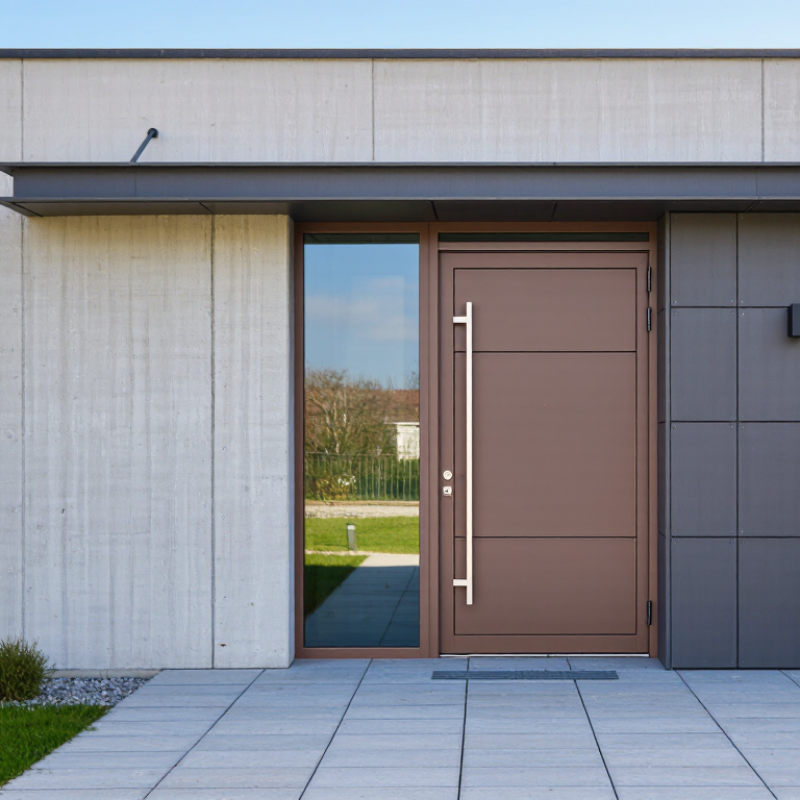
7 Aluminum Front Door Buying Tips for Global Buyers

Define Project Requirements and Local Climate Conditions

Before comparing aluminum front doors, document the project’s exposure and performance needs. Record the opening size, wall construction, intended use, and local requirements for air leakage, water penetration, and structural pressure. Note whether the entrance faces prevailing winds or receives strong afternoon sun. Small details matter: a recessed porch may reduce direct rain, while a coastal entry can face salt-laden spray.

Climate risk is not static. The World Meteorological Organization’s State of the Global Climate 2023 reported that global mean temperature was about 1.45°C above the 1850–1900 average. For US projects, NOAA recorded 28 weather and climate disasters costing at least $1 billion each in 2023. These figures do not determine a door specification, but they support checking local wind, rainfall, heat, and flood exposure rather than relying on broad regional labels.

Ask suppliers for test results that match the intended door size and configuration. In hot, sunny locations, compare solar heat gain and thermal performance; in cold or windy areas, examine the frame’s thermal break, seals, and air-leakage rating. For coastal sites, confirm corrosion-resistant finishes and suitable hardware. A beautiful sample proves little about drainage or installation quality. I would also verify the sill detail on site; it is easy to overlook, and even a well-rated door can underperform when water has nowhere to go.

Compare Aluminum Door Profiles, Finishes, and Hardware

Aluminum front door profiles affect strength, insulation, sightlines, and installation. Compare the frame depth, sash thickness, and thermal-break design, not just the overall appearance. A deeper profile may improve rigidity, but it can also reduce the clear opening. Check drawings against the project’s wall thickness and threshold details. Measure twice. Small mismatches can complicate installation.

Finish samples are more useful than screen images. View them outdoors and indoors, since light can change how a color reads. For coastal or high-humidity locations, ask about the coating process and suitable maintenance. A textured finish may disguise fingerprints, though dust can settle in its grooves. It is easy to overlook that trade-off. Request a sample large enough to assess sheen and texture, then confirm the specified finish in writing.

Hardware should match the door’s size, weight, and opening direction. Check hinge capacity, lock points, handle height, and cylinder compatibility before ordering. Ask how components can be adjusted or replaced, especially if local service access is limited. A heavy-looking handle is not proof of durability. Request technical specifications and relevant test information, and confirm that the proposed configuration matches the tested assembly. One detail buyers sometimes miss: hardware can alter the usable clear opening.

Evaluate Security, Thermal, and Weather Performance

Security, thermal efficiency, and weather resistance depend on the whole door assembly, not just its aluminum frame. Ask for test reports that identify the tested size, glazing, hardware, and installation conditions. A strong frame can still be a weak point if the lock area flexes or the glass specification is unclear. Check how the multipoint lock engages, and whether hinges resist sagging under the door’s weight. Small details matter.

Thermal performance varies with climate and building design. Look for a thermally broken frame, where an insulating barrier separates the inner and outer aluminum sections. Request documented U-factor or equivalent test data for the complete door, including glass. Compare like with like; frame-only figures can mislead. In cold or hot regions, also inspect the threshold and perimeter seals, since air leakage can undermine otherwise good insulation. A lower number is not automatically better if the test method differs.

For wind-driven rain, ask how water penetration and air leakage were tested, and at what pressure. Confirm that the rating suits the building’s exposure, especially near coastlines or open terrain. Examine drainage paths and replaceable gaskets; these are easy to overlook in a showroom. Installation matters too. A well-rated door can leak when the opening is out of square or flashing is incomplete. I would verify local service and spare-part availability before ordering, even if the product data looks excellent. That step can feel tedious, but it may prevent a frustrating repair later.

Check Building Codes, Certifications, and Warranty Terms

7 Aluminum Front Door Buying Tips for Global Buyers

Check local building codes before comparing finishes or handle styles. Local rules come first. Requirements may cover door width, opening direction, fire resistance, accessibility, wind pressure, thermal performance, and safety glazing. A door suitable for a mild inland climate may fail near a hurricane zone or coastal area. Ask the supplier for test reports, technical drawings, and installation instructions. Then confirm them with a licensed local professional or building authority. Certification marks are not universal. Verify whether the documents come from an accredited testing body and apply to your destination country. I have seen buyers accept a familiar certificate without checking its regional validity. That mistake can delay customs clearance, inspections, or installation.

Read the warranty like a contract, not a sales promise. Check the coverage period for the frame, powder coating, glass, hinges, locks, seals, and accessories. Confirm whether labor, replacement parts, transport, and removal costs are included. Some warranties exclude salt air, incorrect cleaning products, poor drainage, or installation by unapproved contractors. Coastal buyers should request clear corrosion-resistance details and maintenance instructions. Keep invoices, delivery photos, and installation records. Small records matter later.

Ask what happens when the finish fades or hardware fails. Response times should be written. A long warranty may still be weak if exclusions are broad or claims require difficult evidence. The most attractive quotation is not always the safest purchase. Review the documents twice. Fresh eyes help.

Verify Supplier Quality, Shipping, and Installation Support

For global buyers, an aluminum front door is more than a design purchase. It must survive handling, weather, and installation abroad. The supplier’s photos are not enough. Request the alloy grade, profile thickness, finish method, hardware specifications, and quality inspection records. Ask for close-up images of corner joints, hinges, seals, and drainage holes. A reliable supplier should explain its inspection process clearly. Check whether the finished door matches approved drawings and size tolerances. Small defects matter.

I once reviewed a shipment where the door looked excellent, but the crate was too narrow. The frame arrived with scratches. That mistake increased local repair costs. Confirm packed dimensions, gross weight, pallet materials, and loading photographs before shipment. Ask for a written production schedule and shipping timeline. Clarify delivery terms, port responsibilities, and document requirements. Sea freight can take longer during peak seasons. Do not trust verbal promises alone.

Installation support is equally important. Request detailed drawings, opening measurements, fixing points, and adjustment instructions. An accurate opening is essential. Confirm whether technical support is available across time zones. Ask if the supplier can provide replacement seals, rollers, or screws. Keep these parts on hand. One missing component can delay the project. The supplier may offer installation videos, but a video cannot solve every site condition. That limitation deserves honest discussion. Transparent support is usually more valuable than a low initial price.

7 Aluminum Front Door Buying Tips for Global Buyers

Verification checklist coverage for supplier quality, shipping, and installation support. Each bar represents the number of practical checks recommended for that buying area, not market-share or survey data.

How to use this chart: Prioritize areas with more checks required, especially product specifications, supplier quality evidence, export packaging, and installation support. Confirm documentation before placing an order.

FAQS

Why should I assess the whole door instead of only its aluminum frame?

Security and weather performance depend on the complete assembly. Check glazing, locks, hinges, seals, and installation details. Small parts matter.

What should security test reports include?

Look for the tested door size, glazing, hardware, and installation conditions. Confirm that multipoint locks engage properly and hinges support the door’s weight.

How can I compare thermal performance fairly?

Request U-factor data for the complete door, including glass. Compare results using the same test method. Frame-only figures can mislead.

What details help prevent drafts and water leaks?

Inspect the threshold, perimeter seals, drainage paths, and replaceable gaskets. Ask about air leakage and water tests. Installation matters too.

How do I check whether a door suits my location?

Match its ratings to local exposure, especially near coastlines or open terrain. Confirm building requirements with a local professional. Climate changes the answer.

What documents should I review before ordering?

Request technical drawings, installation instructions, and relevant test reports. Verify that certifications apply in your destination country. Familiar-looking documents may not be enough.

What should an aluminum door warranty cover?

Check coverage for the frame, coating, glass, hinges, locks, seals, and accessories. Confirm whether labor, transport, and replacement parts are included.

What records should I keep after purchase?

Save invoices, delivery photos, and installation records. Ask for written repair response times and service details. This can feel tedious, but it may help later.

Conclusion

Choosing an Aluminum Front Door for a global project starts with clear requirements: dimensions, design preferences, budget, traffic levels, and the local climate. Compare door profiles, finishes, and hardware to find options suited to the building’s appearance and exposure to heat, cold, moisture, or coastal conditions. Consider security features alongside thermal insulation, weather resistance, and ease of maintenance, since these affect both comfort and long-term performance.

Before ordering, confirm that the door’s specifications meet applicable building requirements and review any relevant certifications and warranty terms. Assess the supplier’s quality-control process, packaging, shipping arrangements, and ability to provide installation guidance. Checking these details early can help buyers reduce delays, avoid mismatches between the door and the project, and make a more informed purchase.

Aveline

Aveline

Aveline is a professional marketing specialist with a deep understanding of the company’s products and the needs they are designed to meet. She regularly contributes expert articles to the company website, sharing clear, practical information that helps readers explore product features, compare......