Foshan, Guangdong, China [email protected]
0%

Choosing an Entry Door supplier is not simply a matter of comparing prices. Buyers need a product that fits the building, performs reliably, and arrives with clear documentation. China offers manufacturers with different production scales, materials, and customization options. Their catalogs may include steel, aluminum, wood, or composite designs, with choices such as insulated cores, glass panels, and multiple finishes.

Small details matter. A frame that misses the opening by a few millimeters can complicate installation. A coating that looks consistent under showroom lights may appear different outdoors. Buyers should compare drawings, material specifications, hardware, packaging, and stated production schedules before making a commitment. Clear questions help. Vague answers deserve follow-up.

This guide introduces notable Chinese manufacturers and explains what global buyers can examine when building a shortlist. It considers product range, customization, quality-control processes, export communication, and the evidence suppliers provide. Request samples or product-specific reports where appropriate, and confirm that any claimed certifications match the intended market and model. A polished catalog is not proof. Nor does a low quotation tell the whole story.

No supplier list can replace direct verification. Factory capabilities, lead times, and service can change, and an online profile may leave important gaps. That is worth remembering. Use the comparisons as a starting point, then check specifications, responsibilities, and after-sales terms with each manufacturer. A careful review takes time, but it can prevent expensive surprises after the doors reach the site.
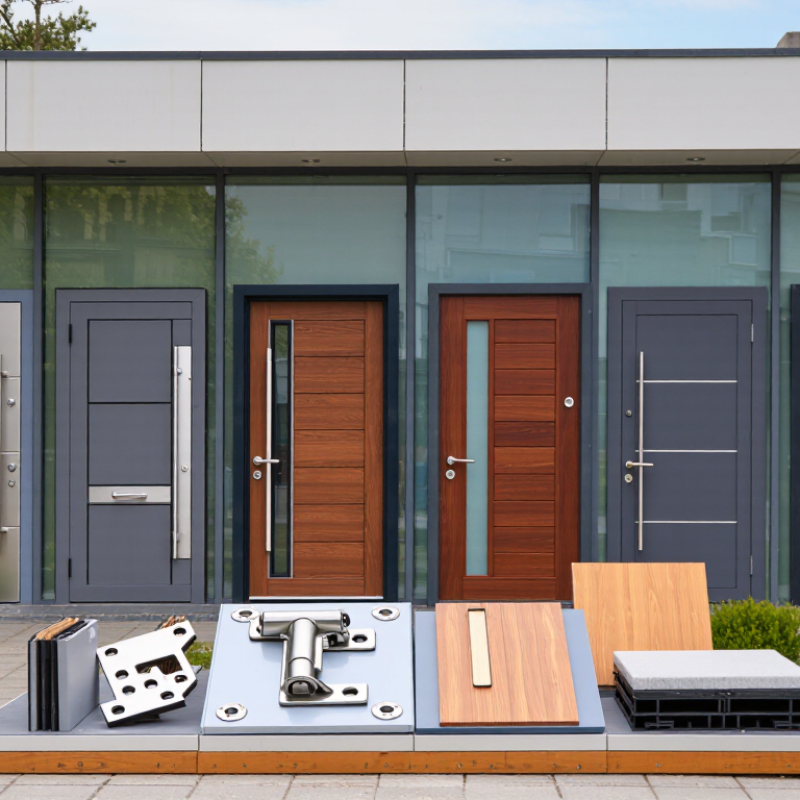
Top Entry Door Manufacturers in China for Global Buyers

China’s Entry Door Industry and Its Role in Global Trade

China’s entry door industry supports a broad export network, from material processing to finished-product assembly. Manufacturers produce steel, aluminum, and wood doors for residential and commercial projects. Many factories can adjust dimensions, finishes, glazing, and hardware to match project specifications. A sample frame on a workshop floor can reveal more than a product photo.

Global trade depends on more than factory capacity. Buyers need clear drawings, agreed performance requirements, and consistent communication about lead times. Packaging also matters: corner guards, moisture barriers, and stable palletization can reduce damage during long shipments. Small details count. A misplaced hinge cutout can delay installation across an entire building.

China’s manufacturing scale gives international buyers access to varied designs and production options. Still, scale is not a guarantee of uniform quality. Finish color may shift slightly between batches, and test results must match the actual door configuration. Buyers should review samples, inspect production records, and confirm specifications before shipment. Even then, checks can miss something. That is an imperfect part of cross-border sourcing, and it deserves honest attention.

Main Types of Entry Doors Made in China

Entry doors made in China cover several material and construction types. Steel doors are common for homes, apartments, and commercial entrances. Their reinforced cores can improve resistance to impact, while insulated fillings help limit heat transfer. Check the frame, hinges, and lock preparation too. A strong slab can still underperform with weak hardware.

Aluminum entry doors suit contemporary designs and humid locations because their frames resist corrosion. Thermal-break construction can reduce heat flow, though performance depends on the full door assembly. Solid-wood and engineered-wood doors offer natural grain and a substantial feel. They need suitable coatings and routine care, especially where rain or direct sun reaches the entrance. Fiberglass doors can imitate wood and resist moisture, but surface quality varies between products. Some manufacturers also produce glazed or fire-rated entrance doors for specific building needs. Ratings must match the project’s requirements.

Tips: Request a complete specification, not just a catalog photo. Confirm dimensions, core material, finish, glazing, hardware, and test documentation before ordering. Ask for a sample or production photos. Small details matter. A finish that looks warm indoors may appear different in daylight, and this is easy to overlook.

Common Entry-Door Materials Made in China

Representative density of materials commonly used in entry-door construction (kg/m³)

Values are approximate reference densities for the materials, not the weight of finished doors. Actual door weight varies with dimensions, core, glazing, and hardware.

How to Assess Chinese Entry Door Manufacturers

Assess a Chinese entry door manufacturer through evidence, not presentation. Request a factory audit or a live video walkthrough of the cutting, welding, coating, and assembly areas. Ask for a written specification covering steel thickness, core material, frame construction, locks, hinges, and weather seals. Compare these details with the approved sample; small changes can affect weight, fit, and durability.

Details matter.

Test a sample for smooth closing, even gaps, secure hardware, and consistent finish. For coastal projects, ask how the coating is tested against corrosion, and request relevant test reports. Verify that the manufacturer can trace materials and keep production consistent across repeat orders.

A good sample alone proves little. Check references, inspection records, packaging methods, and agreed lead times. Clarify who handles defects and what evidence is needed for a warranty claim.

I would not rely on a showroom visit alone; it may show the best production day, not the normal one. Independent pre-shipment inspection can reveal issues before doors are packed, though it cannot replace clear specifications or ongoing communication. Ask direct questions, and note where answers remain vague.

Profiles of Leading Entry Door Manufacturers in China

Profiles of China’s leading entry-door manufacturers are best judged by production strengths, not catalogue claims. Some focus on steel security doors, with reinforced frames, multi-point locks, and powder-coated finishes. Others specialize in aluminum or wood systems, where thermal breaks, weather seals, and precise corner joints matter. Look for factories that can explain their test methods and provide consistent dimensional tolerances. Small details count. Ask how they protect finished doors during export packing; a scratched sample tells little about shipment quality.

The 2023 Global Status Report for Buildings and Construction, published by UNEP and the Global Alliance for Buildings and Construction, estimates that buildings account for 34% of global energy demand. That makes insulation and airtightness relevant selection criteria, not just marketing language. A credible manufacturer should share measurable test results for air leakage, water resistance, and thermal performance, while clarifying which door configuration was tested. Yet a strong showroom sample may not represent every production batch. Buyers should verify material specifications, inspection procedures, and packaging through documented checks. Profiles vary, and no single factory excels equally at every door type. That distinction deserves scrutiny.

Top Entry Door Manufacturers in China for Global Buyers - Profiles of Leading Entry Door Manufacturers in China

Manufacturer Profile Typical Product Focus Common Materials Available Configurations Customization Buyers Commonly Request Key Information to Verify Best Suited To
Steel security door specialist Residential entrance and security doors Formed steel panels, steel frames, insulating cores, and hardware Single-leaf and double-leaf doors; inward- or outward-opening options depend on the design and destination market Door and frame dimensions, panel finish, glazing, lock preparation, hinge position, and hardware set Request the exact steel gauge, core composition, lock specification, corrosion-protection details, and test reports for the offered model Residential projects where security, durability, and a range of decorative finishes are priorities
Wooden entry door specialist Interior-facing and exterior entrance doors in traditional or contemporary styles Solid wood, engineered wood, wood veneer, and composite components Flush, panelled, glazed, and custom-profile designs Wood species or veneer, stain or paint color, panel design, glazing, frame details, and finish system Confirm whether components are solid or engineered, the substrate and veneer construction, moisture-control measures, and the intended exposure conditions Residential and hospitality projects seeking natural wood appearance or design flexibility
Aluminium entry door specialist Modern residential, commercial, and building entrance systems Aluminium profiles, insulated glazing, seals, and compatible hardware Hinged, glazed, and multi-panel designs, subject to the selected system Profile finish, glazing type, color, opening direction, threshold, hardware, and frame dimensions Check profile and glazing specifications, air and water performance evidence where required, thermal-performance data, and hardware compatibility Projects that require contemporary styling, glazed openings, or coordinated aluminium frames
Fiberglass or composite door specialist Low-maintenance residential entrance doors Fiberglass or other composite skins, insulated cores, and reinforced frames Panelled, smooth, wood-grain, and glazed designs, depending on the product line Surface texture, color, glazing layout, frame material, weather seals, and hardware preparation Verify the skin and core construction, suitable climate and exposure conditions, finish warranty, and model-specific performance documentation Buyers seeking a lower-maintenance alternative to some wood-door designs
Fire-rated door manufacturer Rated doors for buildings and projects with fire-safety requirements Usually steel or timber assemblies with specified cores, seals, frames, and compatible hardware Single- or double-leaf assemblies; options depend on the tested and approved design Opening dimensions, vision panels, frame type, closer, panic hardware, seals, and finish, subject to the approved assembly Request a valid test or certification document for the complete door assembly and confirm that the rating and standard are accepted in the destination market Commercial, residential, and public-building projects where a specified fire rating is required
Export-oriented custom door supplier Made-to-order entry doors for distributors, contractors, and private-label programs Varies by product line; may include steel, wood, aluminium, or composite construction Configurations, finishes, and packing options depend on the agreed project specification Drawings, labeling, packaging, hardware sets, finish schedules, and shipment documentation Confirm production lead time, sample approval process, inspection arrangements, packaging method, and responsibility for destination-market compliance Importers and project buyers with defined specifications or repeat-order requirements
These are generalized, non-company-specific supplier profiles, not a verified ranking or claims about individual manufacturers. Product construction, dimensions, performance, certifications, and export capabilities vary by model and order. Confirm specifications and applicable local requirements directly with the supplier before purchase.

Export Standards and Sourcing Considerations for Global Buyers

For global buyers, export readiness begins with a clear specification, not a broad product description. Record the opening size, frame depth, handing, threshold type, and hardware finish. Ask whether stated dimensions refer to the door leaf or the complete assembly. Small differences can complicate installation. Details matter.

Applicable requirements vary by destination and door type. Request current test reports and certificates, then confirm their scope, issuing body, and relevance with a qualified local reviewer. A report for one configuration may not cover different glazing, locks, or panel thickness. For fire-rated or security doors, verify that the tested assembly matches the ordered design. Do not rely on a certificate image alone.

Sourcing checks should connect factory capability with delivery conditions. Review production samples, coating consistency, corner joints, and packaging protection. A polished sample can still hide uneven batch quality; this deserves a closer look. Ask how defects are recorded and resolved, and define inspection criteria before production. Confirm pallet dimensions, moisture protection, spare hardware, and shipping marks against the destination’s handling needs. Agree on lead times and tolerances in writing. A factory visit or independent inspection can help, but neither replaces precise documents and a practical installation review.

FAQS

What types of entry doors are commonly made in China?

Common options include steel, aluminum, solid or engineered wood, and fiberglass. Glazed and fire-rated doors serve specific project needs.

Is a reinforced steel door slab enough for reliable performance?

Not always. Check the frame, hinges, lock preparation, core, and insulation. Weak hardware can undermine a strong slab.

When might an aluminum entry door be a suitable choice?

Aluminum frames resist corrosion, making them useful in humid locations. Thermal breaks can reduce heat transfer, but the full assembly matters.

What care do wood and fiberglass doors need?

Wood needs suitable coatings and routine care, especially near rain or direct sun. Fiberglass resists moisture, but surface quality varies. Look closely.

Which dimensions and details should buyers confirm before ordering?

Record the opening size, frame depth, handing, threshold, and hardware finish. Clarify whether dimensions describe the door leaf or complete assembly. Small mismatches cause trouble.

How can buyers check whether test reports apply to their order?

Request current reports and certificates, then confirm their scope and relevance with a qualified local reviewer. Glazing, locks, or panel thickness may differ. A certificate image alone is not enough.

What should buyers inspect during sourcing?

Review samples, coating consistency, corner joints, and packaging protection. Define inspection criteria and defect handling before production. A polished sample can flatter the final batch.

What delivery details should be agreed in writing?

Confirm pallet dimensions, moisture protection, spare hardware, shipping marks, lead times, and tolerances. Factory visits or inspections can help, but documents still matter. Even careful checks can miss something.

Conclusion

China has become an important source of Entry Door products for global buyers, supported by a broad manufacturing base and experience serving international markets. Manufacturers offer a range of options, including steel, aluminum, timber, and composite doors, with different designs, finishes, security features, and levels of insulation. Understanding these product types helps buyers match door specifications to their project requirements, climate, and budget.

When assessing suppliers, buyers can compare production capabilities, quality-control processes, customization options, communication, and export experience. Reviewing product specifications, samples, and relevant test documentation can help clarify whether a manufacturer is a good fit. It is also important to confirm applicable standards, packaging, shipping arrangements, lead times, and after-sales support before placing an order. A careful sourcing process makes it easier to identify reliable partners and select Entry Door solutions suited to the intended market.

Aveline

Aveline

Aveline is a professional marketing specialist with a deep understanding of the company’s products and the needs they are designed to meet. She regularly contributes expert articles to the company website, sharing clear, practical information that helps readers explore product features, compare......