Choosing the right Aluminium Front Door supplier can shape a building’s security, comfort, and first impression. China has become a major manufacturing base for aluminium systems, but scale alone does not guarantee quality. The supplier still matters.
As aluminium fenestration consultant David E. Moore observes, “A dependable door begins with a dependable system, not a glossy catalogue.” This practical view explains why buyers should examine more than price. Reliable Chinese suppliers often provide thermal-break profiles, powder-coated finishes, reinforced frames, multipoint locks, and customized glass options. Some also support low-energy designs for hot summers and cold winters.
Look closely.
Experienced manufacturers usually maintain documented quality procedures, production samples, and export packaging standards. They can explain alloy grades, coating thickness, hardware brands, drainage design, and installation tolerances without avoiding technical questions. Factory visits, third-party inspections, and sample testing add valuable confidence. Certifications should be checked against the destination market, not accepted as decoration.
China’s strongest suppliers can also coordinate drawings, color matching, hardware selection, and container loading. This reduces communication gaps between architects, contractors, and purchasing teams. Their large production capacity may improve lead times and pricing, especially for villas, apartments, hotels, and commercial projects.
Still, the process is not perfect. A beautiful sample may hide weak sealing or inconsistent assembly. A low quotation may exclude hardware, delivery, or after-sales support. Buyers should request clear specifications, real project references, warranty terms, and inspection records before signing.
The best choice is not simply the cheapest factory. It is a transparent partner that combines engineering experience, stable workmanship, responsive communication, and dependable after-sales service.
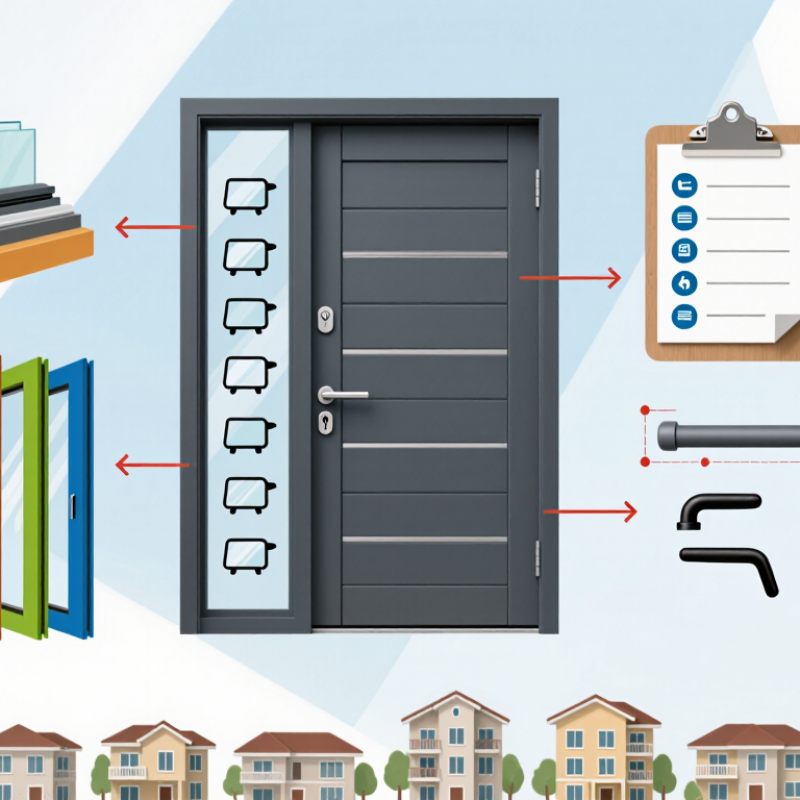
Aluminium front doors are entrance systems made from engineered aluminium profiles, glass, seals, hinges, locks, and threshold components. Unlike traditional timber doors, they resist warping, swelling, and insect damage. Their slim frames also allow larger glass areas without making the entrance look heavy. Clean lines matter.
Their popularity comes from a practical balance. Aluminium is strong but relatively light, so a large door can operate smoothly when hinges and hardware are correctly selected. Thermal-break profiles reduce heat transfer through the frame, while insulated glass and compression seals improve indoor comfort. Powder-coated surfaces offer many colors and usually need only regular cleaning. Still, poor coating preparation can cause early fading or corrosion, especially near coastlines.
When comparing Chinese aluminium front door suppliers, buyers should request profile specifications, coating standards, glass data, and test records. Experienced suppliers can explain drainage paths, corner joints, wind-load performance, and installation tolerances instead of discussing appearance alone. Ask for a sample corner.
Factory quality control should include dimensional checks, coating inspection, hardware testing, and water-penetration checks. Packaging also deserves attention because a well-made door can arrive scratched after weak protection. Custom sizes and finishes are useful, but excessive customization may increase errors and lead time. A careful supplier confirms drawings before production and provides clear installation guidance. No system is perfect. Good decisions come from checking details before the deposit is paid.
Aluminium front doors use aluminium profiles as the main frame and panel structure. Aluminium has a typical density of about 2.70 g/cm³, making it substantially lighter than steel while remaining strong and dimensionally stable. This supports large door designs, slim frames, and easier installation.
Their popularity also comes from corrosion resistance, low maintenance, design flexibility, and compatibility with insulated thermal-break systems. The values shown are approximate material densities; the final performance of a complete door depends on its profile design, glazing, insulation, seals, and manufacturing quality.
Data reference: Typical engineering density values for aluminium alloys, structural steel, and softwood timber.
Chinese aluminium front door suppliers remain competitive because they combine large-scale production with flexible customization. Many factories source profiles, hardware, glass, and finishing materials through established regional supply chains. This can reduce purchasing delays and control production costs. Buyers may request thermal-break frames, concealed hinges, multi-point locks, or textured powder coatings. These details matter in real projects.
Production experience also supports practical engineering decisions. Skilled teams can adjust frame depths, opening directions, drainage paths, and glass thicknesses before manufacturing. Some suppliers use cutting centers, CNC equipment, and documented inspection procedures. Reliable suppliers should provide drawings, material specifications, sample approvals, and measurable quality checks. Ask for evidence, not attractive promises. A clear inspection record is more useful than a polished factory video.
Export capability adds another advantage. Experienced suppliers understand protective packaging, container loading, moisture control, and installation guidance. They can often support different climate requirements and building styles. However, the lowest quotation is not always the best value. Thin profiles, weak hardware, or poor powder coating may create repair costs later. Some suppliers still need stronger communication during design changes. Buyers should compare complete specifications, testing documents, warranty terms, and response times before choosing a partner. Mistakes happen, even in organized factories. Transparent correction matters.
| Competitive Dimension | Typical Industry Data or Capability | Why Chinese Suppliers Can Be Competitive | Recommended Buyer Verification |
|---|---|---|---|
| Material Availability | Aluminium is widely used for residential and commercial doors because it is lightweight, corrosion-resistant, recyclable, and suitable for extrusion. | Large aluminium-processing clusters can provide access to extrusion, machining, welding, coating, glass, hardware, and assembly services within the same supply network. | Request the alloy designation, material certificates, extrusion drawings, and traceability records for the main profiles. |
| Profile Customisation | Common front-door configurations include single doors, double doors, sidelights, transoms, inward-opening units, and outward-opening units. | Suppliers commonly support made-to-measure dimensions, custom glazing layouts, different panel designs, concealed drainage, and thermal-break profile options. | Approve shop drawings showing frame depth, sash dimensions, drainage paths, glass position, opening direction, and hardware locations. |
| Thermal Performance | Thermal-break aluminium systems use insulating polyamide sections between the interior and exterior aluminium parts. Whole-door performance depends on the frame, glass, panel, seals, and installation. | A broad range of system designs allows suppliers to offer standard, improved, or high-insulation door configurations for different climate zones and project budgets. | Compare independently tested whole-door U-values or thermal-transmittance results rather than relying only on the profile specification. |
| Weather Resistance | Performance is influenced by multi-point seals, drainage design, threshold construction, corner joints, glass installation, and site installation quality. | Established manufacturers can combine extruded profiles, EPDM or comparable sealing systems, insulated thresholds, and tested drainage details in one finished assembly. | Ask for air-permeability, watertightness, and wind-load test results applicable to the proposed door size and configuration. |
| Surface Finishing | Common finishes include powder coating, anodising, wood-effect finishes, and selected metallic or textured colours. | Integrated or closely connected finishing facilities can support a wide colour range, batch production, custom colour matching, and coordinated finishes for doors and windows. | Confirm the coating specification, colour reference, surface-treatment process, film thickness requirements, and warranty conditions. |
| Durability and Corrosion Protection | Aluminium does not rust like steel, but corrosion resistance still depends on alloy quality, pretreatment, coating quality, fasteners, drainage, and the local environment. | Suppliers can adapt pretreatment, coating systems, stainless-steel hardware, and sealant selections for coastal, humid, or urban environments. | Review salt-spray or environmental test evidence where relevant, and specify compatible fasteners and maintenance requirements. |
| Hardware Integration | Front doors may use multi-point locks, adjustable hinges, pull handles, lever handles, cylinders, closers, and electronic access components. | Door manufacturers often coordinate hardware preparation, drilling, machining, and pre-assembly, which can reduce installation work and compatibility risks. | Check hardware load ratings, security classification where applicable, cylinder dimensions, hinge adjustment range, replacement availability, and spare-part support. |
| Production Flexibility | Many factories can produce both repeatable standard orders and customised project orders, subject to minimum quantities and production capacity. | Flexible production lines and established component networks can support different dimensions, colours, glazing choices, and panel patterns in one procurement program. | Request a written production schedule, approved bill of materials, sample approval procedure, and quality-control checkpoints. |
| Quality-Control Process | Key inspection points include incoming material checks, dimensional inspection, coating inspection, glass verification, hardware testing, assembly inspection, and final packaging inspection. | Suppliers with documented quality systems can standardise inspections across large orders and provide inspection records before shipment. | Request quality manuals, inspection checklists, non-conformity procedures, pre-shipment inspection rights, and production samples. |
| Compliance Documentation | Depending on the destination market, projects may require evidence related to structural performance, thermal performance, air and water resistance, safety glazing, fire performance, or security. | Export-oriented suppliers are familiar with preparing technical files, test reports, drawings, packing lists, and installation documentation for international projects. | Confirm that reports are issued by competent laboratories and that the tested product matches the supplied profile, glass, hardware, size, and configuration. |
| Packaging and Logistics | Finished doors require protection for corners, glass, coated surfaces, handles, and moving parts during inland and international transportation. | Suppliers can usually provide export packing, palletisation, container loading plans, moisture protection, and consolidated shipment arrangements. | Approve packing specifications, loading photos, package marks, spare-material quantities, shipping terms, and damage-claim procedures. |
| Total Procurement Value | The final cost includes the door, glass, hardware, packaging, documentation, freight, import charges, installation, maintenance, and possible replacement parts. | Integrated sourcing and direct factory purchasing may reduce intermediary costs and simplify coordination between profiles, panels, glazing, and hardware. | Compare like-for-like quotations that include the same specifications, performance requirements, accessories, delivery terms, taxes, and after-sales scope. |
| After-Sales Support | Useful support includes installation guidance, adjustment instructions, replacement hardware, profile samples, maintenance information, and technical responses. | A supplier involved in design, manufacturing, and assembly can generally provide product-specific technical support instead of generic component advice. | Define response times, warranty exclusions, spare-parts availability, claim documentation, and responsibilities for installation-related issues. |
Chinese aluminium front door suppliers can offer wide design choices and competitive production capacity. Quality still depends on verification, not attractive photographs. A reliable supplier should explain the alloy grade, profile thickness, thermal-break structure, and surface treatment clearly. Vague answers deserve caution.
Request a physical sample before placing a large order. Check whether the frame feels rigid and closes without rubbing. Inspect corner joints, drainage holes, seals, hinges, and locking points. A door may look excellent but fail during installation.
I once trusted a polished sample too quickly; the delivered finish showed uneven color near the corners. That mistake changed my inspection process.
Ask for coating specifications, test reports, and production photographs with dates. Verify wind resistance, water tightness, air leakage, and insulation data when these properties matter. Also compare the stated measurements with the actual sample. Chinese suppliers with experienced engineers usually provide detailed drawings and practical installation advice. Still, documentation should come from an identifiable testing body, not only a sales representative. Check packaging carefully, especially around glass edges and exposed corners. Small defects often become expensive after shipping.
A third-party inspection can confirm dimensions, hardware, finish consistency, and quantity before dispatch. It adds cost. It can prevent bigger losses.
When choosing a China-based aluminium front door supplier, expect more than a factory quotation. A reliable supplier should begin with practical consultation. They should ask about door size, wall conditions, climate, security needs, and daily use. Clear questions often reveal real experience.
Technical support should include accurate drawings, material specifications, and finish samples. You should receive details about aluminium profiles, glass options, hinges, locks, seals, and drainage. A professional team can explain thermal performance and water resistance without hiding behind vague claims. Ask for verifiable test reports and production photos. Small details matter.
Customization should not stop at colour. A dependable supplier can adjust opening direction, threshold height, handle position, and frame depth. They should provide a pre-production sample or approval drawing before manufacturing. Packaging also deserves attention. Corner protection, moisture-resistant wrapping, and labeled components reduce damage during transport. I have seen attractive doors arrive with scratched frames because packaging was treated as an afterthought.
Communication is another service, not a courtesy. Expect regular updates, inspection records, loading photos, and shipping documents. After delivery, the supplier should offer installation guidance, replacement support, and a clear response process. Some suppliers promise fast service but answer slowly after payment. That gap deserves careful reflection. A slightly higher quote may be reasonable when it includes engineering checks, quality control, and dependable after-sales help.
Choosing the best aluminium front door supplier in China requires more than comparing prices. Start by checking the factory’s production experience, export history, and quality control process. Ask for workshop photos, product samples, and test reports for air tightness, water resistance, and wind pressure. A reliable supplier should explain aluminium grade, wall thickness, thermal-break design, glass options, and hardware clearly.
Visit the factory if possible. Observe cutting accuracy, corner assembly, powder coating, and final inspection. Small details matter, such as smooth hinges, even gaps, and accurate door dimensions. Request a sample before placing a large order. The sample may reveal issues that brochures cannot show. Check whether the supplier can follow your drawings and manage custom sizes without repeated mistakes.
Communication is equally important. Choose a team that answers technical questions directly and confirms specifications in writing. Discuss packaging, production time, replacement terms, and installation guidance before signing a contract. A very low quotation deserves careful review. It may exclude better hardware, protective film, or proper testing. Even experienced buyers can overlook these costs. Ask for a complete quotation with measurable details, not vague promises. Suppliers with stable inspection records and transparent documents are usually safer choices for long-term projects.
They combine large-scale production with flexible customization. Regional supply chains can reduce purchasing delays and costs. Buyers may request thermal-break frames, concealed hinges, and textured finishes. Lower prices still require careful checking.
Customization may include frame depth, opening direction, threshold height, and handle position. Suppliers can also adjust glass thickness and drainage paths. Colour alone is not enough. Details matter.
Expect drawings, material specifications, finish samples, and inspection records. Testing documents should support claims about thermal performance and water resistance. Attractive promises are weak evidence. Ask for measurable proof.
Look for cutting equipment, CNC processing, and documented quality checks. Request sample approval before production begins. Inspect profiles, hinges, locks, seals, and glass carefully. Small defects can become expensive repairs.
Packaging should include corner protection and moisture-resistant wrapping. Components should carry clear labels. Loading photos can show how the doors were secured. Good packaging prevents scratched frames.
A reliable supplier should provide regular updates and answer design questions clearly. Expect inspection records, loading photos, and shipping documents. Slow replies after payment are a warning sign. Communication sometimes fails.
Not always. Thin profiles, weak hardware, or poor finishes may create later repair costs. Compare complete specifications, warranty terms, testing documents, and response times. Cheap can become expensive.
Suppliers should offer installation guidance and replacement support. They should explain the response process for damaged or incorrect parts. Mistakes happen, even in organized factories. Transparent correction matters.
Choosing a reliable Aluminium Front Door supplier in China can offer an excellent balance of durability, design flexibility, energy efficiency, and cost-effectiveness. Aluminium front doors are popular because they resist corrosion, require minimal maintenance, provide strong security, and can be customized in various colors, finishes, glass styles, and dimensions. Chinese suppliers are competitive due to advanced manufacturing capabilities, efficient production systems, flexible customization, and access to a broad range of materials and hardware.
When evaluating suppliers, buyers should examine aluminium alloy quality, surface treatment, structural strength, thermal insulation, weather resistance, hardware performance, and product testing. A dependable supplier should also provide professional design support, accurate quotations, sample services, clear production schedules, careful packaging, and responsive after-sales assistance. To select the best partner, compare experience, factory capability, quality control procedures, communication, customization options, and overall value rather than focusing only on price. A supplier that combines consistent quality with transparent service can help ensure a secure, attractive, and long-lasting entrance solution.