Engineered Aluminium Entrance Door Systems
Explore our factory-direct product range engineered for extreme wind load durability, airtight thermal insulation, anti-theft security, and seamless architectural aesthetics.
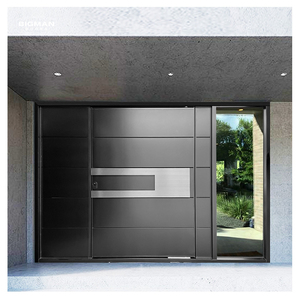
Modern Luxury Extra Large Steel Security Door Reinforced Anti-theft Fire Resistant Villa Exterior Kitchen Main Entrance Front
Contact Us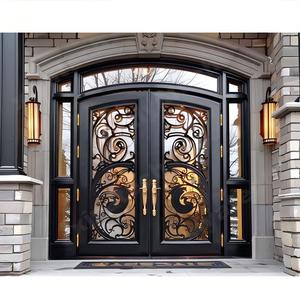
XIYATECH Factory Price Classical Design Customized Exterior Iron Door Grill Design Wrought Iron Front Entry Doors For Houses
Contact Us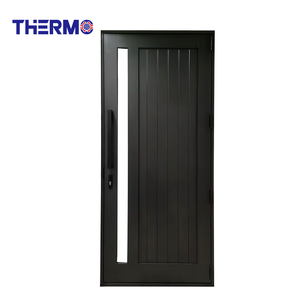
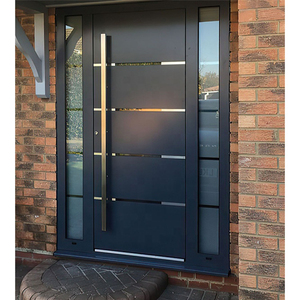
Hot Sale Security Steel Single Gate Door Exterior Metal Security Front Entry Doors for Houses
Contact Us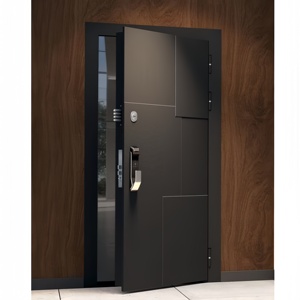
ZEKIN Customized Size Security Entrance Doors Exterior Residential Entry Doors Thermal Insulation Anti-Theft Front Pivot Doors
Contact Us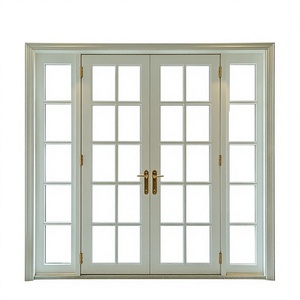
Sunnysky High Quality Patio Double Tempered Glazed Swing Glass Doors Aluminum Glass French Door For Exterior Entry Doors
Contact Us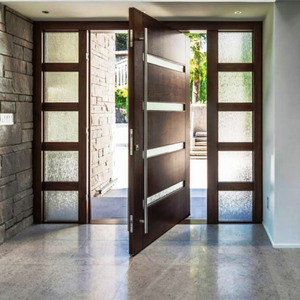
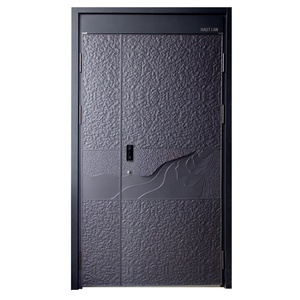
Modern Style German-Style Aluminum Armored Protection Entrance Door Stainless Steel Waterproof Sheet Metal Door Home Protection
Contact UsWhitepaper: Engineering Standards for CE Certified Aluminium Entrance Doors
In contemporary B2B fenestration procurement, verifying structural compliance under European Standard EN 14351-1 is critical for architects, developers, and commercial door importers. As a premier original equipment manufacturer (OEM) based in Foshan, China, Foshan Aluvoy Entry Door Systems Co., Ltd. has established rigorous manufacturing protocols to ensure our architectural aluminium entrance doors meet and exceed strict European Union directives, North American NFRC performance benchmarks, and Australian AS2047 standard guidelines.
1. Core Performance Parameters of EN 14351-1 Standard
CE Certification for external pedestrian doorsets mandates standardized testing across five core engineering vectors:
- Thermal Transmittance (U-Value): Utilizing imported 24mm to 34mm Technoform polyamide thermal break strips (PA66GF25), our insulated aluminium door profiles achieve overall assembly U-values as low as 0.85 W/m²K to 1.2 W/m²K, vastly improving building envelope energy ratings and complying with modern Passive House benchmarks.
- Watertightness (EN 12208): Engineered with multi-chamber EPDM (Ethylene Propylene Diene Monomer) gasket systems and concealed drainage channels, our entrance doors achieve class ratings up to Class E1050 (withstanding continuous water penetration at positive test pressures of 1050 Pa).
- Air Permeability (EN 12207): Precision CNC-machined corner cleats combined with multi-point locking pins secure the door leaf tightly against the frame compression seals, achieving top-tier Class 4 air tightness ratings.
- Resistance to Wind Load (EN 12210): Built using high-tensile 6063-T6 architectural aluminium alloy profiles with wall thicknesses ranging from 2.0mm to 3.0mm, our entrance systems effortlessly resist structural wind loads up to Class C5 / B5 (2000 Pa design pressure).
- Burglar Resistance (EN 1627): Integrated structural steel armored inserts, heavy-duty 3D adjustable security hinges, and German-engineered multi-point hook locks yield certified security compliance up to RC2 and RC3 protection levels.
Technical Insight: Information gain analysis proves that thermal insulation in aluminium doors relies heavily on profile geometry and thermal break quality. Our dual-cavity techno-polymer barrier eliminates thermal bridges, preventing condensation even under internal/external temperature differentials exceeding 35°C.
2. Advanced Surface Treatment and Corrosion Protection
To endure demanding coastal and harsh urban microclimates, our aluminium entrance doors undergo comprehensive surface pretreatment before applying premium powder coatings (Qualicoat Class 2 standard) or PVDF fluorocarbon coatings adhering to AAMA 2605 specification standards. This process ensures exceptional UV resistance, color retention over 25+ years, and high resistance to salt spray corrosion (tested beyond 3,000 hours under ASTM B117 standard protocol).
Enterprise Capabilities & OEM Infrastructure
Why top architectural firms, building contractors, and regional window and door distributors trust Aluvoy as their primary strategic manufacturing partner.
In-House Automated CNC Machining
Every profile cutting, lock mortising, hinge drilling, and corner crimping operation is processed on high-precision 5-axis CNC machining centers, guaranteeing fabrication tolerances within ±0.2mm.
Triple International Compliance
Holding official CE certification, Australian AS2047 approval (verified via SAI Global), and North American NFRC listings, enabling seamless customs clearance and building site sign-offs worldwide.
BIM & Custom CAD Engineering
Our experienced engineering team converts client architectural site drawings and elevation schedules into detailed 2D shop drawings and 3D BIM models before production launch.
Export Heavy-Duty Packaging
Finished door leaf assemblies and frames are encased in protective polyethylene film, fitted with corner guards, and packed into fully enclosed steel-reinforced wooden crates for safe sea transport.
Comprehensive 10-Year Warranty
Backed by a solid 10-year manufacturer warranty covering extrusion structural integrity, anodized surface integrity, mechanical hardware durability, and insulated glass seal lifetime.
Dedicated Project Management
Direct communication with qualified bi-lingual sales engineers who assist from initial tender drawings, material selection, mock-up samples, up to installation supervision guides.
Future Sourcing & Procurement Trends in Aluminium Entrance Doors (2026–2030)
As global building codes shift toward net-zero carbon footprints, decarbonized raw material supply chains, and integrated smart living spaces, procurement managers must align their supply lines with emerging technological and environmental trends:
1. Integration of Smart Biometric Access & Mechatronic Locks
Traditional mechanical key cylinders are increasingly giving way to fully integrated motorized multi-point locks compatible with modern smart home automation systems (Zigbee, Z-Wave, Matter protocols). Future-ready entrance doors incorporate concealed biometric fingerprint readers, facial recognition modules, and smartphone Bluetooth low energy (BLE) receivers directly inside the door sash or pull handle profiles. This eliminates visible lock trim while enhancing security through real-time access logging.
2. Architectural Shift Toward Heavy-Duty Oversized Pivot Entrance Systems
In high-end luxury residential villas and commercial headquarters, standard hinged doors are being superseded by grand, large-format pivot doors reaching heights of up to 4.5 meters and widths up to 2.2 meters. These systems require specialized heavy-duty hydraulic floor pivots with adjustable closing speeds, concealed dampeners, and reinforced anti-warping tension rods hidden inside the aluminium profiles to maintain frame alignment across seasonal thermal changes.
3. Adoption of Low-Carbon Recycled Extrusions and EPD Certifications
Leading European and North American buyers now require Environmental Product Declarations (EPDs) to verify embodied carbon footprints. Manufacturing entrance doors using prime aluminium billets produced via green hydroelectric smelting (with recycled aluminium content exceeding 75%) substantially reduces Scope 3 carbon emissions. This strategy allows developers to earn valuable credits under BREEAM, LEED v4, and DGNB green building certification schemes.
4. Vacuum Insulated Glass (VIG) & Advanced Thermal Barriers
The quest for ultra-low building energy consumption is driving the adoption of Vacuum Insulated Glass (VIG) inserts inside entrance door panels. By introducing a microscopic vacuum gap between glass panes, thermal conductive losses drop dramatically—allowing entrance doors to achieve U-factors below 0.60 W/m²K without increasing door panel thickness or overall frame depth.
Frequently Asked Questions (FAQ) for Global Buyers
Clear, technical answers to common questions regarding CE certification compliance, custom engineering, factory inspection, and international logistics.
What specific documentations prove your aluminium entrance doors comply with CE EN 14351-1 standards?
We provide full Factory Production Control (FPC) documentation, Declaration of Performance (DoP) certificates signed by accredited testing bodies, and official Initial Type Testing (ITT) reports detailing air tightness, water tightness, structural wind resistance, and thermal U-value calculations. These documents ensure immediate acceptance by building inspectors and municipal compliance officers within the European Economic Area (EEA).
How does aluminium compare with wrought iron or solid timber for exterior front doors?
Thermally broken aluminium offers vastly superior dimensional stability, corrosion resistance, and thermal insulation compared to solid timber or wrought iron. Timber is prone to swelling, warping, and rotting under fluctuating ambient moisture, while iron suffers from severe thermal bridging and rust susceptibility. Thermally broken aluminium combines high structural rigidity, minimal maintenance, precision weather sealing, and complete color finish longevity over decades of use.
Can your factory produce custom oversized entrance doors according to architect drawings?
Yes, 100% of our production is tailored to client site dimensions, architectural CAD drawings, and opening schedules. Our engineering department reviews your drawings to optimize glass thickness, frame structural reinforcement, hinge loading capacity, and lock hardware compatibility before issuing detailed shop drawings for final customer approval prior to manufacturing.
What is your typical production lead time and minimum order quantity (MOQ)?
Standard fabrication lead time is 25 to 35 business days from final shop drawing sign-off and deposit confirmation. Because we operate flexible dual production lines, we accommodate project orders ranging from single custom luxury villa entrance doors to multi-container commercial hotel or residential development projects.
How do you ensure zero-defect quality control before shipment?
Our factory operates under ISO 9001 quality management protocols. Every manufacturing step—including raw profile incoming inspection, CNC cutting accuracy, corner crimping strength, thermal break strip insertion, glass unit sealing, and hardware operational checks—is recorded by dedicated QC technicians. Prior to packing, completed doors are assembled on mock-up testing racks to verify seamless latching, lock smooth operation, and gasket compression seal alignment.
Do you provide remote installation support or shop assembly guides?
Yes. Every shipped order includes detailed CAD installation manuals, structural fixing bracket location diagrams, and step-by-step assembly guides. Our engineering support team is also available via video call to assist local installer crews on-site with fine-tuning pivot hinges, lock adjustment, and perimeter weatherproofing procedures.
Ready to Request Engineering Quotations & Technical CAD Drawings?
Connect with our expert technical export team today to discuss your project requirements, receive factory-direct pricing, or schedule a virtual factory audit tour.