Featured Architectural Entrance & Security Pivot Door Systems
Engineered for luxury residential villas, commercial facades, and high-security architectural openings. Manufactured in full compliance with international building codes.
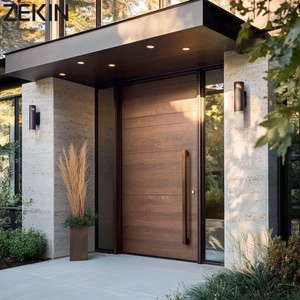
ZEKIN Modern American Design House Heat Insulation Fire Prevention Luxury Entrance Pivot Door House Front Entry Doors
Contact Us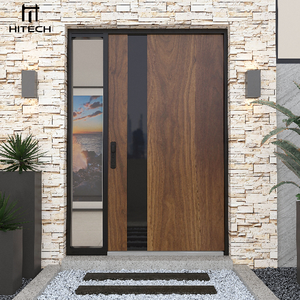
Hitech Modern American Design House Front Pivot Door Large Entrance Modern Entry Door Security Doors For Houses Exterior
Contact Us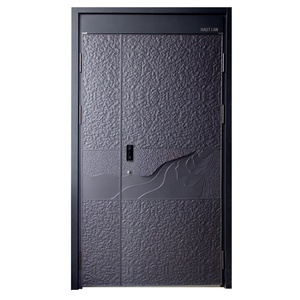
Modern Style German-Style Aluminum Armored Protection Entrance Door Stainless Steel Waterproof Sheet Metal Door Home Protection
Contact Us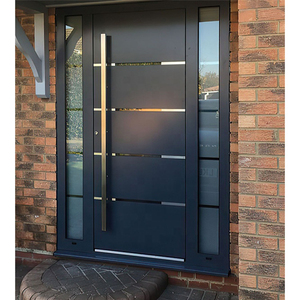
Hot Sale Security Steel Single Gate Door Exterior Metal Security Front Entry Doors for Houses
Contact Us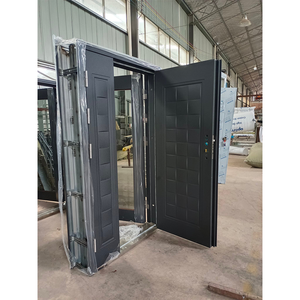
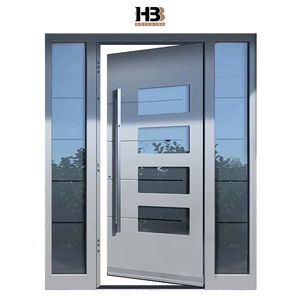
American Modern House Front Main Entrance 4 Glass Panel Inserted Insulated Metal Stainless Steel Security Exterior Door
Contact Us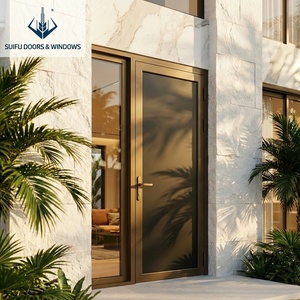
French Style Aluminum Alloy Swing Front Entry Door AS2047 Double Glazed Hurricane Proof Entrance Door
Contact Us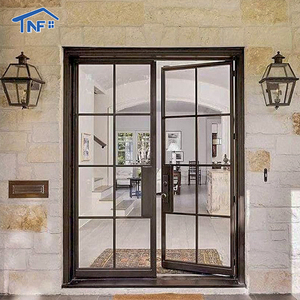
Customized Design Modern Thermal Insulation Villa Casement Glass Aluminum Door with French Door Style and SDL Grill Design
Contact UsArchitectural Engineering Standards for CE Certified External Pivot Doors
Modern luxury architecture has fundamentally shifted away from traditional hinged door assemblies toward oversized visual openings. As real estate developers, structural specifiers, and procurement directors seek seamless indoor-outdoor transitions, pivot doors have emerged as the paramount architectural solution. However, specifying over-sized entry portals requires navigating complex structural physics, wind-load mechanics, thermal envelope continuity, and rigorous European safety standards. Partnering with verified CE Certified Pivot Door Factories & Exporters ensures that aesthetic ambition is fully backed by certified mechanical reliability and legal compliance across the European Economic Area (EEA) and global markets.
Understanding EN 14351-1 CE Testing Parameters for Pivot Doors
Unlike standard residential swing doors mounted on side hinges, pivot doors operate on offset upper and lower pivot shafts. This structural alteration changes the load distribution completely. When evaluating a certified China manufacturer or exporter, international buyers must verify test reports across five critical engineering criteria:
- Structural Wind Load Resistance (EN 12210): Pivot door leaves frequently measure 1.5 meters to 3.0 meters in width and upwards of 4.0 meters in height. Under extreme wind conditions, large surface areas experience massive positive and negative pressure forces. CE compliance requires testing up to Class C5/B5, ensuring panel deflection remains within strictly permissible safety limits ($\le 1/300$ of the frame span) without seal blow-out or structural joint failure.
- Watertightness Under Pressure (EN 12208): Because pivot doors rotate along an internal axis, standard continuous rebate seals are interrupted at the top and bottom pivot points. Leading export factories utilize multi-stage drop-down automatic weather seals, perimeter magnetic gaskets, and internal drainage sub-frames to achieve ratings up to Class 9A (600 Pa test pressure under continuous water spraying).
- Air Permeability (EN 12207): In thermal envelope design, uncontrolled air infiltration compromises building energy ratings. High-end aluminum armored pivot doors feature active drop seals activated upon frame closure, attaining Class 4 air tightness—the highest achievable tier under EN specifications.
- Thermal Transmittance ($U_d$ Value): Achieving thermal barrier continuity in metal entrance systems requires structural polyamide barrier strips (PA66-GF25 with 25% glass fiber reinforcement) engineered within the aluminum extrusions. Combined with argon-filled low-emissivity double or triple insulated glass units (IGUs), thermal values can reach $U_d \le 1.1 \text{ W/m}^2\text{K}$.
- Operating Forces & Mechanical Durability (EN 12046-2 / EN 12400): Heavy armored pivot doors weighing up to 800 kg must open effortlessly with operating forces under Class 2 ($\le 100 \text{ N}$ manual push/pull force). Furthermore, pivot hinges undergo dynamic cycle testing exceeding 200,000 to 500,000 continuous opening/closing cycles.
| Performance Criteria | Test Standard | Standard Entry Swing Door | Aluvoy Architectural Pivot Door |
|---|---|---|---|
| Max Panel Dimensions | EN 14351-1 Annex A | 1200mm W x 2400mm H | 3000mm W x 6000mm H (Customized) |
| Weight Carrying Capacity | EN 12400 Class 8 | Up to 120 kg | 500 kg to 1000 kg Heavy-Duty Pivot Shaft |
| Wind Load Deflection | EN 12210 | Class C2 / C3 | Class C5 (High-Rise & Coastal Rated) |
| Thermal Break Profile | EN ISO 10077-2 | Non-Thermal / 14mm PA66 | 24mm - 34mm PA66-GF25 Structural Polyamide |
| Burglar Resistance | EN 1627 | Standard Latch / RC1 | RC2 / RC3 / RC4 Armored Multi-Point Locking |
Future Global Procurement Trends for Pivot Doors (2025–2030)
As commercial buyers, architectural firms, and window importers update their annual procurement strategies, the specifications for entrance doors are evolving rapidly. Procurement managers who recognize these trends early gain a substantial competitive edge in their local markets:
1. Super-Sized Openings & Slim Sightlines
The demand for mega-scale entrance portals exceeding 4 meters in height is growing by over 18% annually in luxury residential sectors. Minimalist aluminum profiles with ultra-slim stiles (less than 30mm visible width) combined with massive glass panels are becoming the benchmark.
2. Integrated Smart Access & Motorized Drives
Procurement specifications are shifting heavily toward concealed electro-mechanical multi-point locking mechanisms (e.g., German-engineered GU or Winkhaus systems) fully compatible with facial recognition, biometric fingerprint scanners, keypads, and smart home automation systems (KNX, Control4).
3. Passive House Thermal Performance
With worldwide carbon emission regulations tightening, buyers are rejecting uninsulated metal doors. High-end procurement requires aerogel-filled aluminum profiles, triple-pane Low-E glass, and perimeter thermal isolation that meet Passive House standards ($U_d \le 0.8 \text{ W/m}^2\text{K}$).
Product Development & Engineering Innovations in Pivot Door Manufacturing
To deliver flawless quality at factory-direct pricing, leading manufacturers like Foshan Aluvoy Entry Door Systems Co., Ltd. have completely digitized their manufacturing pipelines. Key technical innovations include:
Concealed Floor Pivot Systems (FritsJurgens / German Type)
Traditional pivot doors required deep floor slots to accommodate bulky hydraulic box springs. Modern technical designs utilize fully integrated, self-closing pivot hinges built directly inside the bottom aluminum door rail. Features include adjustable damping control, 90-degree hold-open positioning, 180-degree or 360-degree rotation, and zero floor maintenance requirements.
Armored Stainless Steel & Aluminum Hybrid Cores
Combining the thermal insulation and light weight of extruded T6063-T5 aluminum with embedded 304/316 stainless steel armored plates creates doors that resist forced entry (EN 1627 RC3/RC4 rating) while remaining structural light enough to prevent long-term hinge sagging or frame distortion.
Furthermore, surface treatment technology has advanced significantly. Exterior aluminum surfaces undergo Qualicoat-certified fluorocarbon (PVDF) electrostatic spraying or anodizing processes. This enables pivot doors to resist salt spray corrosion for over 3,000 continuous hours—an imperative requirement for luxury oceanfront villa construction in regions like Florida, Australia, the Caribbean, and the Middle East.
Factory Auditing: Why Direct Sourcing from Foshan Aluvoy Delivers Superior ROI
Importing large-format architectural doors involves strict risk mitigation regarding structural tolerances, freight packaging, and international code compliance. Founded in 2005, Foshan Aluvoy Entry Door Systems Co., Ltd. operates a modern 20,000 square meter production facility equipped with 5-axis CNC machining centers, automated assembly lines, and in-house structural testing laboratories.
Unlike trading intermediaries, Aluvoy manages every phase of production in-house: profile extrusion cutting, CNC hardware slotting, corner crimping, structural silicone gluing, glass insertion, and pre-shipment assembly mockups. Our factory holds authentic international certifications including Australian AS2047 (SAI Global), North American NFRC, Florida Product Approval for Hurricane Impact, and European CE Certification.
Why Global Importers & Contractors Partner With Us
Over 1,000 buyers from 30+ countries have visited our Foshan facility. Here is how we remove risk from your supply chain.
Multi-National Certified Systems
Full documentation for AS2047, NFRC, Florida Hurricane Impact, and CE EN 14351-1. Your local building inspectors receive valid, verifiable test reports for seamless site approvals.
Custom CAD / BIM Engineering
Every single order is converted into precise architectural shop drawings by our structural engineering team prior to production. Opening schedules, wall anchoring, and sill flashings are pre-verified.
Export-Ready Wooden Crating
With over 10,000 containers shipped globally, our fully enclosed IPPC-certified fumigated plywood crating ensures zero glass breakage or surface scratches during ocean freight.
Frequently Asked Questions on Pivot Door Sourcing
Direct technical answers to the most common questions asked by architects, importers, and procurement directors.
What certifications do your aluminum windows and pivot doors hold?
Our door and window systems carry full CE Certification (EN 14351-1) for European markets, AS2047 Certification issued via SAI Global for Australia, and NFRC / Florida Product Approvals for North America (including high-velocity hurricane zones). Test reports for wind load, water tightness, air infiltration, and thermal transmittance are provided with shop drawings.
How do pivot doors achieve water tightness and air sealing at the pivot axis?
Because pivot doors rotate away from the frame, standard continuous rebates cannot be used at the pivot pin location. We solve this using heavy-duty perimeter magnetic seal gaskets paired with dynamic automatic drop-down bottom seals. When the door closes, an internal pin triggers a pneumatic mechanism that pushes a rubber weather strip flush against the floor threshold, blocking wind and rain driving up to 600 Pa.
Can you manufacture pivot doors to custom architectural drawings and oversized dimensions?
Yes. Every single order is manufactured 100% custom to the buyer's architectural drawings, structural opening schedules, and finish requirements. Our engineering department prepares comprehensive shop drawings for sign-off before raw material cutting begins. We regularly manufacture single-panel pivot doors up to 3.2 meters wide and 6.0 meters high.
What warranty is provided on export orders?
All aluminum extrusions, glass units, structural thermal breaks, and hardware mechanisms are backed by our comprehensive 10-Year Factory Warranty. Replacement components or hardware parts are dispatched via express air freight should any non-conformance arise.
How is quality controlled during factory production?
Manufacturing is completely controlled in-house across our 20,000m² facility: CNC cutting, corner punching, hardware milling, structural silicone sealing, double-glazing assembly, and pre-loading inspection. Every finished pivot door undergoes a 100% trial assembly test on our factory rig to check alignment, pivot rotation smoothness, and locking pin engagement before crating.
Do you provide site installation guidance for overseas projects?
Yes. We supply comprehensive installation manuals, 3D exploded hardware diagrams, and video guides tailored to your specific project shop drawings. Our technical engineering team is available for remote video consultation during site installation.