Featured Factory-Direct Entry Door Systems
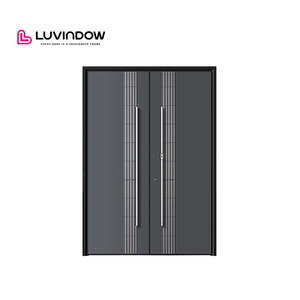
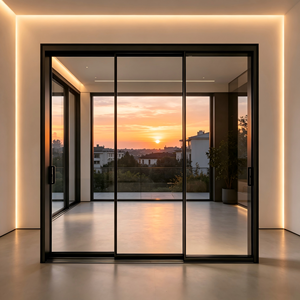
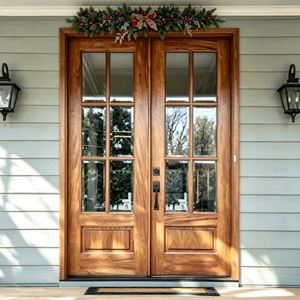
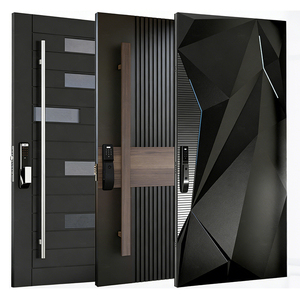
Explore our certified aluminum and tempered glass main entrance, pivot, sliding, and casement door systems engineered for international architectural compliance.
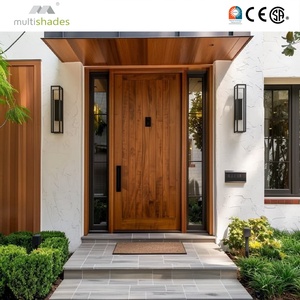
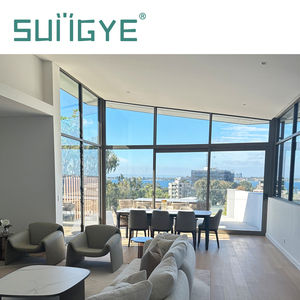
China Wholesale Tempered Glass Entry Door Procurement Whitepaper
The global demand for architectural glass entryways has experienced a paradigm shift. Modern commercial and high-end residential developments no longer treat entrance doors merely as physical access points; they are engineered thermal envelopes, primary security barriers, and statement architectural features. Sourcing from a premier China wholesale tempered glass entry door factory offers international developers, general contractors, and trade distributors an unmatchable combination of custom precision engineering, advanced material science, and cost scalability.
However, navigating overseas manufacturing requires deep technical clarity regarding structural glass processing, aluminum extrusion alloys, thermal break technology, and regional building code compliance. This technical whitepaper establishes an authoritative benchmark for evaluating, specifying, and procuring wholesale tempered glass entry doors directly from tier-1 Chinese manufacturing hubs like Foshan, Guangdong.
When procuring massive tempered glass entry doors, nickel sulfide (NiS) inclusions represent a latent risk of spontaneous glass failure. Top-tier Chinese manufacturers utilize Heat Soak Testing (HST) per EN 14179-1, placing tempered glass panels in a calibrated thermal oven at 290°C for 2 hours to force premature failure of contaminated panels prior to export. Always verify that your factory supplier includes HST certification for frameless and structural glass entry doors.
1. Glass Processing Mechanics: Fully Tempered vs. Toughened Glazing Systems
Tempered entry door glass undergoes thermal treatment where float glass is heated to approximately 620°C–650°C and rapidly quenched with high-pressure cold air streams. This process creates high compressive stress in the glass surface (minimum 69 MPa or 10,000 psi per ASTM C1048), while the core remains in tensile stress. The resulting tempered glass exhibits 4 to 5 times the mechanical impact resistance and bending strength of standard annealed glass.
| Glass Configuration | U-Factor (Btu/h·ft²·°F) | SHGC Range | STC (Sound Transmittance) | Primary Structural Application |
|---|---|---|---|---|
| 10mm / 12mm Monolithic Tempered | 1.02 – 1.10 | 0.78 – 0.82 | 31 – 33 dB | Interior Commercial Partitions & Frameless Pivot Doors |
| Double Insulated Tempered (6+12Ar+6 Low-E) | 0.26 – 0.32 | 0.35 – 0.45 | 36 – 39 dB | Standard Exterior Residential & Office Entrance Doors |
| Triple Insulated Tempered (5+12Ar+5+12Ar+5) | 0.14 – 0.20 | 0.25 – 0.35 | 40 – 43 dB | Passive House & Cold Climate Exterior Entryways |
| Hurricane Impact Laminated (6 Temp + 1.52 SGP + 6 Temp) | 0.45 – 0.52 | 0.40 – 0.50 | 42 – 45+ dB | Coastal High-Velocity Hurricane Zones (HVHZ / Florida Approved) |
2. Frame Metallurgy & Thermal Break Architecture
A tempered glass entry door is only as resilient as its supporting frame. Superior Chinese entry door factories utilize 6063-T6 or 6060-T6 architectural grade aluminum extrusions with wall thicknesses ranging from 2.0mm to 3.0mm for heavy-duty commercial traffic. To satisfy global energy performance mandates (such as NFRC standards in North America or NCC requirements in Australia), thermal break technology is integrated within the aluminum profiles.
Rather than primitive poured-and-debridged polyurethane bridges, top-tier factories insert multi-cavity Polyamide PA66 GF25 (25% Glass Fiber Reinforced) thermal struts. This structural barrier breaks the conductive heat transfer path, drastically lowering the overall assembly U-factor and preventing condensation formation on the interior frame profile during winter extremes.
Future B2B Procurement Trends in Wholesale Entry Doors (2025–2030)
Understanding upcoming market trajectories allows commercial buyers and distributors to specify door systems that remain relevant, compliant, and highly marketable over the next decade.
1. Oversized Floor-to-Ceiling Pivot Systems
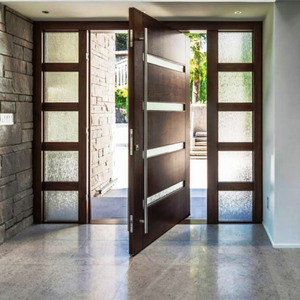
Architectural demand is moving away from traditional standard-height swing doors toward massive, heavy-duty offset pivot entry doors exceeding 3.5 meters in height and weights up to 500kg. Wholesale factories are increasingly integrating German-engineered hydraulic floor springs and heavy-duty 3D adjustable pivot hinges.
2. Smart IoT & Motorized Multi-Point Locking
Mechanical keys are rapidly being superseded by fully integrated biometric keyless access, facial recognition scanners, and smart home IoT relays built directly into the aluminum door stiles during factory fabrication. Multi-point automatic deadbolt locking systems (e.g., Siegenia or HOPPE) provide uncompromised anti-burglary protection.
3. Low-Carbon Aluminum & EPD Transparency
Environmental Product Declarations (EPDs) are becoming mandatory for Western commercial bids. Chinese manufacturers are adopting primary aluminum smelted with renewable hydro-power and integrating recycled aluminum content to significantly shrink embodied carbon footprints.
Product Engineering & Technological Innovation Trends
Advancements in glass science and manufacturing automation are redefining the operational standards of tempered glass entry systems:
Vacuum Insulated Glass (VIG) Integration
Replacing traditional gas-filled double glazing with thin-profile Vacuum Insulated Glass (VIG) enables slim entry door profiles to achieve thermal performance equal to a solid insulated wall (U-factors as low as 0.60 W/m²K or 0.10 Btu/h·ft²·°F) without structural weight penalties.
Electrochromic & Switchable Privacy Glass
Integrating Polymer Dispersed Liquid Crystal (PDLC) interlayers between laminated tempered glass sheets allows entry doors to switch from crystal-clear transparency to opaque privacy via smartphone app, wall control, or motion sensor in milliseconds.
Ceramic Digital Ceramic Frit & Low-E Coatings
Advanced 720-dpi digital glass printers fuse inorganic ceramic inks onto tempered glass surfaces during heat treatment. This provides permanent scratch-resistant geometric patterns, wood grain textures, and solar control fritting that will never peel or fade under UV exposure.
Factory Qualifications & Manufacturing Capabilities
Located in the heart of China's aluminum fabrication capital—Foshan, Guangdong—Foshan Aluvoy Entry Door Systems Co., Ltd. has established itself as an authoritative manufacturer and direct exporter of architectural aluminum windows and tempered glass entry door systems since 2005.
Our facility operates under rigorous ISO9001 quality management protocols, serving real estate developers, commercial builders, architects, and stocking distributors across North America, Australia, and Europe. Unlike trading intermediaries, every process—from high-precision CNC aluminum profile cutting, notch punching, and thermal break crimping to corner sealant injection, glazing assembly, and final structural performance testing—is executed strictly in-house.
Global Compliance & Verification Protocols
To eliminate overseas import risks and facilitate immediate site approvals, Aluvoy systems undergo third-party auditing and testing by internationally recognized testing bodies:
- Australian Market Compliance (AS2047 & AS2208): Certified through SAI Global, validating structural deflection (N6 rating), air infiltration, and water penetration resistance.
- North American NFRC Certification: Full thermal ratings for U-Factor, Solar Heat Gain Coefficient (SHGC), and Visible Transmittance (VT).
- Florida Product Approval (HVHZ Hurricane Impact): Verified impact resistance utilizing SentryGlas® (SGP) interlayers designed to withstand Category 5 wind loads and missile strikes (TAS 201/202/203).
Frequently Asked Questions for Wholesale Entry Door Procurement
Answers to crucial technical, logistical, and compliance questions raised by international procurement managers and structural engineers.
What mandatory certifications are required when importing tempered glass entry doors into Australia and North America?
For the Australian market, window and door assemblies must be certified to AS2047 (structural performance) and use glass compliant with AS/NZS 2208 safety standards. In North America, structural performance must meet AAMA/WDMA/CSA 101/I.S.2/A440 standards, thermal performance must carry NFRC labeling, and safety glass must hold SGCC (Safety Glazing Certification Council) / ANSI Z97.1 certification. Florida hurricane zones require Florida Product Approval numbers (NOA).
How does the factory prevent spontaneous tempered glass explosion during transit and site operation?
Spontaneous breakage is primarily caused by trace Nickel Sulfide (NiS) inclusions expanding inside tempered glass. Aluvoy enforces Heat Soak Testing (HST) per EN 14179 for heavy commercial tempered doors. Furthermore, all glass edges undergo high-precision CNC polished grinding to eliminate microscopic edge micro-cracks before thermal tempering.
What is the typical factory turnaround time for custom CAD shop drawings and batch production?
Upon receiving architectural drawings or opening schedules, our engineering department generates complete 2D/3D shop drawings within 3 to 5 business days for client approval. Once shop drawings are signed off, standard production lead time is 25 to 35 calendar days depending on surface finish (e.g., custom PVDF color matching or anodizing requires longer curing cycles).
How are oversized tempered glass doors packaged to guarantee zero sea freight damage?
All door units are protected with peelable protective film, wrapped in heavy-duty EPE foam corner guards, and enclosed in custom-fabricated fumigation-free fully enclosed plywood crates. Rubber shock-absorbing bumpers are positioned beneath glass edges inside the crates to withstand multi-axis container vibrations during ocean shipping.
Can Aluvoy manufacture custom pivot and entry doors to exact architectural drawings?
Yes. Every order is 100% customized. We fabricate systems according to your structural schedules, incorporating specified frame profile depths, custom sidelights, transoms, hardware prep cutouts, and specialized glazing makeups.
What surface treatment coatings are available for coastal high-salinity marine environments?
For coastal projects within 1km of ocean water, we specify Fluorocarbon PVDF (Polyvinylidene Fluoride) 3-coat/4-coat spraying (AAMA 2605 compliant) or marine-grade anodizing (minimum 25 microns thickness). This guarantees superior resistance against salt spray corrosion, chalking, and UV degradation for up to 20 years.
What warranty coverage is supplied with direct-factory wholesale orders?
Aluvoy backs all aluminum architectural entry door systems with a 10-Year Warranty covering frame structural integrity, powder coating adhesion, sealed glass unit seal failure (dust/moisture inside IGU), and mechanical hardware operation under normal service conditions.
Accelerate Your Project Procurement With Direct Factory Engineering
Send your project elevation schedules or architectural drawings to our senior engineering team for immediate review, shop drawing preparation, and wholesale factory pricing.
Contact Us