Featured Wholesale Thermal Break Aluminum Door Systems
Explore our factory-direct, high-performance entrance systems designed for export markets across North America, Australia, and Europe.
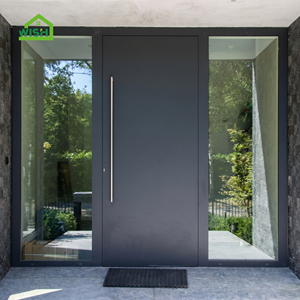
Modern Heavy-Duty Manual Pivot Entry Door
Engineered with thermal break aluminum frames, soundproof double glazing, and perimeter EPDM sealing for extreme exterior weather resistance.
Inquire Now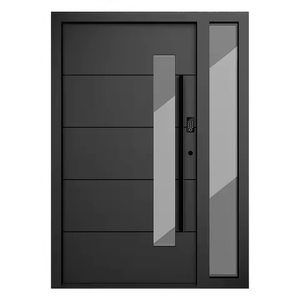
European Standard Aluminum Security Villa Entry Door
Features multi-point lock hardware, anti-pry thermal break profiles, and custom anodized finishes compliant with European residential standards.
Inquire Now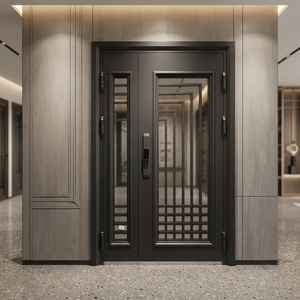
Luxury Clad Anti-Drill Security Entrance Door
Combines high-density aluminum alloy cladding, drill-proof lock cores, and a Polyamide PA66 thermal barrier strip for superior thermal protection.
Inquire Now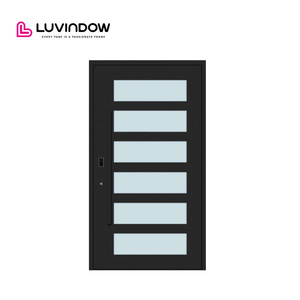
Large Opening Architectural Pivot Entry Door
Designed specifically for luxury North American residential communities, offering oversized glass spans with heavy-load bottom pivot hardware.
Inquire Now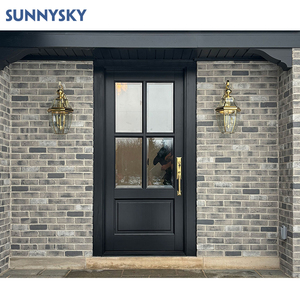
Modern American Series Front Pivot Entry Door
Sleek minimalist profiles paired with high-performance insulated glass units (IGU) delivering exceptional U-factors and solar heat gain control.
Inquire Now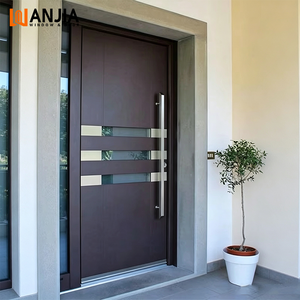
Smart Multi-Point Lock Aluminum Security Door
Integrated biometric and keyless smart access control system encased within structural thermal break extrusion profiles for ultra-modern homes.
Inquire Now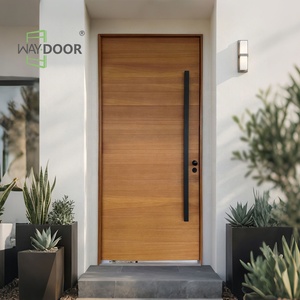
Custom Flush Oversized Solid Wood & Aluminum Pivot Door
Hybrid thermal break structure incorporating natural Oak/Mahogany wood cladding over reinforced aluminum cores for high-end villa facades.
Inquire Now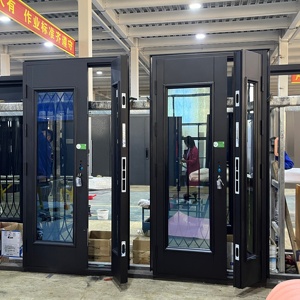
Matte Black Villa Aluminum Frame Front Entry Door
Architectural matte black fluorocarbon powder-coated aluminum door system, custom-fabricated to exact structural project drawings.
Inquire NowFactory Direct Manufacturing & Global Footprint
Foshan Aluvoy Entry Door Systems Co., Ltd. delivers verified structural integrity and certified thermal compliance worldwide.
Technical Architecture of Thermal Break Aluminum Systems
Understanding the Thermodynamic Mechanics Behind High-Performance Aluminum Exterior Doors
In modern architectural engineering, standard non-thermal aluminum frames act as thermal conductors, transferring heat during summer and losing indoor warmth during winter. As global building energy codes become increasingly rigorous, international procurement teams require standard-compliant thermal break aluminum doors that eliminate conductive energy loss without compromising structural integrity.
What Is a Thermal Break in Aluminum Door Systems?
A thermal break is a continuous non-metallic barrier inserted between the interior and exterior aluminum extrusions. Utilizing Polyamide PA66 reinforced with 25% fiberglass (PA66 GF25), this structural insulating strip interrupts thermal conduction. Because PA66 GF25 shares virtually identical thermal expansion coefficients with 6063-T5/T6 structural aluminum alloys, the bond remains structural sealed even under radical temperature differentials ranging from -30°C to +80°C.
Key Thermodynamics Metrics & Performance Standards
When sourcing thermal break aluminum doors from China wholesale suppliers, evaluating verified physical metrics ensures compliance with site specifications:
- Thermal Transmittance (U-Factor): Standard aluminum doors exhibit U-factors around 5.8 W/m²K. Aluvoy’s engineered thermal break door profiles, paired with low-emissivity double or triple insulating glass units (IGUs), achieve U-factors down to 1.2 – 1.6 W/m²K (0.21 – 0.28 BTU/h·ft²·°F), meeting stringent ENERGY STAR® and NFRC mandates.
- Structural Design Pressure (DP Rating): Exterior entrance pivot and hinged doors undergo severe wind load testing. Our heavy-duty systems achieve performance ratings up to DP70 (+70/-70 PSF), withstanding gale-force winds exceeding 200 mph.
- Acoustic Isolation (STC / OITC): Multi-cavity thermal break extrusions integrated with laminated double-glazed panels and dual-seal EPDM gaskets achieve Sound Transmission Class (STC) ratings up to STC 42, isolating indoor spaces from urban traffic noise.
- Air & Water Permeability: Compression weather stripping prevents air infiltration per ASTM E283 (< 0.1 cfm/ft²) and water penetration per ASTM E331 under severe pressure testing up to 700 Pa.
PA66 GF25 Insulation Strips
German-engineered polyamide structural strips preventing conductive thermal transfer while maintaining frame tensile strength.
Certified Security Hardware
Multi-point locking mechanisms from Sobinco, Hoppe, and Siegenia engineered for anti-burglary protection.
AAMA 2605 Surface Coatings
Fluorocarbon PVDF and architectural powder coatings providing 20+ years of color retention in harsh coastal environments.
System Comparison Matrix for Architectural Specifiers
Objective Performance Comparison: Thermal Break Aluminum vs. Alternative Door Frame Materials
| Performance Parameter | Aluvoy Thermal Break Aluminum | Standard Non-Thermal Aluminum | Solid Natural Timber | Unreinforced uPVC |
|---|---|---|---|---|
| Thermal Insulation (U-Value) | 1.2 – 1.6 W/m²K (Superior) | 5.2 – 6.0 W/m²K (Poor) | 1.5 – 1.9 W/m²K (Good) | 1.4 – 1.8 W/m²K (Moderate) |
| Structural Integrity & Max Size | Extreme (Panels up to 4.0m) | High (Panels up to 3.0m) | Moderate (Warp Risk) | Low (Sagging Risk) |
| Maintenance & Weatherability | Zero Maintenance / Corrosion Free | Zero Maintenance | High (Periodic Varnish/Sealing) | UV Yellowing & Embrittlement Risk |
| Hurricane Impact Compliance | Florida Product Approved / TAS 201-203 | Limited Structural DP | Requires Heavy Reinforcement | Unsuitable for High Velocity Impact |
| Fire Safety Rating | Non-Combustible (Class A) | Non-Combustible (Class A) | Combustible (Requires Treatment) | Melts & Emits Toxic Fumes |
| Lifespan Expectancy | 40+ Years | 30+ Years | 15 – 25 Years | 10 – 20 Years |
Global Procurement & Architectural Trends (2025–2030)
Market Intelligence and Technical Projections for Developers, Importers, and General Contractors
As the international construction sector navigates decarbonization mandates and changing consumer tastes, procurement specialists sourcing thermal break doors from China must align with four major industry shifts:
1. Net-Zero Carbon Mandates & Whole-Life Building Audits
Governments across North America (via IECC standards), Australia (via AS2047 and NatHERS requirements), and Europe are tightening energy budgets. Project tenders now require suppliers to disclose Environmental Product Declarations (EPDs). Aluvoy uses low-carbon recycled aluminum billets smelted via hydropower, lowering embodied carbon while producing profiles certified to North American NFRC and Australian SAI Global standards.
2. Architectural Trend toward Oversized Hydraulic Pivot Systems
Modern luxury residential designs favor grand entryways with clear openings exceeding 2.5 meters in width and 3.5 meters in height. Traditional butt hinges cannot support these heavy loads (often over 350 kg per panel). The solution lies in heavy-duty hydraulic bottom pivot assemblies concealed within thermal break sills. These systems allow effort-free manual operation while maintaining continuous perimeter EPDM compression seals when closed.
3. Coastal Hurricane Resilience & High-Velocity Wind-Borne Debris Protection
Coastal regions suffer increasingly severe weather events. Sourcing hurricane impact thermal break doors certified under Florida Product Approval (TAS 201 Large Missile Impact, TAS 202 Structural Pressure, TAS 203 Cyclic Loading) has expanded beyond Florida to Hawaii, the Caribbean, coastal Australia, and East Asia. These systems combine multi-layer laminated glass (utilizing DuPont SentryGlas® interlayers) with reinforced thermal extrusions to prevent envelope breach during Category 5 storms.
4. Smart Home & Biometric Hardware Integration
Commercial and luxury residential buyers demand keyless convenience without sacrificing security. Factory-fitted multi-point electronic locking systems—compatible with facial recognition, fingerprint access, RFID cards, and home automation protocols (Z-Wave, Zigbee, Control4)—are becoming standard requirements in B2B procurement schedules.
Enterprise Advantages & Manufacturing Rigor
Why Leading Global Developers Partner with Foshan Aluvoy Entry Door Systems Co., Ltd.
Full Shop Drawing Support
Our engineering team translates architectural plans into comprehensive CAD/BIM shop drawings for approval prior to production, eliminating job-site sizing errors.
In-House Manufacturing
Every process—cutting, CNC machining, thermal crimping, corner corner-gluing assembly, and QC testing—is executed in our 20,000 m² workshop.
Export Packaging & Freight
Products are protected in steel-reinforced, fully enclosed plywood crates with moisture barriers, ensuring zero transit damage across 10,000+ shipped containers.
10-Year Comprehensive Warranty
Backed by a 10-year factory structural warranty and dedicated remote installation assistance for general contractors globally.
Frequently Asked Questions for Global Procurement
Technical Clarifications for Architects, Developers, and Importers Sourcing Thermal Break Doors from China
What certifications do your thermal break aluminum doors carry for North America and Australia?
Our aluminum window and door systems are fully certified for key global export markets. For Australia, our products are certified under AS2047 (Windows and External Glazed Doors in Buildings) and tested per AS1288 glass selection standards via SAI Global. For North America, our door systems carry NFRC (National Fenestration Rating Council) certification for thermal performance metrics (U-Factor, SHGC, Visible Transmittance) and have secured Florida Product Approval (TAS 201/202/203) for high-velocity hurricane zones.
How do you ensure structural rigidity when manufacturing oversized entrance pivot doors?
Oversized thermal break doors utilize high-tensile 6063-T6 aluminum extrusions with reinforced wall thicknesses (ranging from 2.0mm to 3.0mm depending on profile height). Internal corner joints are hydraulically crimped with corner cleats and injected with structural two-component corner sealant. Additionally, we integrate heavy-duty floor pivots capable of supporting panel weights up to 500 kg while maintaining smooth, non-sagging swing operation over decades of daily use.
What is the engineering workflow for custom CAD drawings and project approvals?
Upon receiving your architectural plans or window schedules, our technical engineering team creates detailed 2D CAD shop drawings and 3D profile section submittals within 48 hours. These drawings detail frame dimensions, wall installation anchors, thermal break placement, glass build-up, threshold drain details, and hardware layouts. Factory production begins only after the client or project architect provides formal sign-off on the shop drawings.
How do PA66 GF25 thermal break strips perform under extreme climate variations?
Polyamide 66 reinforced with 25% glass fiber (PA66 GF25) is engineered specifically for architectural aluminum fenestration. It exhibits exceptional mechanical strength, heat deflection temperatures exceeding 240°C, and structural stability in sub-zero freezing environments down to -40°C. Because its coefficient of thermal expansion closely matches aluminum, it prevents shear stress failure or seal separation during rapid temperature swings.
What options are available for glass specifications and Low-E coatings?
We supply a broad range of insulated glass configurations customized to your climate zone: double-glazed (e.g., 6mm Low-E + 12Ar + 6mm Clear) or triple-glazed units, tempered safety glass, laminated hurricane impact glass (PVB or SGP interlayers), soundproofing acoustic glass, tinted solar control glass, and privacy smart-tint glass. Warm-edge spacers and 90%+ Argon gas fill come standard on our energy-efficient series.
What is your typical production lead time and freight packing methodology?
Standard custom fabrication lead time is 25 to 35 days upon shop drawing approval. For overseas shipping, door frames and sash assemblies are wrapped in protective foam, corner-guarded, and secured in fully enclosed fumigated plywood crates with internal steel strapping and moisture-desiccant packs. This eliminates scratches, frame warping, or glass breakage during sea container transit.
Ready to Source High-Performance Thermal Break Doors?
Submit your architectural drawings or opening schedules today. Our engineering team provides fast CAD submittals, factory-direct wholesale pricing, and full project technical support.
Inquire Now