Featured OEM/ODM Entry Door Systems
Factory-direct custom entrance solutions certified to AS2047, NFRC, and Florida Hurricane standards for international architectural projects.
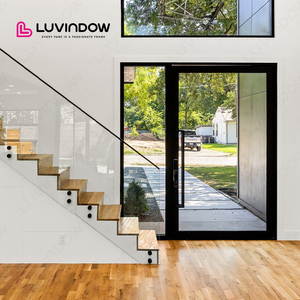
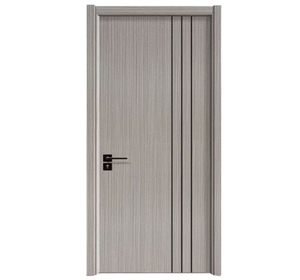
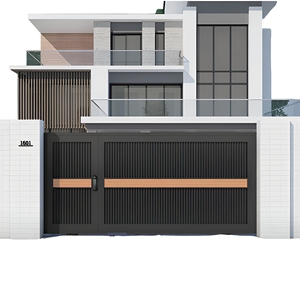

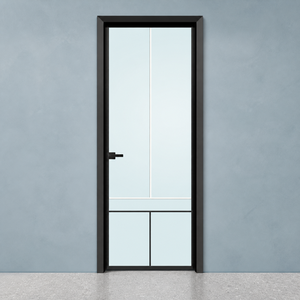
1. The Strategic Imperative of Energy-Efficient Architectural Entrance Systems
An Industry White-Paper on Fenestration Performance, Thermal Bridge Mitigation, and Decarbonization in Modern Construction.
In the contemporary global building sector, fenestration components no longer serve merely as aesthetic envelope elements or simple physical barriers. With commercial and residential buildings accounting for roughly 39% of global energy-related carbon emissions—where thermal losses through fenestration account for up to 40% of total HVAC heating and cooling loads—the entrance door system has become a primary focal point for energy conservation and building code compliance. Modern building standards, including North America's IECC 2024 / ASHRAE 90.1, Europe’s EPBD (Energy Performance of Buildings Directive), and Australia’s NCC 2022 Section J, mandate exceptionally stringent limits on total window-to-wall U-factors and Solar Heat Gain Coefficients (SHGC).
As a specialized OEM/ODM Energy Efficient Entry Door Supplier & Exporter, Foshan Aluvoy Entry Door Systems Co., Ltd. addresses this transition through deep engineering integration. By replacing legacy conductive aluminum profiles with multi-chambered polyamide thermal breaks (PA66 GF25), structural low-emissivity (Low-E) double/triple glazing units, and continuous EPDM compression weather-sealing, engineered entry doors act as dynamic thermal barriers. For global buyers, property developers, and procurement managers, partnering with an established OEM/ODM manufacturer guarantees that custom architectural entryways deliver measurable performance, reduced operational carbon footprints, and compliance with regional structural wind-load and impact requirements.
Information Gain Note: Thermal Bridge Mitigation in Entry Door Frameworks
Traditional metal entry doors without structural insulation act as direct thermal bridges, causing severe heat loss in winter, extreme solar heat gain in summer, and internal surface condensation that leads to structural degradation. Modern thermal break technology inserts a low-conductivity polyamide bar between inner and outer extruded aluminum profiles, reducing frame thermal conductivity by over 70%.
2. Technical Deep-Dive: Engineering Architecture of OEM/ODM Entry Systems
Deconstructing the material science, structural profiles, sealing integrity, and hardware mechanics of high-performance doors.
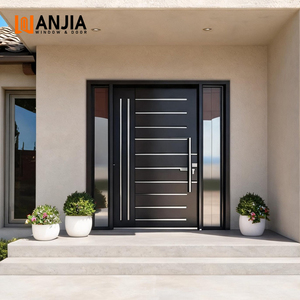
Achieving high energy efficiency in large-format entry doors—such as architectural pivot doors, lift-and-slide entry systems, and heavy-duty hinged French doors—requires precise structural design and advanced material selection. OEM/ODM customization allows global project specifiers to tailor each component to specific environmental exposures and building performance targets:
Polyamide PA66 GF25 Thermal Breaks
Utilizing 25% glass-fiber reinforced polyamide strips mechanically crimped into 6063-T6 aluminum extrusions to effectively eliminate thermal transfer while maintaining structural rigidity under high wind pressures.
Low-E Double & Triple Glazing Units
Fitted with magnetron-sputtered Low-E coatings, argon gas infill (90%+ concentration), and Technoform warm-edge spacers, delivering U-factors as low as 0.8 to 1.2 W/m²K for extreme climate zones.
Multi-Point Security & Perimeter Sealing
Integrated German-engineered multi-point locking gear paired with continuous dual/triple EPDM gaskets ensures air infiltration ratings below 0.10 cfm/ft² and superior water penetration resistance.
Furthermore, for coastal regions subject to severe weather events, structural integrity cannot be compromised for thermal efficiency. Advanced OEM engineering merges impact-resistant laminated glass (utilizing SGP—Kuraray SentryGlas interlayers) with reinforced thermal break profiles. This dual-capability ensures the entry system achieves Florida Product Approval and complies with TAS 201/202/203 and ASTM E1886/E1996 standards, resisting Category 5 hurricane wind loads and debris impacts while preserving internal energy efficiency.
3. Global B2B Procurement Trends in Fenestration (2025–2030)
Strategic Insights for Architects, Developers, Importers, and Supply Chain Executives.
1. Net-Zero Energy & Passive House Standards
Procurement is shifting rapidly toward components certified by the Passivhaus Institut and NFRC. Commercial tenders increasingly require documented Environmental Product Declarations (EPDs) and ultra-low U-values to qualify for green building ratings like LEED v4.4 and BREEAM.
2. Photovoltaic & Smart Building Integration
Building-Integrated Photovoltaics (BIPV) are expanding from roof solar panels into entry systems. Modern solar-powered sliding and pivot doors utilize micro-thin solar films embedded within sidelights to power motorized locks and automated operators independently.
3. Multi-Hazard Resilient Building Envelopes
Developers are seeking single-spec doors that provide combined hurricane resistance, elevated acoustic insulation (STC 40+), forced-entry deterrence, and thermal efficiency—reducing overall trade management costs during construction.
4. Supply Chain Digitization & BIM Workflow
Global importers now expect direct integration between architectural BIM (Building Information Modeling) CAD files and factory CNC machining lines, enabling custom fabrication without intermediate drafting errors.
4. B2B Technical Performance Matrix & Selection Guide
Comparative structural and thermal parameters across core entry door categories.
| Entry Door System Style | Thermal U-Factor (W/m²K) | SHGC Range | Air Infiltration (L/s·m²) | Structural Wind Load (DP) | Primary Application |
|---|---|---|---|---|---|
| Thermal Break Aluminum Pivot Door | 1.1 – 1.4 | 0.20 – 0.35 | ≤ 0.08 | DP 50 – DP 70 | Luxury Residential Main Entrance |
| Fiberglass French Entrance Door | 0.8 – 1.1 | 0.18 – 0.28 | ≤ 0.05 | DP 45 – DP 60 | Energy-Focused Residential / Villas |
| Commercial Low-E Sliding Entry | 1.3 – 1.6 | 0.22 – 0.40 | ≤ 0.12 | DP 55 – DP 80 | Retail, Offices, Storefronts |
| Hurricane Impact Lift & Slide | 1.2 – 1.5 | 0.19 – 0.30 | ≤ 0.04 | DP 70 – DP 100+ | Coastal High-Wind & Storm Zones |
| Smart Solar Automatic Sliding Door | 1.2 – 1.5 | 0.21 – 0.32 | ≤ 0.10 | DP 50 – DP 65 | Off-Grid Commercial & Modern Condos |
5. Enterprise Manufacturing Advantages: Why Partner with Foshan Aluvoy
Established in 2005, Foshan Aluvoy Entry Door Systems Co., Ltd. brings two decades of verified manufacturing and export mastery.
As one of China's pioneer architectural fenestration manufacturers to hold authentic AS2047 certification (SAI Global) for Australia, NFRC accreditation for North America, and official Florida Product Approvals for hurricane zones, Aluvoy operates a 20,000 m² state-of-the-art facility equipped with dual automated assembly and CNC machining lines. Over 150 skilled engineers and technicians maintain strict in-house quality control across every production stage.
Full In-House Manufacturing
Cutting, precision CNC machining, corner crimping, glazing unit assembly, gluing, and final quality assurance are 100% completed inside our workshop—never outsourced to third parties.
Strict Engineering Approval Workflow
Before raw materials are cut, our structural engineering team prepares comprehensive CAD shop drawings detailing opening dimensions, threshold profiles, and anchor locations for buyer sign-off.
Proven Heavy-Duty Export Packing
With over 10,000 export containers delivered to more than 30 countries, our steel-reinforced wood crating and protective wrapping prevent transit damage, ensuring ready-to-install units on site.
6. Frequently Asked Questions (FAQ) for OEM/ODM Buyers
Technical, commercial, and logistical clarifications for global importers, builders, and distributors.