High-Performance OEM/ODM Glass Entry Door Systems
Explore our export-ready, custom-manufactured exterior glass entry doors. Designed for extreme weather resistance, thermal efficiency, and high architectural aesthetic appeal.
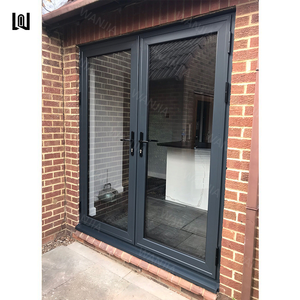
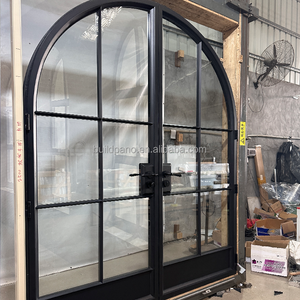
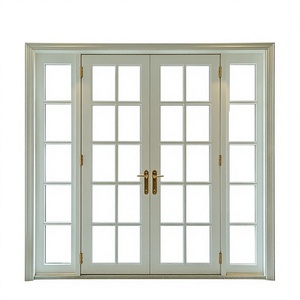
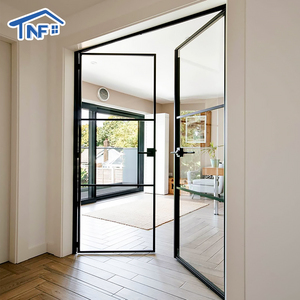
Architectural Blueprint: OEM/ODM Glass Entry Door Procurement & Engineering
A comprehensive technical analysis for commercial builders, facade consultants, and building product importers.
1. Metallurgical & Structural Frame Specifications
In high-end OEM/ODM production, the longevity of exterior glass entry doors depends fundamentally on alloy composition and extrusion precision. Standard entry doors often utilize commercial-grade aluminum that suffers from structural deflection under severe wind loads. Premium B2B manufacturing specifies 6063-T6 or 6061-T6 architectural aluminum alloy, providing a minimum tensile strength of 205 MPa.
To eliminate thermal bridging in extreme climates, custom doors feature advanced polyamide thermal barriers (PA66-GF25 with 25% glass fiber reinforcement). This structural separation reduces thermal conductivity dramatically, allowing entry door systems to achieve overall U-factors as low as 0.24 BTU/h·ft²·°F (1.36 W/m²K), satisfying stringent IECC (International Energy Conservation Code) requirements across North America and Europe.
2. Advanced Glazing Engineering & Impact Resilience
Glazing units selected for main entrance doors must balance light transmission, thermal insulation, and force protection. Standard double-pane configurations utilize 6mm + 12Ar + 6mm Low-E tempered glass. However, coastal developments and high-velocity hurricane zones (HVHZ) demand structural laminated glass matrices.
Engineered OEM/ODM solutions integrate SentryGlas® (SGP) ionoplast interlayers rather than conventional PVB. SGP interlayers offer 5 times the tear strength and 100 times the stiffness of standard PVB, maintaining structural integrity even if both glass panes are fractured by wind-borne debris. This engineering matrix ensures compliance with Florida Building Code TAS 201 (Large Missile Impact), TAS 202 (Uniform Structural Load), and TAS 203 (Cyclic Wind Pressure Loading).
Concealed Heavy-Duty Hardware
German-engineered multi-point locking systems and concealed 3D adjustable 316 stainless steel friction hinges engineered for door leaves up to 450 kg (990 lbs).
AAMA 2605 Surface Coatings
Fluoropolymer PVDF powder coatings engineered to withstand 3,000 hours of continuous salt spray testing without chalking or color degradation in severe coastal salt air.
Acoustic Attenuation (STC 42+)
Multi-cavity profile geometry combined with argon-filled asymmetrical laminated double glazing provides superior noise dampening for high-density urban environments.
Next-Generation Technologies Shaping Glass Entry Door Sourcing
As international energy codes tighten and modern architectural concepts evolve, OEM/ODM suppliers are shifting toward hyper-engineered smart entry doors.
1. Minimalist Ultra-Slim Sightlines & Invisible Frames
Architects are increasingly specifying zero-threshold, ultra-narrow aluminum frame profiles (sightlines under 18mm). Through structural silicone glazing (SSG) technology, the glass pane acts as a primary load-bearing element, allowing massive 4-meter high glass entry doors that maximize daylight while exceeding structural wind deflection limits.
2. Dynamic Smart Glass & PDLC Integration
Commercial entrance projects are rapidly integrating Polymer Dispersed Liquid Crystal (PDLC) switchable privacy glass. Switchable glass transitions from opaque to crystal clear in under 100 milliseconds via automated building management systems or biometric access readers, combining privacy with high-tech entrance design.
3. Vacuum Insulated Glass (VIG) Hybrid Matrix
Replacing traditional thick triple-glazing with Vacuum Insulated Glass (VIG) allows entry doors to achieve center-of-glass U-factors down to 0.60 W/m²K (0.10 BTU/h·ft²·°F) within a slim 8.3mm profile thickness. This weight reduction extends hinge lifespan while drastically cutting heating and cooling energy loads.
4. Decarbonized Low-Embodied Carbon Extrusions
Leading global developers now demand Environmental Product Declar Declarations (EPDs). OEM/ODM procurement is moving toward primary aluminum smelted using hydroelectric power, achieving carbon intensity footprints under 4.0 kg CO2e per kg of aluminum, aligning with LEED v4.1 and BREEAM sustainability metrics.
Global Certification Standards Comparison Matrix
Understanding regional testing benchmarks ensures your imported OEM/ODM glass entry doors pass local building inspections without costly delays.
| Market Standard | Certifying Body | Structural Load Test | Water Penetration | Air Leakage Rating |
|---|---|---|---|---|
| AS2047 / AS1288 (Australia) | SAI Global / NATA | Serviceability & Ultimate Limit (up to 4500 Pa) | Pass @ 600 Pa High-Pressure Spray | Under 0.10 L/s·m² (Air Conditioning Level) |
| NFRC / AAMA (North America) | National Fenestration Rating Council | DP Rating (DP50 - DP90 Structural) | Pass @ 15% of Structural DP rating | ≤ 0.10 cfm/ft² (@ 1.57 psf) |
| Florida HVHZ (USA Coastal) | Florida Department of Business | TAS 201 (9lb Lumber Impact @ 50 fps) | TAS 202 Water Resistance Standard | TAS 203 (9,000 Cyclic Pressure Cycles) |
| CE / EN 14351-1 (Europe) | TÜV / Notified Body | EN 12210 Wind Load Class C5 | EN 12208 Water Tightness Class E1050 | EN 12207 Air Permeability Class 4 |
Enterprise OEM/ODM Manufacturing Infrastructure
Foshan Aluvoy Entry Door Systems Co., Ltd. provides end-to-end manufacturing, custom design engineering, and export fulfillment for demanding global markets.
20,000+ m² Factory & 2 Automated Lines
Our facility houses high-precision CNC dual-head cutting machines, automatic corner-crimping units, and automated structural silicone dispensing machinery for seamless output.
In-House Testing & Quality Laboratory
Every custom profile batch undergoes rigorous in-house quality control, including helium leak testing for IGUs, film thickness measurement, and structural air/water chamber testing.
BIM & CAD Engineering Shop Drawings
Our experienced team of facade engineers translates your architectural blueprints into precise 2D/3D CAD shop drawings for sign-off prior to extrusion cutting, preventing on-site fit issues.
B2B Procurement & Technical FAQ
Direct technical and logistical answers for project managers, commercial importers, and architectural buyers.
What certifications do your custom OEM/ODM glass entry doors carry?
What is your lead time for custom die extrusion profiles and mass production?
Can you manufacture glass entry doors to custom architectural drawings?
How do you ensure zero glass breakage during long-distance oceanic container transport?
What thermal break technology is used for energy-efficient glass entrance doors?
What surface treatment warranties do you offer for coastal installations?
Do you provide remote installation guidance and technical site support?
What is your structural warranty policy for international buyers?
Ready to Request an OEM/ODM Project Quote?
Submit your architectural drawings, opening schedules, or engineering specs today. Our technical export team will provide a comprehensive factory-direct quote within 24 hours.
Contact Us