Top Engineered Luxury Entry & Exterior Door Systems
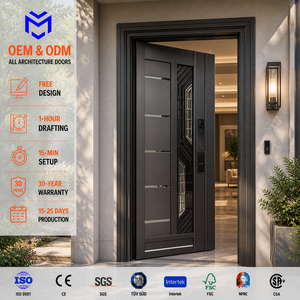
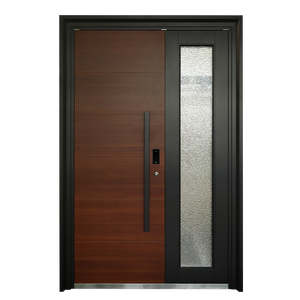
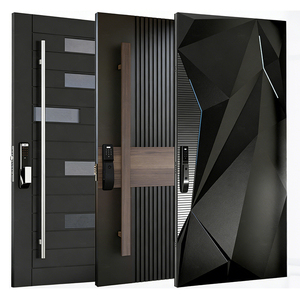
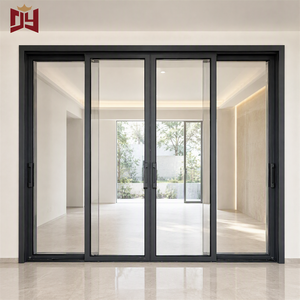
Explore our flagship high-performance structural entrance solutions built to custom CAD specifications, backed by AS2047, NFRC, and Florida Hurricane Impact approvals.
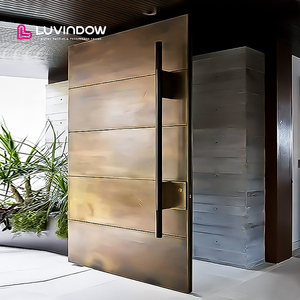
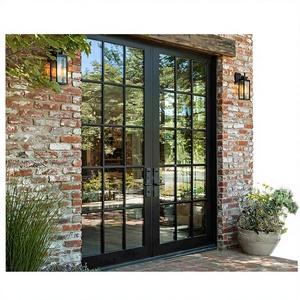
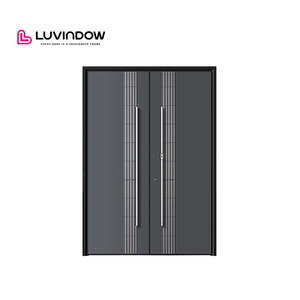
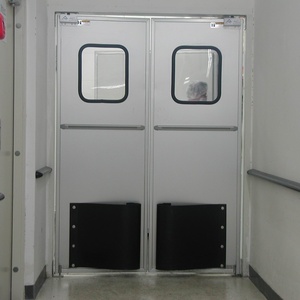
Precision Manufacturing & Global Footprint
Executive Summary: The Modern Luxury Entrance Architecture Shift
In contemporary architectural design and high-end commercial development, the entrance portal has evolved far beyond a basic point of building ingress. Today's modern luxury entry door represents the critical nexus of structural engineering, thermal envelope efficiency, advanced biometric security, and architectural branding. Global procurement metrics indicate a decisive transition away from legacy solid timber and unreinforced hollow metal doors toward high-gauge extrusion aluminum thermal break systems, 304/316 marine-grade stainless steel framing, and massive oversized structural pivot doors.
For project developers, general contractors, facade engineers, and luxury door distributors, selecting a top-tier supplier requires evaluating complex engineering parameters: structural finite element analysis (FEA), air/water tightness under severe wind loading, thermal transmittance (U-Factor < 0.8 W/m²K), solar heat gain coefficients (SHGC), forced entry ratings, and verified international building code certifications. This whitepaper provides a comprehensive evaluation framework for sourcing from the top 10 modern luxury entry door suppliers, highlighting market trends, engineering benchmarks, manufacturing methodologies, and procurement risk mitigation.
Procuring luxury entrance systems without rigorous verification of air/water pressure test protocols and certified structural anchor details often leads to expensive job-site retrofits. Partnering with a manufacturer capable of producing full shop drawings and supplying factory-certified AS2047, NFRC, and Florida Product Approvals eliminates code compliance friction during final municipal inspections.
Top 10 Modern Luxury Entry Door Suppliers Evaluation Framework
When shortlisting top global suppliers and manufacturers for commercial, multi-family, and luxury residential projects, procurement officers must move beyond superficial aesthetic appraisals. A robust audit requires examining five core engineering pillars:
1. Structural Integrity & Wind Load
Evaluating design pressure (DP) ratings, finite element stress modeling, and resistance to cyclonic hurricane-force wind loads up to Category 5 standards (TAS 201/202/203).
2. Thermal & Acoustic Performance
Integration of multi-chamber polyamide thermal break strips (PA66GF25), double/triple laminated Low-E glazing, and argon gas fills achieving strict NFRC & Title 24 compliance.
3. Biometric Smart Security
Seamless embedding of motorized multi-point lock bodies, hidden electrical conduits, 3D facial recognition, fingerprint access, and smart home automation protocol compatibility.
Furthermore, premier manufacturers maintain full in-house control over key fabrication processes—extrusion cutting, precision CNC notch machining, hydraulic corner crimping, structural silicone bonding, and multi-layer surface treatment. Outsourcing core manufacturing steps inevitably introduces quality variances that jeopardize site installation schedules and overall project longevity.
Future Sourcing & Procurement Trends for Luxury Entrance Doors (2026–2030)
The global market for high-end luxury entry doors is experiencing unprecedented technological acceleration. Procurement teams must anticipate the following macro-level industry shifts over the next decade:
1. Oversized Structural Pivot Systems with Heavy-Duty Hydraulic Hinges
Modern luxury residential architecture increasingly demands soaring verticality, with entrance openings routinely exceeding 3.5 to 6 meters in height and up to 2.5 meters in width. Traditional side-hung butt hinges are structurally inadequate for door leaves weighing upwards of 400 kg. Leading suppliers now utilize concealed floor-integrated hydraulic pivot mechanisms featuring adjustable closing speeds, 90-degree hold-open functions, and heavy structural load capacities capable of supporting up to 1,000 kg while maintaining fingertip operational effort.
2. Advanced Thermal Break Aluminum & Carbon-Neutral Extrusions
With global building energy codes (such as Europe's EPBD and North America's IECC) mandating near-zero energy building (NZEB) status, luxury entry door design must mitigate thermal bridging. Modern aluminum entry doors feature continuous techno-polymer thermal breaks, aerogel insulating inserts, and dual EPDM perimeter weather stripping. This allows metal entry doors to achieve thermal performance metrics previously reserved for thick timber construction without compromising structural rigidity or weather resistance.
3. Invisible Threshold & Flush ADA Transition Drainage Solutions
The barrier-free movement standard is no longer limited to institutional commercial spaces; luxury residential buyers demand seamless transitions between exterior hardscapes and interior foyers. Sourcing trends favor low-profile concealed drainage sills equipped with integrated water management tracks, stainless steel drop-down perimeter seals, and linear trench drains that prevent wind-driven rain penetration while complying with universal accessibility guidelines.
4. Marine-Grade Surface Finishes & Architectural Coatings
For coastal installations vulnerable to salt spray corrosion and intense UV radiation, standard liquid paint coatings fail rapidly. Sourcing specifications now enforce AkzoNobel or PPG Kynar 500 / Hylar 5000 PVDF fluoropolymer powder coatings, fluorocarbon spraying, or anodic oxidation finishes exceeding 25 microns. These chemical surface treatments ensure color retention, chalk resistance, and anti-corrosion performance over 20+ year exposure cycles.
Manufacturer Profile & Industrial Capabilities: Foshan Aluvoy Entry Door Systems Co., Ltd.
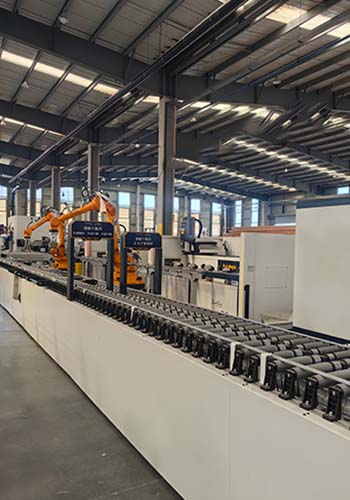
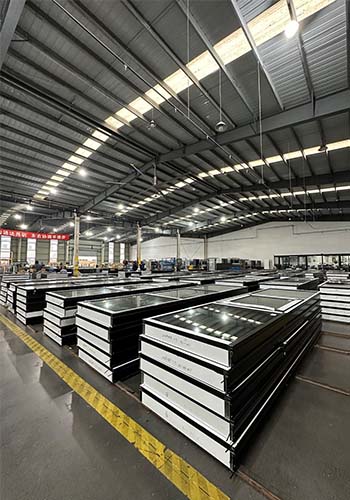
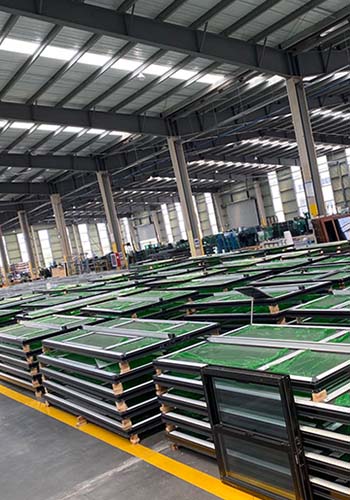
As a pioneer in the high-end aluminum window and door sector, Foshan Aluvoy Entry Door Systems Co., Ltd. (established in 2005) operates as a primary OEM/ODM partner for leading international architects, developers, and trade importers across the United States, Canada, Australia, and the UK. Operating from a modern 20,000+ square meter production facility equipped with dual automated assembly lines and over 150 skilled fabrication engineers, Aluvoy delivers precision-engineered entrance solutions engineered specifically for rigorous international building codes.
Core Competitive Advantages:
- Authentic SAI Global AS2047 Certification: Aluvoy was among the earliest Chinese manufacturers to secure certified compliance for the Australian building code, encompassing structural deflection, air infiltration, and water resistance testing.
- North American NFRC & Florida Hurricane Approval: Full thermal ratings (U-Factor, SHGC, VT) issued through NFRC alongside verified Florida Product Approvals for high-velocity hurricane zones (HVHZ) under large and small missile impact standards.
- Strict 6-Step In-House Quality Assurance: Every order undergoes rigid raw extrusion inspection, CNC double-head precision cutting, pneumatic corner crimping, structural sealant curing, full hardware cycle testing, and pre-shipment mock-up assembly.
- Comprehensive CAD Shop Drawing Support: Prior to production release, Aluvoy’s structural engineering team drafts complete 2D/3D shop drawings detailing opening cross-sections, anchor spacing, wall substrate interfaces, and perimeter waterproofing details.
- 10-Year Comprehensive Warranty: Full long-term backing covering aluminum extrusions, finish integrity, insulated glass seal durability, and functional hardware performance.
Comprehensive Technical FAQ for B2B Entry Door Sourcing
Direct answers to the critical technical and operational questions asked by procurement managers, general contractors, and trade importers:
What specific certifications do your luxury entry doors hold for global markets?
Our engineered window and entrance systems hold authentic AS2047 certification issued through SAI Global for the Australian market, NFRC certification for thermal performance in North America, and Florida Product Approval for high-velocity hurricane zones (HVHZ). Copies of test reports and certificate registry numbers are available upon request.
Can entry door systems be custom-fabricated to project CAD drawings and non-standard rough openings?
Yes. 100% of our production is engineered-to-order. Every unit is fabricated strictly according to the buyer's architectural drawings or opening schedules. Our engineering department generates comprehensive CAD shop drawings detailing frame depths, glass build-ups, anchor locations, and drainage details for client sign-off prior to raw material cutting.
How do you control thermal bridging and air infiltration in large aluminum entry door assemblies?
We utilize multi-chamber extruded aluminum profiles fitted with imported PA66GF25 (25% glass fiber reinforced polyamide) thermal barrier strips. Combined with continuous perimeter triple EPDM compression seals, magnetic drop-down bottom weather-stripping, and insulated glass units featuring warm-edge spacers, our entry systems easily achieve tight U-Factor and air infiltration performance standards.
What warranty coverage is provided for international shipments?
All Aluvoy aluminum frame extrusions, factory surface finishes, structural glass seals, and mechanical hardware components are backed by a standard 10-Year Warranty. We maintain dedicated technical support and replacement component inventory to resolve any rare field issues promptly.
How do you ensure fragile, heavy entry door assemblies arrive undamaged after ocean transit?
With over 10,000 containers exported globally since 2005, our export packing protocol utilizes fully enclosed IPPC-certified fumigated plywood crates, protective corner guards, shock-absorbing EVA foam wraps, and internal steel strapping. Doors are packed vertically to resist lateral sea-freight forces.
Do you provide remote installation support or detailed assembly instructions for overseas contractors?
Yes. Every shipment includes step-by-step assembly diagrams, exploded hardware installation guides, and perimeter sealing instructions. Additionally, our engineering staff provides real-time video technical consultation and remote support throughout the installation phase.
Ready to Elevate Your Architectural Entrance Specification?
Submit your architectural drawings or opening schedules to our engineering export team for a comprehensive technical evaluation, shop drawing proposal, and competitive factory-direct quote.
Get a Quote