Featured Insulated Entry Door Systems
Factory-direct exterior door solutions engineered with thermal breaks, acoustic insulation, structural safety, and storm impact resistance.
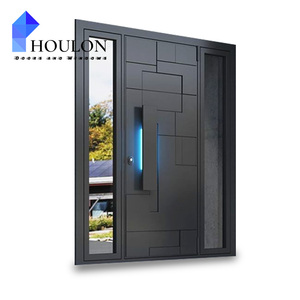
Italian Luxury Design Exterior Security Front Pivot Aluminum Door
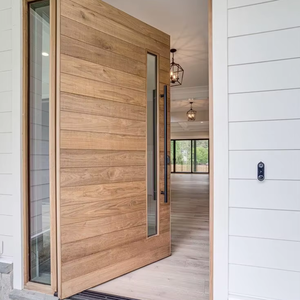
Customized Timber Frame Pivot Exterior Front Entry Door System
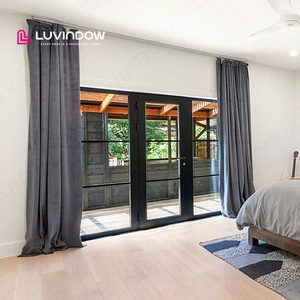
Modern Double Glass Wrought Aluminum Exterior Entrance Door
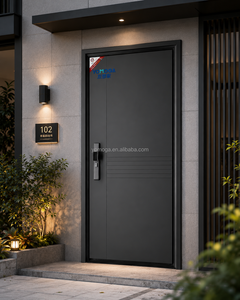
Waterproof & Soundproof Steel Pivot Main Entrance Door
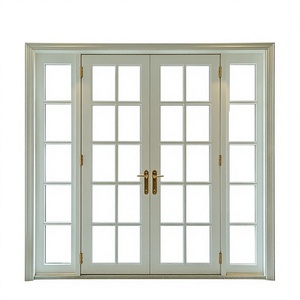
Double Glazed Aluminum Swing French Patio Entry Door
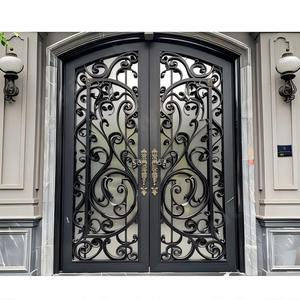
Anti-Theft Black Wrought Iron Arched Double Entry Door
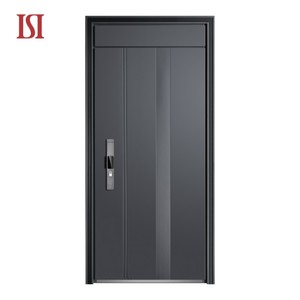
Fireproof & Soundproof Anti-Theft Exterior Steel Security Door
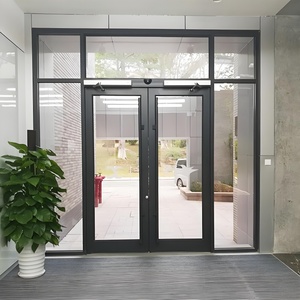
Heavy-Duty Commercial High-Visibility Glass Entrance Door
Architectural Whitepaper: Engineering High-Performance Insulated Entry Doors
A deep dive into thermal barrier physics, air infiltration dynamics, and structural fenestration integrity for international project procurement.
Modern building envelope design places rigorous demands on exterior entrance portals. Entry doors are no longer evaluated solely as static aesthetic elements; they are complex dynamic thermal barriers responsible for controlling thermal conduction, air leakage, moisture penetration, and acoustic transfer. Procurement managers, real estate developers, and architectural specifiers sourcing from global manufacturing hubs must navigate strict international building energy codes (such as IECC in the US and NCC in Australia) to avoid thermal bridging failures and energy losses.
Information Gain Focus: Understanding Thermal Conductivity ($\lambda$) vs. Overall Assembly U-Factor
Evaluating an insulated entry door strictly by its core insulation rating (R-value) is a fundamental engineering oversight. The structural frame, threshold thermal break, double-EPDM weatherstripping, and glass edge spacers jointly dictate the true Fenestration Assembly U-Factor. Premium factories utilize continuous Polyamide PA66 GF25 thermal breaks that isolate inner and outer aluminum skins, reducing frame conductivity by over 75% compared to monolithic metal profiles.
1. Thermal Break Physics and Composite Core Architectures
To qualify as a top-tier insulated entry door, a door leaf must integrate multi-layered thermal isolation strategies. In aluminum and steel-clad door systems, the primary conduction pathway occurs through the metallic outer skin. Premium Chinese door factories employ advanced extrusion manufacturing to insert fiberglass-reinforced polyamide strips (PA66 GF25) into the structural profile. This mechanical crimping breaks the metallic continuous path, creating a high-thermal-resistance barrier.
Furthermore, internal cavities are injected with high-density polyisocyanurate (PIR) or expanded polyurethane (PU) foam with closed-cell ratios exceeding 95%. This prevents internal convective air currents within the door core, yielding assembly U-factors as low as 0.18 BTU/h·ft²·°F ($U \le 1.02 \text{ W/m}^2\text{K}$).
2. Acoustic Attenuation & Atmospheric Resistance Metrics
For high-end residential villas, hotels, and urban multi-family developments, thermal insulation operates in tandem with sound dampening. Airborne noise transmission is attenuated through laminated glass assemblies and dense elastomeric perimeter seals:
- Sound Transmission Class (STC): Insulated entry doors with dual-laminated glass panes and acoustic foam infill achieve STC ratings between 38 dB and 45 dB, effectively insulating indoor occupants from urban traffic noise.
- EPDM & Silicone Gaskets: Continuous triple-compression EPDM rubber weatherstripping maintains elastic memory across extreme temperature ranges (-40°C to +120°C), eliminating air filtration at high wind velocities.
- Water & Air Tightness: Precision-machined door assemblies undergo hydrostatic water pressure testing up to 700 Pa without leakage, achieving top-tier wind-driven rain resistance.
Factory Superiority & OEM/ODM Manufacturing Mastery
Backed by over two decades of export experience, world-class testing accreditations, and complete in-house fabrication control.
Global Code Certifications
Certified under Australian AS2047 (SAI Global accredited), North American NFRC thermal standards, and Florida Building Code High-Velocity Hurricane Zone (HVHZ) impact regulations.
End-to-End In-House Control
Every production process—aluminum profile CNC cutting, corner crimping, polyurethane injection, glass unit assembly, and final QC inspection—is strictly contained within our owned facility.
Extensive Overseas Footprint
Trusted by over 1,000 project developers, contractors, and door importers across the United States, Canada, Australia, and 30+ countries worldwide since 2005.
Technical Specification Matrix by Door Substructure
Objective comparison of core entry door materials to assist project engineers and procurement buyers in making informed selections.
| Substructure System | Avg. U-Factor Range | STC Rating (dB) | Design Pressure (DP) | Weathering & Maintenance | Ideal Project Type |
|---|---|---|---|---|---|
| Thermal Break Aluminum | 0.18 – 0.26 | 38 – 44 dB | DP 60 – DP 90 | Ultra-Low Maintenance (Powder Coated) | Luxury Villas, Commercial Entrance, Coastal Units |
| Steel-Polyurethane Composite | 0.14 – 0.22 | 36 – 42 dB | DP 50 – DP 75 | Low Maintenance (Galvanized / Painted) | Apartments, Multi-Family Residential, Hotels |
| Aluminum Clad Timber Core | 0.16 – 0.24 | 40 – 45 dB | DP 45 – DP 65 | Moderate (Periodic Wood Treatment) | High-End Eco Residences, Custom Lodges |
| Insulated Wrought Iron | 0.24 – 0.32 | 35 – 40 dB | DP 70 – DP 100 | Low-Moderate (Anti-Rust Coating) | Grand Custom Entrances, High-Security Estates |
*Data derived from standardized factory laboratory testing under NFRC 100/200 and ASTM E283/E330/E331 protocols.
Future Trends in Global Insulated Entry Door Sourcing (2025–2030)
Forecasting technical evolutions, carbon accounting rules, smart access integration, and next-generation insulated fenestration.
1. Vacuum Insulated Glass (VIG) Integration
As international energy codes move toward zero-net-energy (ZNE) and Passivhaus standards, traditional double and triple glazed units are approaching their physical thickness limit. Vacuum Insulated Glass (VIG) creates an ultra-thin 0.2mm vacuum gap between glass sheets, dropping center-of-glass U-factors down to an astonishing 0.06 BTU/h·ft²·°F. Leading insulated entry door suppliers are integrating VIG into narrow-profile pivot and swing door designs, enabling sleek minimalist aesthetics without sacrificing thermal efficiency.
2. Smart Biometric & Motorized Access Integration
The global luxury door market is rapidly transitioning from mechanical locks to fully integrated electro-mechanical hardware. Modern export factories now pre-wire internal door cores during assembly to accommodate concealed multi-point electronic locksets, biometric fingerprint sensors, facial recognition cameras, and automated motor-driven pivot hinges compatible with smart building automation protocols.
3. Embodied Carbon & Circular Materials
Environmental Product Declarations (EPDs) are quickly becoming mandatory for commercial procurement in North America and Western Europe. Importers are evaluating factories based on their use of recycled 6063 aluminum alloys, low-VOC powder coatings (AAMA 2605 standard), and carbon-neutral manufacturing practices. Chinese suppliers investing in solar-powered workshops and sustainable material supply chains gain a distinct competitive advantage in global tenders.
4. Multi-Hazard Resilience (Impact + Thermal + Fire)
Extreme weather phenomena have fused thermal insulation requirements with hurricane and fire protection. Next-generation insulated entry doors are engineered with SentryGlas® (SGP) laminated interlayers, fire-retardant intumescent perimeter seals, and heavy-gauge reinforced subframes capable of withstanding Category 5 hurricane wind forces (Large Missile Impact Level D) while maintaining tight thermal boundaries.
Technical Sourcing & Supplier Audit Guide for B2B Importers
A systematic framework for evaluating overseas entry door factories, controlling quality risks, and verifying engineering credentials.
Verify Genuine Test Certificates
Require suppliers to provide accredited laboratory test reports (e.g., SAI Global for AS2047, NFRC for North America, Florida DBPR approval numbers). Ensure test specimens match the requested door profile dimensions.
Audit CAD & Shop Drawing Workflow
Professional OEM factories issue detailed CAD shop drawings outlining perimeter tolerances, glass thickness, thermal break placement, and anchoring schedules for sign-off prior to raw material cutting.
Inspect Export Packaging Quality
Long-distance sea freight introduces vibration, humidity, and handling hazards. Ensure the supplier utilizes fully enclosed, fumigated plywood crates with protective foam corner guards and blue protective film.
Frequently Asked Procurement Questions (FAQ)
Direct technical answers to common questions asked by door importers, general contractors, and project developers.
What thermal insulation performance (U-Factor) should I specify for North American and Australian projects?
For cold climate zones in North America (IECC Climate Zones 5 through 8), specifiers should target an overall assembly U-Factor of 0.20 BTU/h·ft²·°F ($U \le 1.14 \text{ W/m}^2\text{K}$) or lower. For temperate coastal regions in Australia (Climate Zones 2 through 5), an SHGC (Solar Heat Gain Coefficient) below 0.25 paired with a U-Factor under $2.0 \text{ W/m}^2\text{K}$ (conforming to AS2047 and NatHERS guidelines) is ideal to prevent summer solar overheating and winter heat loss.
How does a thermal break aluminum entry door differ from standard aluminum doors?
Standard aluminum doors use continuous uninsulated extruded alloy profiles, which act as thermal conductors, rapidly transferring heat or cold into the building and causing interior surface condensation. A thermal break aluminum door features a non-conductive structural insulation strip (typically fiberglass-reinforced polyamide PA66 GF25) mechanically locked between the interior and exterior aluminum extrusions, effectively stopping thermal bridge transfer.
What international certifications do Foshan Aluvoy entry doors hold?
Foshan Aluvoy Entry Door Systems Co., Ltd. holds authentic AS2047 certification issued through SAI Global for Australia, NFRC thermal rating certification for the United States and Canada, and Florida Product Approval (TAS 201/202/203) for hurricane impact resistance in high-velocity coastal storm zones.
Can your factory produce custom oversized pivot doors according to architectural CAD drawings?
Yes. Every order is manufactured strictly to your project’s custom dimensions, architectural drawings, and performance schedules. Our engineering department prepares comprehensive shop drawings for client review and structural sign-off before raw material cutting and assembly begin.
How are large insulated entry doors tested for wind pressure and hurricane impact resistance?
Impact-rated doors undergo rigorous laboratory testing involving cyclic air pressure differential loading (ASTM E1996) and large missile impact testing (ASTM E1886 / TAS 201). A 9-pound 2x4 timber beam is fired from an air cannon at 50 feet per second directly against the door glass and frame assemblies. The unit must remain structural intact without breach to earn Florida HVHV approval.
What is the typical manufacturing lead time and minimum order quantity (MOQ)?
Our standard factory production lead time is 25 to 35 business days following shop drawing approval and deposit receipt. We support both project-based container orders and custom sample orders for qualified commercial buyers and real estate developers.
How does the factory ensure zero glass breakage or finish damage during ocean transportation?
With over 10,000 export containers shipped globally since 2005, our factory utilizes an engineered export crating protocol. Door panels are wrapped in scratch-resistant protective film, fitted with rubber corner guards, and secured inside fully enclosed, fumigated solid plywood crates. Desiccant packs are inserted to absorb moisture during long sea voyages.
What warranty coverage is provided on insulated entry door systems?
We provide a comprehensive 10-year factory warranty covering structural aluminum extrusion integrity, surface powder coating performance against peeling or severe fading, insulated glass seal integrity against internal condensation, and mechanical door hardware functionality.
Ready to Source High-Performance Insulated Entry Doors?
Send your project elevation drawings, opening schedules, or engineering specifications to our export engineering team for a fast factory-direct quote and structural analysis.