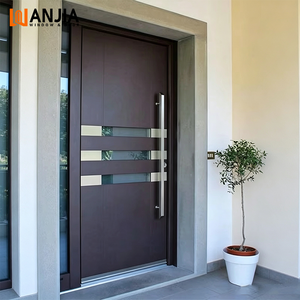
WANJIA Smart Multi Lock Entrance Doors Aluminum Exterior Security
Mechanism: 5-Point Electronic Smart Lock
Material: T6 High-Grade Aluminum Profile
Rating: RC3 Burglar Resistance
Explore eight engineered door configurations certified for high-end residential mansions, luxury villas, and commercial real estate projects worldwide.
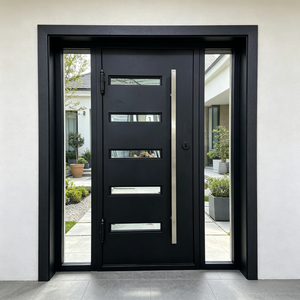
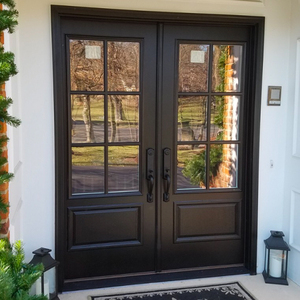
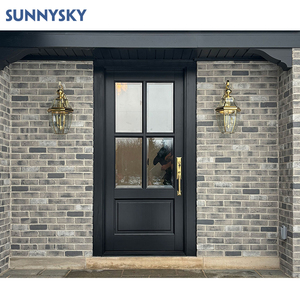
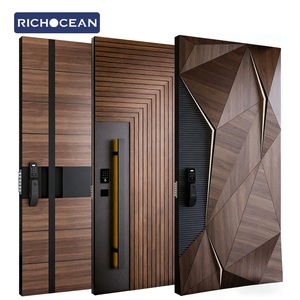
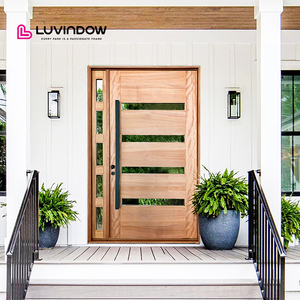
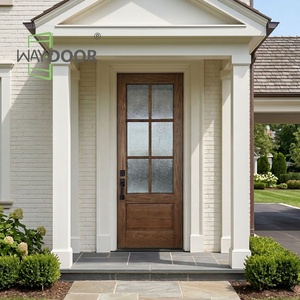
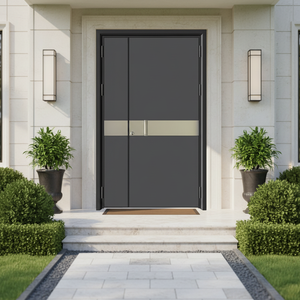
Selecting an original equipment manufacturer (OEM) for modern front entry doors requires rigorous structural, thermal, and security auditing. Below is the technical matrix utilized by global architectural firms and commercial builders.
Top trusted manufacturers engineer profiles using 6063-T6 or 6060-T6 architectural aluminum alloys. Structural integrity hinges on wind pressure tolerance (Design Pressure ratings up to DP ±65 psf) and resistance to deflection under heavy gust velocity (compliant with AS2047 and ASTM E330 testing criteria).
A continuous polyamide (PA66 GF25) thermal break strip is non-negotiable for energy-efficient facades. Modern front entry door systems must achieve overall U-factors below 0.28 BTU/h·ft²·°F (U-value ≤ 1.6 W/m²K) and maintain air leakage rates below 0.1 cfm/ft² per NFRC 100/200 benchmarks.
Precision security engineering mandates multi-point locking hardware (top, center, bottom, and anti-lift hooks) constructed from SUS304 stainless steel. Certified door slabs comply with European RC2/RC3 burglary resistance standards and integrate smart biometric access units.
| Certification / Standard | Geographic Focus | Key Tested Parameters | Min. Pass Requirement for Front Entry Doors |
|---|---|---|---|
| AS2047 (SAI Global) | Australia / New Zealand | Deflection, Air Infiltration, Water Penetration, Ultimate Strength | Structural Pressure: 1500 Pa; Water Resistance: 300 Pa; Air Infiltration: ≤ 1.0 L/s·m² |
| NFRC 100/200/400 | North America (USA/Canada) | U-Factor, Solar Heat Gain Coefficient (SHGC), Visible Transmittance (VT) | U-Factor ≤ 0.26 BTU/h·ft²·°F; SHGC ≤ 0.22; Air Leakage ≤ 0.3 cfm/ft² |
| Florida Product Approval (TAS 201/202/203) | High-Velocity Hurricane Zones (HVHZ) | Large Missile Impact (9-lb 2x4 at 50 ft/s), Cyclic Pressure Loading | Pass 9,000 positive/negative pressure cycles; Zero structural glass dislodgement |
| EN 14351-1 / CE Mark | European Union / Global | Acoustic Isolation (Rw), Burglar Resistance (RC), Thermal Transmittance (Ud) | Acoustic: Rw ≥ 38 dB; Burglar Rating: RC2/RC3; Thermal: Ud ≤ 1.4 W/m²K |
Real-world metrics reflecting twenty years of continuous technological refinement and global B2B delivery reliability.
Architectural shifts and climate regulations are reshaping entry door specifications. Forward-thinking procurement managers are prioritizing these structural trends.
Modern residential architecture is moving away from traditional single-hinged entry slabs toward grand-format pivot doors reaching heights of up to 4 meters and widths of 2.4 meters. Procurement demands now mandate heavy-duty floor-concealed hydraulic pivot hinges with adjustable dampening, self-closing mechanisms, and load capacities exceeding 500 kg without frame sagging over time.
The modern front entry door is no longer a passive barrier but an active IoT node. Buyers increasingly specify factory-prewired frame channels designed for 3D facial recognition cameras, hidden capacitive fingerprint scanners, and motor-driven multi-point locks compatible with modern smart home automation systems (Zigbee, Z-Wave, Matter) operating under dual power backups.
Environmental regulations across North America and Europe are driving strict requirements for verified Environmental Product Declarations (EPDs). Leading door manufacturers utilize low-carbon primary aluminum billets smelted using renewable hydro-energy, paired with post-consumer recycled alloys to minimize embodied carbon while maintaining structural yield strengths above 240 MPa.
To counter rising jobsite labor costs overseas, developers demand fully pre-assembled, unitized frame-and-door packages. Trusted manufacturers deliver pre-hung units complete with factory-installed sub-frames, threshold drainage profiles, pre-tested weather gaskets, and shop drawings signed off by certified structural engineers prior to ocean shipment.
From solid cast aluminum slabs to hybrid wood-aluminum composites, explore the material breakthroughs defining high-end exterior entrances.
Cast aluminum doors feature solid 8mm–12mm monolithic alloy panels cast under extreme pressure, providing unparalleled structural resistance against physical impact and zero risk of surface denting. Extruded thermal-break aluminum profiles offer superior energy efficiency with PA66 nylon insulating chambers designed to stop heat conduction in extreme hot or freezing climates.
Surface treatment durability dictates long-term brand reputation. Leading manufacturers utilize Qualicoat Class 2 or Class 3 fluorocarbon (PVDF) electrostatic powder coatings engineered to withstand over 10,000 hours of neutral salt spray testing (ASTM B117) without chalking, fading, or peeling—essential for coastal, high-salinity marine environments.
Advanced interior door cores incorporate high-density acoustic insulation wool, ceramic fiber fireproofing liners, and steel armor plates. Paired with triple-glazed laminated glass incorporating acoustic PVB or SGP (SentryGlas) interlayers, these systems achieve sound attenuation up to STC 42 dB and bulletproof ratings up to UL752 Level 3.
Founded in 2005 in Foshan, Guangdong, Foshan Aluvoy Entry Door Systems Co., Ltd. has grown into a premier OEM/ODM manufacturer specializing in high-performance aluminum windows, grand entry doors, curtain walls, and hurricane impact fenestration systems.
Operating a state-of-the-art 20,000+ square meter factory staffed by over 150 skilled engineers and technicians, Aluvoy operates two dedicated automated production lines. We were among the pioneer Chinese manufacturers to achieve authentic AS2047 certification issued through SAI Global for Australia, along with complete North American NFRC certifications and Florida Hurricane Product Approvals.
Addressing key technical, logistical, and compliance inquiries raised by developers, architects, and importers.
A trusted manufacturer supplying global markets must hold region-specific independent certifications. For Australia and Oceania, verified AS2047 certification issued via SAI Global is required, testing deflection (span/250), air infiltration (≤ 1.0 L/s·m²), and water penetration resistance (typically 300Pa to 450Pa). For North America, products should hold NFRC thermal certification (U-factor and SHGC) and, for hurricane-prone regions like Florida or the Caribbean, Florida Product Approval (TAS 201/202/203) validating large-missile impact resistance and 9,000 cyclic pressure loadings.
Solid wood doors (teak, oak, mahogany) offer natural organic aesthetic appeal but are susceptible to warping, twisting, splitting, and swelling when exposed to shifting ambient humidity and UV radiation. In contrast, thermally broken aluminum pivot doors utilize high-grade T6 aluminum profiles that maintain absolute dimensional stability regardless of weather extreme. When insulated with internal PA66 nylon thermal breaks and high-density polyisocyanurate cores, aluminum systems equal or exceed solid wood’s U-factors while eliminating maintenance requirements such as periodic re-sanding and varnishing.
Upon receiving architectural drawings or opening schedules, our engineering team prepares comprehensive AutoCad shop drawings within 3 to 5 business days, outlining cross-sectional profiles, glass build-ups, anchor point spacing, and threshold details. Once drawings are approved and deposit paid, raw material extrusion and CNC fabrication require approximately 25 to 35 days depending on profile finish (e.g., standard anodizing vs custom PVDF color matching). Pre-shipment trial assembly and container loading add 3 days, bringing total factory lead time to approximately 30–40 days.
Smart access integration is conducted during factory CNC machining rather than retrofit on site. Wiring channels are precision-drilled inside the thermal-break aluminum profile chambers, routing power cables through flexible stainless steel door loops directly into hidden frame conduits. Lock cases utilize multi-point motorized steel latches rated for over 200,000 continuous cycles. Backup mechanical keys and hidden USB-C emergency power terminals are integrated into the bottom handle rosette to guarantee entry during power outages.
Foshan Aluvoy employs a multi-tier export packaging system honed across 10,000+ shipped containers. First, all powder-coated surfaces are covered with protective PE film. Door slabs and frames are individually wrapped in thick shock-absorbing EPE foam, followed by heavy-duty corrugated board corner guards. Units are then secured inside fully enclosed, fumigated IPPC-certified wooden crates or steel-reinforced A-frame racks. Desiccant packs are inserted to absorb moisture in humidity-changing maritime climates.
Yes. By engineering profile wall thicknesses up to 3.0mm, employing heavy-duty corner key cleats with injected two-component structural epoxy, and installing laminated impact glass (such as 6mm Toughened + 1.52mm SGP / PVB + 6mm Toughened), door systems can pass both AS2047 high-pressure water/wind tests and Florida HVHZ large-missile impact criteria. These hybrid-certified systems allow multi-regional developers to standardize door specifications across diverse global projects.
For installations within 1,000 meters of salt water, standard architectural powder coating is insufficient. We specify Qualicoat Class 2 or Class 3 PVDF (polyvinylidene fluoride) fluorocarbon coatings or hard-anodized oxide finishes (minimum 25-micron depth). PVDF coatings utilize 70% Kynar 500 resin, guaranteeing resistance to salt spray corrosion, severe ultraviolet degradation, and chemical atmospheric pollutants for 15 to 25 years without color shifting.
Eliminating third-party distributors and regional supply middlemen reduces total procurement costs by 30% to 45%. Working direct with Foshan Aluvoy grants architects and procurement teams complete customization control over frame profiles, glass specifications, surface finishes, and hardware brands (German Hopo, Siegenia, GU, or domestic high-precision options) while retaining single-origin warranty accountability and direct engineering support.
Send your project architectural drawings to our engineering team for instant technical evaluation and factory-direct pricing.