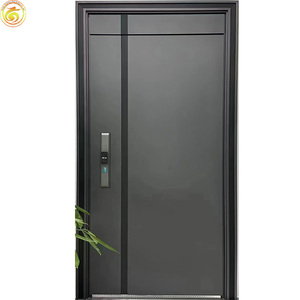
Architectural Product Line
High-Performance Modern Glass Entrance Door Catalogue
Explore our export-grade front entry doors engineered with structural thermal break aluminum, custom cast metals, acoustic laminated safety glass, and advanced multi-point security hardware.
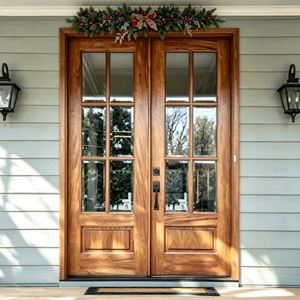
Direct Factory Modern Hinged Aluminum Solid Wood Doors Soundproof Triple Tempered Glass Custom Home Front Casement Door
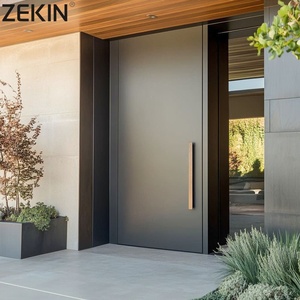
ZEKIN Outdoor Back Painted Glass Anti-theft Exterior Security Aluminum Cast Pivot Door Sound Insulation Front Entry Main Doors
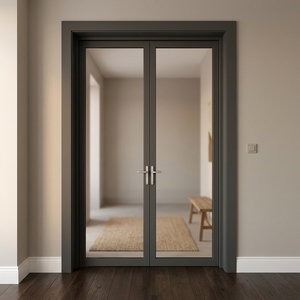
Luxury Custom Aluminum Double Door with Decorative Grid Glass for High End Residential Villa Main Entrance Design
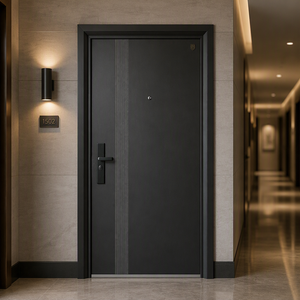
Modern Style Steel Entrance Door Finished Anti-theft Security Door Commercial Apartment Entry Side Opening Exterior Fire Garden
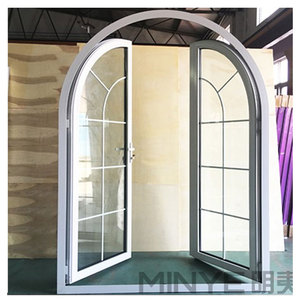
Popular Design Rustic Style Arch Top Doors Aluminum Windproof Casement Door
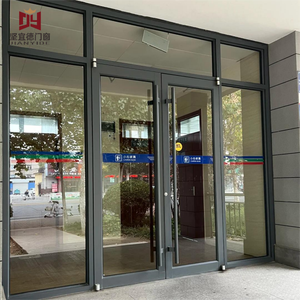
Heavy Duty Commercial Aluminum Entrance Door | Windproof Double Glazed Shopfront Door
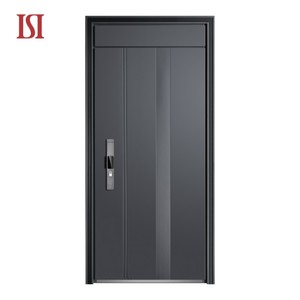
High Quality Security Entry Door Anti-theft Fireproof Soundproof Water Resistant Steel Exterior Door
Engineering White Paper
Structural Engineering & Architectural Specification Analysis
A comprehensive technical evaluation of frame metallurgy, thermal break mechanics, glazing stack configurations, and structural design pressures for modern glass front door sourcing.
In modern architectural design, the front entry door has evolved from a simple physical barrier into a complex, high-performance facade component. Architects, facade consultants, and general contractors operating in demanding international markets such as North America, Australia, and the UK require entry door assemblies that combine low thermal transmittance (U-factor), high acoustic attenuation, extreme forced-entry resistance, and structural integrity against severe wind loads.
1. Profile Metallurgy & Thermal Break Engineering
The structural backbone of high-end modern glass front doors relies on primary 6063-T6 architectural grade aluminum alloys or high-tensile 304/316 stainless steel profiles. To combat high energy losses inherent in metallic framing, custom entrance systems utilize Polyamide 66 with 25% glass fiber reinforcement (PA66GF25) thermal break strips. This mechanical barrier prevents thermal bridging between the exterior envelope and internal spaces, effectively eliminating condensation while drastically reducing HVAC operational loads.
Technical Note: Foshan Aluvoy's proprietary aluminum entry door profiles integrate continuous dual-chamber PA66GF25 thermal struts, yielding frame thermal conductivity values down to Uf ≤ 1.8 W/m²K under NFRC and AS2047 test protocols.
2. Glazing Technology & Security Interlayer Stacks
Modern glass entry doors require specialized safety glazing. Standard configurations feature double-pane or triple-pane insulated glass units (IGUs) incorporating Low-Emissivity (Low-E) coatings, warm-edge spacers, and 90%+ pure Argon gas fills. For high-security villa applications and hurricane-prone coastal regions, laminated interlayers utilizing DuPont SentryGlas® (SGP) or high-flexibility Polyvinyl Butyral (PVB) are specified. SGP interlayers offer five times the tear strength and 100 times the rigidity of standard PVB, ensuring that even under severe impact or attempted break-in, the glass pane remains structurally intact within the frame pocket.
| System Architecture | Primary Material | Thermal Transmittance (U-Factor) | Acoustic Rating (STC) | Max Design Pressure (DP) | Locking System Standard |
|---|---|---|---|---|---|
| Heavy-Duty Pivot Glass Entry | Aluminum 6063-T6 / Cast Metal | 0.26 - 0.32 BTU/h·ft²·°F | 38 - 42 dB | DP70 (HVHZ Approved) | Motorized 5-Point German Locking |
| Thermally Broken Hinged Casement | PA66 Thermal Break Aluminum | 0.22 - 0.28 BTU/h·ft²·°F | 40 - 45 dB | DP80 (TAS 201/202/203) | Mechanical Multi-Point Hook Latch |
| Stainless Steel Villa Armor Door | SUS304 / Galvanized Steel Core | 0.30 - 0.35 BTU/h·ft²·°F | 42 - 48 dB | DP90 High Impact | Anti-Drill 12-Bolt Armor Lockset |
| Hybrid Alu-Clad Timber Entrance | Solid Oak / Teak + Extruded Alu | 0.20 - 0.25 BTU/h·ft²·°F | 42 - 46 dB | DP65 Standard Commercial | Concealed European Mortise Lock |
Strategic Sourcing Insights
Future Procurement Trends in Modern Glass Entry Doors (2025–2030)
Key technological, regulatory, and aesthetic shifts driving international architectural specifications and wholesale door procurement.
Oversized Micro-Framed Pivot Systems
Architects are increasingly specifying floor-to-ceiling glass pivot doors exceeding 3.5 meters in height and 2.0 meters in width. The demand shifts toward ultra-slim sightlines (< 25mm profile width) backed by concealed hydraulic floor pivots capable of carrying panel weights up to 500kg seamlessly.
Zero-Energy & Net-Zero Envelope Compliance
Global building codes (e.g., California Title 24, IECC 2024, Australian NCC) mandate strict overall U-factors below 1.4 W/m²K for residential fenestration. Sourcing trends prioritize entry systems with integrated aerogel insulation, warm-edge composite spacers, and triple-pane glass stacks.
Biometric & Smart Motorized Integration
Standard mechanical key cylinders are giving way to integrated smart access solutions. Premium door manufacturers are factory-embedding concealed 3D facial recognition scanners, fingerprint sensors, RFID keypads, and motorized multi-point solenoid locks directly into the aluminum frame stile.
Extreme Weather & Impact Resilience
With increasing climate volatility, importers in coastal belts require Florida High-Velocity Hurricane Zone (HVHZ) certification. Laminated glass doors must pass missile impact testing (ASTM E1996) and 9,000 cycles of positive/negative wind pressure loading without structural seal breakdown.
Manufacturer Authority
Why International Buyers Trust Foshan Aluvoy Entry Door Systems
Two decades of uncompromised manufacturing excellence, rigorous certified testing, and direct factory export capability.
Full In-House Automated Production
From 5-axis CNC aluminum profile milling, precision corner crimping, and automated structural silicone glazing to final assembly—every process takes place within Foshan Aluvoy’s 20,000m² facility. Zero outsourcing guarantees strict dimensional tolerances under ±0.5mm.
Third-Party Global Certifications
Our doors hold authentic AS2047 certification issued through SAI Global for Australia, NFRC energy performance ratings for North America, and Florida Product Approval for hurricane impact resistance. Full test reports are provided for fast local council sign-offs.
Bespoke Shop Drawings & Engineering
Our dedicated engineering team translates architectural CAD/BIM drawings into precise 2D/3D fabrication shop drawings. We verify opening elevation details, structural anchor load paths, and substrate connection flashing before cutting a single profile.
Export Protective Steel Crate Packaging
Shipping glass doors across oceans requires heavy-duty packing protocols. Every Aluvoy door panel is wrapped in protective PE film, corner-protected with high-density EVA foam, and fully enclosed in custom fumigated plywood crates or rigid steel transport racks.
Rigorous Factory QC Testing
Before packing, representative samples undergo air permeability (ASTM E283), water penetration resistance (ASTM E331), and structural wind pressure load (ASTM E330) testing in our internal test chamber to guarantee zero field failures.
Global After-Sales & Site Technical Support
We provide step-by-step video assembly guides, detailed installation hardware lists, and direct remote technical support for site installers. Replacement parts and glass panels are backed by our express global warranty shipping protocol.
Technical Procurement Knowledgebase
Frequently Asked Questions for Modern Glass Front Door Sourcing
Authoritative answers addressing structural compliance, engineering specifications, custom manufacturing, and global shipping.
What specific certifications do Foshan Aluvoy modern glass front doors hold for international import?
Foshan Aluvoy entry door systems are fully certified for key international markets. For the Australian and New Zealand markets, our doors carry authentic AS2047 structural accreditation issued through SAI Global, along with AS1288 glass compliance. For North America, our products possess NFRC thermal certification (U-factor and SHGC verification) and hold valid Florida Product Approval (FL#) for High-Velocity Hurricane Zones (HVHZ). Copies of test reports and certificate registration numbers are supplied with project documentation.
How do thermal break glass entry doors prevent energy loss in extreme climates?
Our thermal break doors utilize continuous dual Polyamide 66 reinforced with 25% glass fiber (PA66GF25) thermal struts inserted between exterior and interior extruded aluminum profiles. Combined with double or triple insulated glass units (IGUs) incorporating Low-Emissivity (Low-E) soft coatings, warm-edge composite spacers, and 90% Argon gas filling, the total door assembly achieves U-factors as low as 0.22 BTU/h·ft²·°F (approx. 1.25 W/m²K). This prevents heat transfer, eliminates frame condensation, and reduces building HVAC energy consumption.
What structural enhancements are required for oversized glass pivot front doors?
Oversized glass pivot doors (exceeding 3 meters in height) require heavy-wall 6063-T6 aluminum profiles with minimum wall thickness of 3.0mm to resist wind-induced deflection. Mechanically, we integrate heavy-duty concealed hydraulic floor pivot hinges rated up to 500kg with adjustable closing speeds and 90-degree hold-open functions. The glazing stack utilizes laminated tempered glass (e.g., 6mm Low-E Tempered + 1.52 SGP + 6mm Clear Tempered) to ensure structural panel stiffness and user safety.
What is the lead time, shop drawing approval process, and minimum order quantity (MOQ)?
Our standard production lead time is 25 to 35 calendar days after shop drawing approval and deposit receipt. Upon receiving architectural opening schedules, our engineering team issues detailed 2D/3D shop drawings within 3 business days for buyer sign-off. As a factory-direct manufacturer, our MOQ is flexible: we support single-unit custom villa entry doors as well as multi-container commercial apartment orders.
How are glass front doors protected during ocean freight container shipping?
To withstand long-distance maritime transport, door frames and glass panels are wrapped in scratch-resistant protective polyethylene film, reinforced at all corners with high-density EVA foam blocks, and encased in fully enclosed, fumigated plywood wooden crates or heavy-duty steel transport racks. Crates are equipped with moisture-absorbing desiccant packs and securely strapped inside 20GP or 40HQ containers using steel wire ropes to eliminate movement during transit.
What warranty terms apply to surface finishes, glass seals, and hardware mechanisms?
Foshan Aluvoy provides a standard 10-Year Factory Warranty covering structural frame integrity, powder-coated or anodized surface finish against peeling/chalking (compliant with AAMA 2604/2605 standards), and insulated glass seal failure (seal failures leading to internal condensation). Mechanical hardware, smart biometric locksets, and weatherstripping are covered by a 5-year replacement warranty with express international shipping of spare parts.