Architectural Double Entry Door Procurement in New Zealand: Market Trends, Structural Physics, and Import Compliance
As the New Zealand residential and commercial architectural landscape transitions toward high-performance building envelopes, the demand for certified, heavy-duty double entry door exporters serving New Zealand has accelerated dramatically. Modern Kiwi home designs—spanning from coastal villas in the Bay of Plenty to alpine residences in Queenstown—require grand entranceways that deliver visual grandeur without compromising on strict thermal efficiency, wind resistance, and water tightness mandates.
Sourcing double entry doors directly from verified manufacturing exporters in Foshan, China provides builders, property developers, and fenestration importers across Auckland, Wellington, and Christchurch with an unparalleled competitive advantage. However, successfully specifying and importing double entry door systems into New Zealand demands an intimate understanding of the New Zealand Building Code (NZBC), specifically Clause H1 (Energy Efficiency) and Clause E2 (External Moisture), along with standard compliance with AS/NZS 2047 and NZS 4211.
1. New Zealand Architectural Landscape & Demand Dynamics for Double Entrance Doors
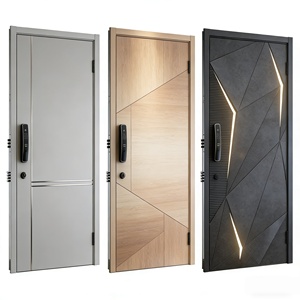
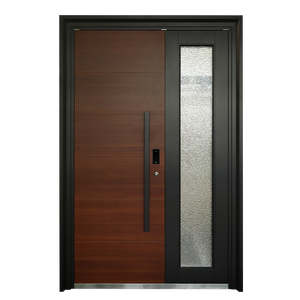
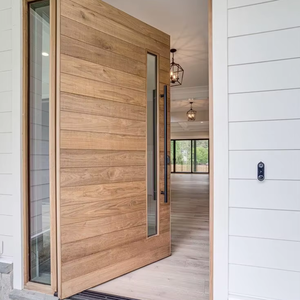
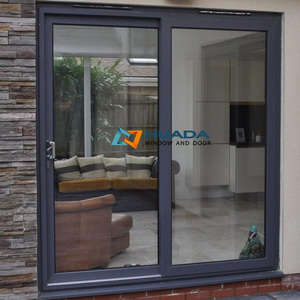
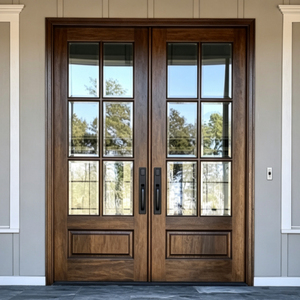
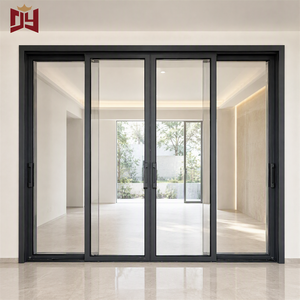
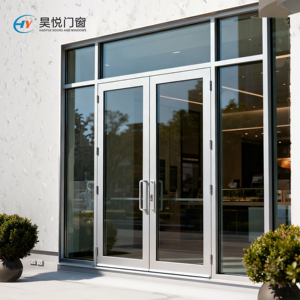
The double entry door—whether designed as a traditional dual-leaf French door, a wide-aperture pivoting structural entry, or an integrated aluminum-clad timber system—serves as the primary focal point of modern New Zealand residential facades. In recent years, several key architectural macro-trends have reshaped local buyer procurement behavior:
- Expansive Open-Plan Transitions: New Zealand homeowners prioritize seamless indoor-outdoor flows. Double entry doors with slim sightlines and oversized glazed sashes allow maximum daylight infiltration while maintaining high structural security.
- Thermal Efficiency Mandates (NZBC H1 Fifth Edition Updates): With the recent elevation of minimum insulation requirements across all six NZ climate zones, exterior door systems must incorporate sophisticated multi-chambered thermal breaks, Low-E double or triple glazing with argon gas fill, and advanced perimeter compression sealing to achieve compliant R-values (R0.46 m²·K/W to R0.50+ m²·K/W).
- Corrosion Resistance in Marine Microclimates: A vast proportion of New Zealand’s population resides within 5 kilometers of coastlines. Exporters must supply double entry door frames finished with high-durability fluorocarbon (PVDF) coatings or Qualicoat Class 2 / Interpon D2525 powder coatings to prevent salt-spray oxidation and atmospheric pitting over decades.
2. Technical Performance Matrix: NZ Building Code (NZBC) vs. Export Standards
When selecting a double entry door exporter for New Zealand projects, structural engineering metrics must be validated via accredited laboratory test reports. Below is a detailed technical performance comparison matrix detailing how Foshan Aluvoy Entry Door Systems Co., Ltd. aligns its manufacturing standard with NZBC mandates:
| Performance Vector | New Zealand Standard Benchmark (NZS 4211 / NZBC H1 & E2) | Aluvoy Export Double Entry Door Engineering Specification | Compliance Verification |
|---|---|---|---|
| Structural Wind Pressure | Low to Extra High Wind Zones (Up to 2.12 kPa / 1500 Pa Design Pressure) | Tested structural deflection up to 3000 Pa (Suitable for Specific Engineering Design - SED) | AS2047 / SAI Global Certified Test Reports |
| Thermal Performance (R-Value) | NZBC H1 Target: Minimum R0.46 – R0.50 m²·K/W for door openings | Polyamide (PA66GF25) Thermal Barrier + Argon Low-E Double/Triple Glazing (R-Value: 0.48 - 0.62) | NFRC / ISO 10077 Thermal Simulation Calculations |
| Water Penetration Resistance | 450 Pa Minimum for Exposed Coastal Elevations (NZBC E2/AS1) | High-sill sub-framing with concealed drainage channels tested up to 600 Pa water tightness | Laboratory Hydrostatic Pressure Test Verified |
| Surface Finish & Durability | Atmospheric Corrosivity Category C4/C5 (Severe Marine) | AAMA 2605 Grade PVDF Coating / AkzoNobel Interpon D2525 (Sub-zero salt fog performance) | 10-Year Anti-Corrosion Surface Guarantee |
| Hardware & Locking Mechanism | Multi-point security locking, Euro-cylinder compatibility | German GU / Hoppe / Krausse 5-point directionally interlocked stainless steel hardware | PAS 24 / European Security Level EN 1627 RC2/RC3 |
3. Localized Application Scenarios Across New Zealand Regions
Different geographic regions within New Zealand present vastly distinct climatic challenges for entry door fenestration. A successful double entry door exporter must tailor material selections to these regional conditions:
Auckland & Northland: Coastal Humidity & Solar Radiation
Projects in Auckland’s North Shore, Waitakere, and coastal Northland require UV-resistant powder coatings and high solar-heat-gain-coefficient (SHGC) glass coatings to minimize internal overheating during humid summer months while insulating during damp winters.
Wellington & Cook Strait: Extreme Wind Loads & Driven Rain
Widely recognized for intense wind corridors, Wellington demands double entry doors with reinforced internal aluminum mullions, heavy-duty continuous hinges, and multi-layered EPDM weather gaskets capable of resisting driven rain under 2000+ Pa gusts.
Canterbury & Southern Alps: Sub-Zero Thermal Insulation
In Christchurch, Wanaka, and Queenstown, freeze-thaw cycles necessitate thermally broken aluminum frames combined with triple-glazed units featuring warm-edge spacers (such as Technoform plastic-hybrid spacers) to prevent perimeter condensation and frost bridge thermal loss.
4. Corporate Manufacturing Superiority: Foshan Aluvoy Entry Door Systems
As a senior direct factory exporter with over two decades of technical dedication, Foshan Aluvoy Entry Door Systems Co., Ltd. operates at the forefront of international fenestration manufacturing. Situated in Guangdong, China’s industrial aluminum hub, our 20,000 square meter factory integrates fully automated CNC machining centers, precision corner-crimping equipment, and rigorous in-house quality control testing facilities.
Unlike standard trading intermediaries, Aluvoy retains absolute control over every stage of double entry door fabrication:
- Structural CAD & Shop Drawing Engineering: Prior to material cutting, our structural engineering team converts architectural project elevations into comprehensive shop drawings detailing head, jamb, and sill flashing connections for customer sign-off.
- Certified Standard Compliance: Aluvoy was among the premier Chinese door manufacturers to earn verified AS2047 accreditation via SAI Global alongside North American NFRC certifications and Florida Hurricane impact approvals.
- In-House Rigorous Assembly & Glazing: Double door sashes undergo full mock-up assembly, hardware torque verification, and pneumatic corner joint seal checks before being packed into custom steel-reinforced export crates.
- Backed by a 10-Year Warranty: Every double entry door system exported to New Zealand is supported by our binding 10-year factory warranty covering frame integrity, thermal break stability, and hardware durability.
Require Technical Shop Drawings or Factory Direct Quotations?
Our dedicated B2B export engineering team is ready to analyze your New Zealand architectural plans and provide custom thermal and wind-load calculations within 24 hours.
Get Catalog5. Frequently Asked Questions (FAQ) for New Zealand Buyers & Importers
How do Aluvoy double entry doors meet New Zealand Building Code (NZBC) Clause E2 weather-tightness?
Our double entry doors feature engineered continuous sub-sill trays with primary and secondary drainage paths, pressure-equalized cavity chambers, and high-performance EPDM weather seals. When installed according to NZBC E2/AS1 flashing details or specific engineering design (SED) sills, our doors effectively prevent water ingress even under severe coastal storm conditions.
Can your exported double entrance doors achieve NZBC H1 energy efficiency compliance?
Yes. By utilizing techno-polymer Polyamide (PA66GF25) thermal breaks between exterior and interior aluminum extrusion profiles, combined with double-glazed low-emissivity (Low-E) glass filled with 90% argon gas, our systems easily achieve system construction R-values ranging from R0.48 m²·K/W up to R0.65 m²·K/W, surpassing current NZBC H1 targets across all NZ climate zones.
What are the shipping lead times and port destinations for New Zealand orders?
Production typically takes 25 to 35 business days following shop drawing sign-off and sample approval. Sea freight shipment from our Foshan facility to main New Zealand ports—including Port of Auckland, Tauranga, Lyttelton (Christchurch), and Otago—takes approximately 14 to 20 transit days via direct vessel lines.
Do you accommodate custom architectural sizes, timber finishes, and smart digital hardware?
Absolutely. Every double entry door system is fully customized to your rough opening dimensions (RO). We offer anodized finishes, fluorocarbon coatings, natural solid wood cladding (such as American Black Walnut or Oak), and pre-machined mortise preparation for commercial smart locks, keyless digital access pads, or concealed hydraulic floor springs.
How are doors protected against damage during containerized ocean transit?
With over 10,000 export containers shipped globally, Aluvoy utilizes rigid wooden crates with internal polyethylene foam cushioning, protective corner guards, vacuum shrink wrapping, and moisture-absorbing desiccant packs. Crates are dynamically strapped within 20ft or 40ft HQ containers to prevent any micro-movement or structural shifting during transit.