Standard & Custom Commercial Aluminum Door Portfolios
Precision-machined architectural door profiles fabricated in Foshan with verified thermal breaks, multi-point panic and security hardware, and certified double/triple insulated glass units configured for direct export to Rotterdam, Amsterdam, Utrecht, and Eindhoven.
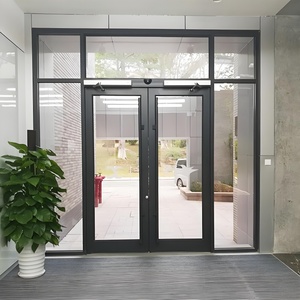
Outus Durable Aluminum Restaurant Entrance Doors with High Visibility Glass Panels
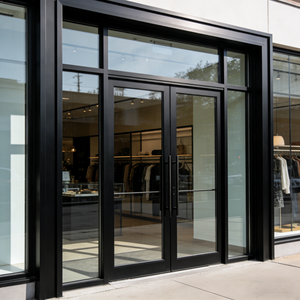
XIYATECH Modern Commercial Storefront Custom Double Outdoor Glass Aluminum Shop Front Exterior Glass Entrance Commercial Doors
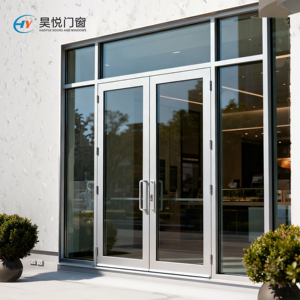
High Quality Factory Price Customized Double Aluminum Alloy Glass Door French Doors Aluminum Casement Door French Entrance Door
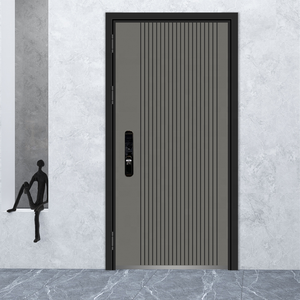
Hot Selling Metal Security Main Doors For Houses Cast Aluminium Doors Exterior Luxury Villa House Entry Door
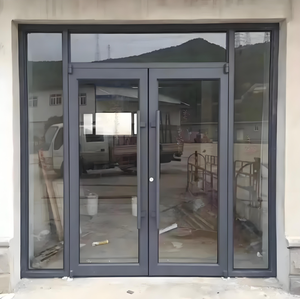
Commercial Aluminium Smart Glass Storefront Door Exterior Doors for Commercial Buildings Hurricane Impact Storefront Glass Doors
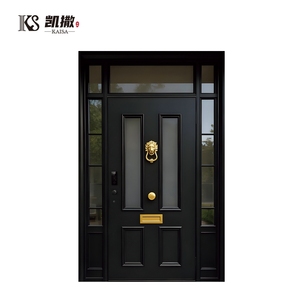
Customized Casement Aluminium Alloy Glass Door Exterior Security Entrance Steel Main Doors
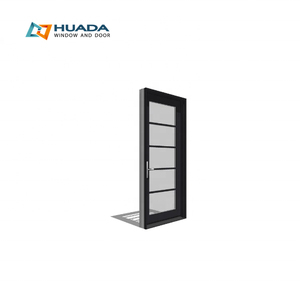
HuaDa CSA Approved Customized Casement Aluminium Alloy Glass Door Exterior Security Entrance Steel Main Doors
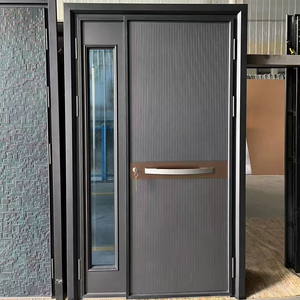
Aluminum Alloy Security Main Exterior Entrance Door With Fireproof Soundproof Swing Door Cast Aluminum Door
Localized Commercial Applications Across the Netherlands
Dutch commercial architecture requires specialized engineering considerations: maritime humidity, aggressive saline coastal winds, stringent Besluit bouwwerken leefomgeving (BBL) thermal mandates, and historic urban conservation standards. Here is how our custom aluminum door assemblies integrate into prime Dutch development typologies.
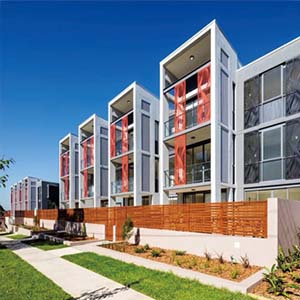
Randstad High-Traffic Retail & Canal Storefronts
In historic retail zones like Amsterdam's Kalverstraat, Utrecht's Steenweg, and Rotterdam's Lijnbaan, storefront doors must endure continuous opening cycles while honoring architectural conservation guidelines.
- Ultra-slim sightline aluminum profiles replicating traditional historic steel casements while providing full 34mm polyamide thermal breaks.
- Integrated automatic concealed overhead transom door closers rated for over 1,500,000 uninterrupted operating cycles.
- Low-threshold ADA compliance (<15mm barrier-free sill) meeting Dutch building decree guidelines for public access and wheelchair accessibility.
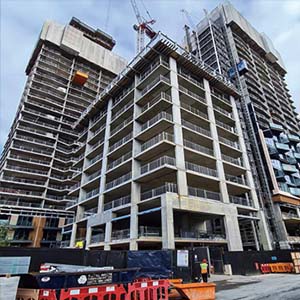
Corporate Headquarters & Zuidas Modern Offices
Prestigious office parks like Amsterdam Zuidas and Rotterdam Kop van Zuid demand high aesthetic transparency coupled with top-tier thermal efficiency (BENG 1/2) and superior acoustic decoupling.
- Thermally insulated commercial double entry doors achieving overall system heat transfer coefficients as low as Uw ≤ 1.1 W/m²K.
- Laminated acoustic sound control glass units offering Rw noise attenuation up to 44 dB against urban transit and airport flight corridors.
- Seamless access control prep: CNC-machined mortises for motorized multi-point locks, electronic strikes, magnetic shear locks, and RFID readers.
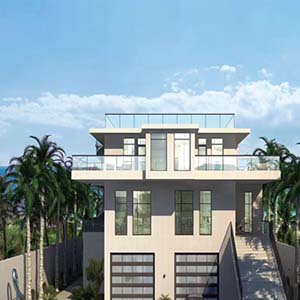
Coastal Maritime Hubs & Industrial Logistics Parks
Industrial logistics corridors in the Port of Rotterdam, Venlo, and Schiphol Logistics Park face relentless maritime saline moisture (C4/C5 atmospheric corrosivity) and severe North Sea wind pressure.
- Heavy-duty 6063-T6 architectural grade aluminum alloy profiles with minimum 2.5mm–3.0mm structural wall thicknesses resisting severe wind gust loads.
- Qualicoat Seaside-class architectural powder coating (minimum 60–80μm) or 25μm Qualanod anodized treatment resisting blister, chalk, and salt-fog corrosion.
- Continuous EPDM dual compression weather seals and water-shedding sill baffles rated to EN 12208 Class 9A (600 Pa) watertightness.
Emerging Trends & Technical Compliance in the Dutch Market
The Dutch fenestration and facade sector is experiencing a paradigm shift driven by stringent decarbonization, circular economy mandates, and enhanced burglary prevention standards. Sourcing OEM/ODM aluminum doors requires comprehensive alignment with specific European and Dutch national norms.
BENG Energy Mandates & Deep Thermal Breaks
Under the Dutch BENG (Bijna Energieneutrale Gebouwen) regulations, all newly erected and heavily renovated commercial facades must meet uncompromising primary energy and envelope performance targets. Our doors employ PA66 GF25 multi-cavity thermal barriers filled with aerogel and extruded warm-edge spacers, delivering Uf frame values below 1.4 W/m²K to facilitate passive-level certifications.
Uw Target: ≤ 1.0–1.2 W/m²KPKVW & EN 1627 RC2/RC3 Burglary Resistance
The Dutch Politiekeurmerk Veilig Wonen (PKVW) and commercial insurer specifications require exterior access assemblies to meet EN 1627–1630 Resistance Class 2 (RC2) or Resistance Class 3 (RC3). Our customized OEM lines feature integrated hardened steel anti-drill plates, security cylinder roses, interlocked corner cleats, and laminated P4A/P5A security glazing bedded in structural structural silicone.
Class: EN 1627 RC2 / RC3 CertifiedCircular Economy & Low-Carbon Aluminum
The Netherlands is at the forefront of the European Circular Economy Action Plan, requiring low-embodied-carbon documentation (Environmental Product Declarations - EPD). We utilize high-ratio post-consumer recycled aluminum billets powered by clean hydroelectric extrusion, providing Dutch contractors with full traceability for BREEAM-NL and LEED v4 credit calculations.
Verified EPD & Circular SourcingBIM Integration & Bespoke Modular Pre-assembly
Dutch general contractors (Aannemers) rely heavily on 3D Building Information Modeling (BIM - Revit/IFC) to prevent clashes on tight urban construction sites. As an advanced ODM manufacturer, we provide parametric BIM object files and deliver complete pre-glazed, pre-hung door units packed with lifting lugs, cutting on-site installation time by up to 60%.
LOD 350 BIM & Pre-Hung ModulesTwo Decades of Precision Fenestration Engineering Direct from Foshan
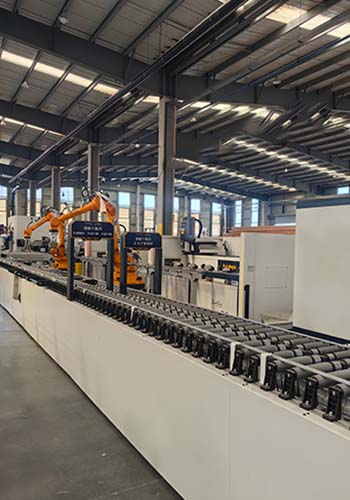
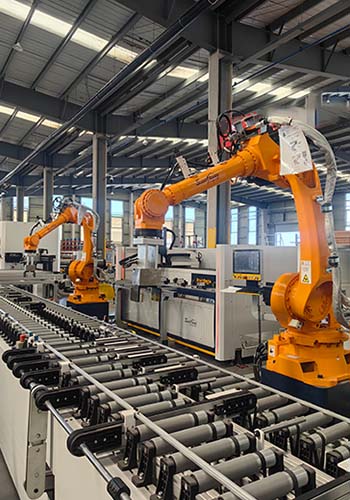
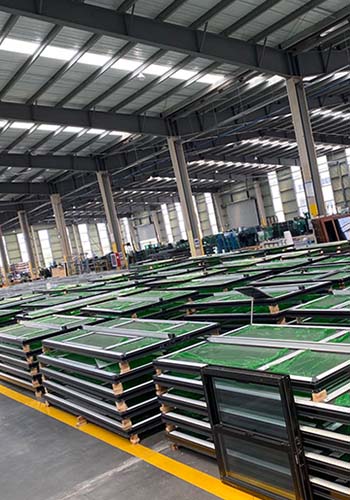
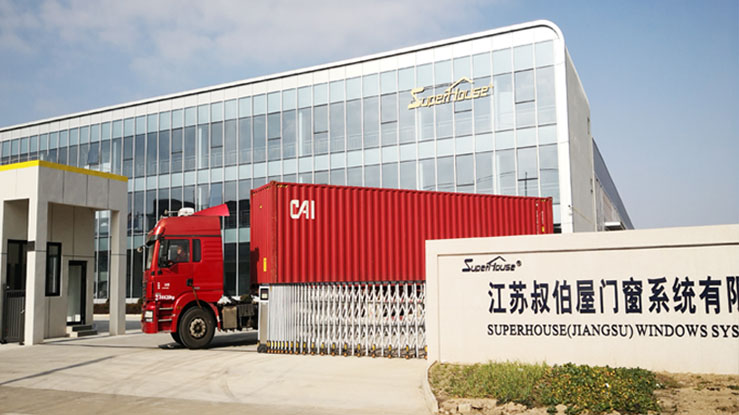
Founded in 2005, Foshan Aluvoy Entry Door Systems Co., Ltd. has established itself as an authoritative leader in architectural aluminum fenestration. Operating from a world-class 20,000 square meter intelligent manufacturing center equipped with two dedicated automated production lines and more than 150 experienced structural engineers, machinists, and assembly technicians, we bridge the gap between custom architectural vision and flawless execution.
While many trading intermediaries outsource fabrication across unverified workshops, 100% of Aluvoy door manufacturing is retained strictly in-house: profile extrusion precision cutting, five-axis CNC robotic mortising, hydraulic corner crimping, structural silicone injection, double-step argon gas filling, and laser-guided QA/QC dimensional inspection.
Having welcomed over 1,000 overseas building developers, architects, and facade contractors from more than 30 countries to conduct rigorous factory audits, we maintain full traceability and compliance with world-class standards including Australian AS2047 (audited through SAI Global), North American NFRC, and stringent Florida Hurricane Approval. For the European and Dutch markets, our engineering team adheres rigorously to EN 14351-1 CE marking protocols.
End-to-End OEM/ODM Project Delivery Process
Managing overseas architectural procurement requires absolute transparency, exact engineering alignment, and zero-defect tolerance. Our proven six-stage methodology guarantees that every aluminum door assembly arrives on your Dutch jobsite precisely as specified.
Architectural Takeoff & BENG Analysis
Your design team submits CAD drawings, elevations, opening schedules, and target Uw/Rw metrics. Our senior engineering estimators evaluate profile series, thermal break widths, and glazing packages against Dutch building code mandates.
System Formulation & Hardware Pairing
We configure specialized profile extrusions, polyamide thermal barriers, EPDM dual gasket circuits, and high-performance European multi-point security hardware (FUHR, Roto, or Sobinco compatible options) to suit specific wind-load calculations.
BIM & Detailed 2D Shop Drawings
Prior to cutting metal, we draft comprehensive 1:1 cross-sectional shop drawings illustrating structural fixing lugs, water drainage paths, sub-sill flashing interfaces, and anchor spacings for contractor sign-off.
CNC Fabrication & In-Line Quality Gates
Extrusions undergo high-precision CNC cutting and slot milling, followed by pneumatic corner jointing with two-part polyurethane structural adhesive. Every sash is tested for diagonal squareness, latch engagement, and hermetic sealing.
Export Crating & Rotterdam Shipping
Finished doors are wrapped with non-marking scratch protection film, fitted with protective corner protectors, and securely packed into steel-reinforced fumigated plywood crates optimized for 40ft High Cube container loading.
Installation Guidance & Warranty Assurance
Each crate includes serialized installation manuals, perimeter anchor schematics, and sealant guidelines. Our export engineers provide video conferencing support for your site installation crews, backed by our 10-year warranty.
Frequently Asked Questions by Dutch Developers & Importers
Authoritative answers addressing compliance, customs logistics, thermal engineering, and warranty coverage for procurement teams sourcing commercial aluminum doors into the Netherlands.
How do your commercial aluminum doors comply with Dutch BENG energy efficiency standards?
Dutch BENG regulations mandate strict thermal transmittance limits across commercial building envelopes. To comply, our commercial door systems utilize multi-cavity polyamide (PA66 GF25) thermal barrier strips measuring up to 34mm in depth, combined with cellular insulation inserts within profile chambers.
When paired with high-performance double or triple insulated glass units (featuring soft-coat Low-E glass, warm-edge composite spacers, and 90% argon gas fill), our commercial doors achieve overall heat transfer coefficients from Uw = 1.3 W/m²K down to 0.85 W/m²K, comfortably meeting and exceeding both BENG 1 and BENG 2 thermal thresholds.
Are your door systems compliant with CE Marking and EN 14351-1 European standards?
Yes. All commercial aluminum entrance doors, sliding systems, and shopfronts intended for the European Union market are fabricated in strict compliance with EN 14351-1 (Windows and pedestrian doorsets without resistance to fire and/or smoke leakage characteristics).
We provide formal Declaration of Performance (DoP) documentation and CE marking labels verifying tested parameters: air permeability (EN 12207 Class 4), watertightness (EN 12208 Class 9A or higher), resistance to wind load (EN 12210 Class C4/B5), and acoustic insulation metrics.
Can you supply door profiles finished to Qualicoat Seaside standards for coastal Dutch regions?
Absolutely. Given that extensive areas of the Netherlands (such as Zeeland, Zuid-Holland, Noord-Holland, and the Wadden Sea islands) are subjected to aggressive saline North Sea maritime air, standard architectural powder coatings can suffer from filiform corrosion.
We provide certified Qualicoat Seaside class pre-treatment (acidic etch and chrome-free chemical conversion) combined with thermosetting architectural polyester powders (AkzoNobel or Tiger Drylac) at thicknesses of 60–80μm. Alternatively, we offer 25μm architectural hard anodizing (Qualanod certified) in natural silver, champagne, dark bronze, and deep black.
What hardware brands and multi-point lock systems do you integrate into commercial entrance doors?
We recognize that door reliability depends heavily on hardware durability. As an OEM/ODM specialist, our default European configurations feature top-grade hardware from leading European suppliers such as FUHR, Roto, Siegenia, Sobinco, or G-U.
For public retail and office entrances, we engineer heavy-duty continuous geared hinges, Dorma/Geze concealed overhead door closers, EN 1125 panic exit push bars, and motorized three-point automatic latching locks with cylinder cores pre-cut for Dutch master-key integration.
How does the shipping, customs clearance, and container logistics process to Port of Rotterdam work?
With over 10,000 export containers shipped worldwide, our logistics operations are refined to prevent shipping damage and bureaucratic delay. Production timelines typically run 25–35 days from shop drawing sign-off.
We arrange direct ocean freight from Nansha or Shenzhen to the Port of Rotterdam (transit time approx. 28–32 days). We ship under FOB, CIF, or DDP (Delivered Duty Paid) terms through accredited Dutch freight forwarding partners who manage Dutch customs clearance, import VAT (BTW), and final transport via flatbed air-ride trucks directly to jobsites in Amsterdam, Rotterdam, The Hague, or anywhere across Benelux.
Can you manufacture to customized architect opening schedules and produce BIM/CAD shop drawings?
Yes, 100% of our production is made-to-order according to specific architectural project drawings and opening schedules. We never push rigid catalog sizes.
Our in-house facade engineering department converts your architectural plans into comprehensive structural shop drawings (including horizontal/vertical head, jamb, mullion, and threshold details) within 3 to 5 business days for approval. We can also provide parametric Revit (.rfa) and IFC models (LOD 300/350) to facilitate seamless clash detection within your master building model.
Ready to Specialize Your Netherlands Commercial Door Project?
Whether you are designing a high-traffic retail storefront along an Amsterdam canal, developing an energy-neutral (BENG) corporate office park in Rotterdam, or sourcing resilient fenestration for a maritime logistics center, our export engineering department is ready to evaluate your architectural drawings, prepare structural shop drawings, and deliver high-precision aluminum door systems on schedule and on budget.