High-Performance Exterior Entry Doors Engineered for Severe Climates
Explore our export-grade entry door configurations manufactured with multi-chamber thermal breaks, air-tight EPDM seals, and high-security multi-point hardware systems.
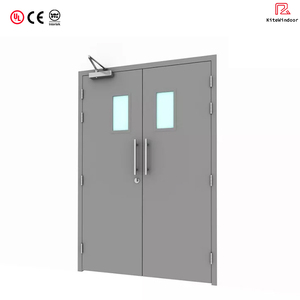
Custom Residential Exterior Front Entry Security Fire-Rated Double Metal Steel Doors
- Material: 304 Solid Stainless Steel / Galvanized Steel
- Thermal Core: High-Density Polyurethane Foam
- Fire Rating: 60-120 Mins Fire Protection
- Locking: 5-Directional Multi-Point System
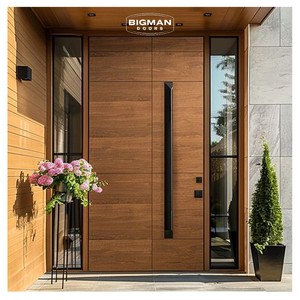
Premium Solid Walnut Front Entry Door With Double Sidelight Modern Design
- Material: Solid American Walnut + Aluminum Core
- Glazing: Triple Pane Low-E Tempered Glass
- Sealant: Dual-Durometer EPDM Weatherstripping
- Application: Luxury Residential & Boutique Hotels
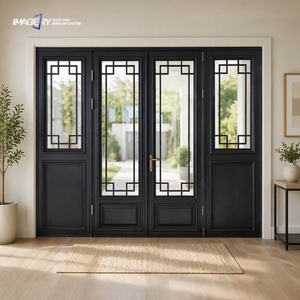
Best Aluminum Double Casement Genuine Antique Glass Doors with Built-in Grilles
- Alloy: 6063-T6 Extruded Aluminum Frame
- Thermal Break: Technoform PA66 GF25 Polyamide
- Glass: Antique Decorative Double/Triple Glazing
- Finish: AAMA 2605 Fluorocarbon Coating
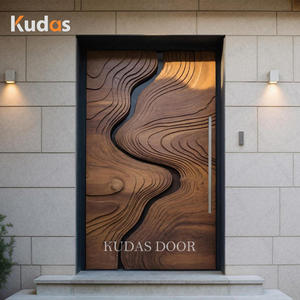
Modern Carved Wooden Front Door Organic Wave Design Handmade Solid Wood
- Core: Engineered Solid Oak / Teak / Walnut
- Moisture Resistance: Kiln-Dried & Multi-Coat UV Seal
- Hinges: Heavy-Duty 3D Adjustable Stainless Steel
- Acoustics: STC Rated up to 38 dB
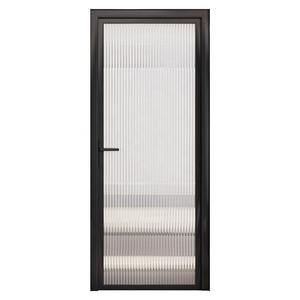
High Quality Modern Aluminum Alloy Swing Glass Doors Corrosion Resistant
- Profile: 2.0mm Heavy Structural Aluminum
- Corrosion Resistance: Salt Spray Tested > 3000 Hours
- Gas Fill: 90%+ Argon Filled Insulating Glass
- Customization: Fully Custom Sizes & RAL Colors
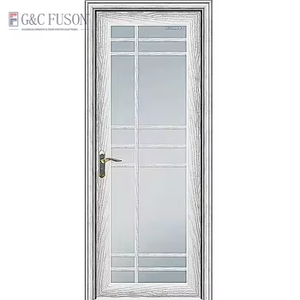
Soundproof Security Doors Porte Exterieur High Quality Mom and Son Entry Door
- Layout: Unequal Double Leaf (Mother-and-Son)
- Sound Insulation: Premium Acoustic Rubber Core (STC 42)
- Security: Anti-Pry Deadbolts & Smart Keypad Ready
- Weather Rating: Class A3 Air Tightness
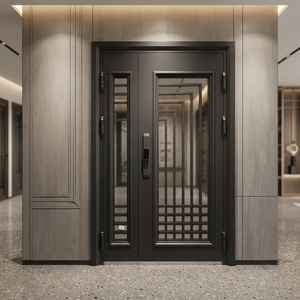
Modern Luxury Clad Security Door Anti-Drill Anti-Pry Lock Villa Exterior Main Entrance
- Structure: Armor Steel Core + Aluminum Cladding
- Armored Plate: 3.0mm Anti-Drill Manganese Plate
- Waterproof: Continuous Bottom Drop Seal System
- Design: Flush Architectural Contemporary Look
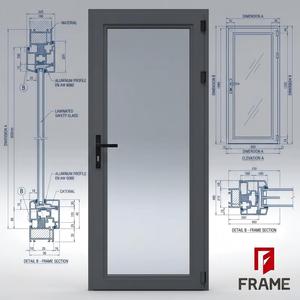
High Quality Aluminium Door Single Double Glass Casement Swing External Door
- Profile Depth: 70mm - 90mm Thermally Broken System
- Glass Options: Double Clear / Low-E / Tinted Laminated
- Hardware: German Siegenia / HOPPE Multi-point Lock
- Rating: NFRC Certified Thermal Insulation
Architectural Engineering: Thermal Insulation & Weather Resistance for Canadian Extremes
Canada’s building envelope requirements are among the most stringent in the world. Ranging from sub-zero prairie freezes (-40°C in Edmonton and Calgary) to damp, high-humidity coastal winds in Vancouver and freeze-thaw cycles in Toronto and Montreal, selecting the wrong entry door leads to severe thermal bridging, condensation damage, interior frame frosting, and structural air leakage.
To meet the National Building Code of Canada (NBC 2020) and qualify for ENERGY STAR® Canada 2024 specifications, Chinese entry door manufacturers serving Canada must transition from standard commercial aluminum profile extrusion to multi-chamber thermal breaks and composite armor core engineering.
1. The Physics of Cold-Climate Thermal Breaks (PA66 GF25)
Aluminum possesses a high thermal conductivity ($k \approx 160-200 \text{ W/m}\cdot\text{K}$). Without a high-performance thermal barrier, an exterior metal entry door acts as a continuous thermal bridge, transferring indoor heat rapidly to the freezing exterior. Modern Chinese factories specializing in exports to North America utilize Technoform Polyamide PA66 GF25 (25% Glass Fiber Reinforced) thermal break strips ranging from 24mm to 34mm in depth.
By splitting the exterior and interior extruded aluminum profiles (6063-T6 temper) and injecting high-density polyurethane (PU) thermal insulation foam ($k \le 0.022 \text{ W/m}\cdot\text{K}$) into the central cavity, the overall door frame U-Factor drops dramatically:
| Thermal Configuration Spec | Standard Non-Thermal Aluminum | Standard Thermal Break (14mm) | Aluvoy Cold-Climate System (34mm PA66 + PU) |
|---|---|---|---|
| Frame Thermal Conductivity (U-Factor) | U-1.20 BTU/h·ft²·°F (6.8 W/m²K) | U-0.45 BTU/h·ft²·°F (2.5 W/m²K) | U-0.15 BTU/h·ft²·°F (0.85 W/m²K) |
| ENERGY STAR Canada 2024 Compliance | Non-Compliant | Zone 1 Only | Zone 1 & Zone 2 (All Canadian Regions) |
| Condensation Resistance Index (CR) | CR < 20 (Severe Frosting) | CR 45 - 55 | CR > 72 (Zero Frost at -30°C Exterior) |
| Air Leakage Rate (ASTM E283 / NAFS-17) | > 1.5 L/s·m² | 0.5 L/s·m² | < 0.05 L/s·m² (A3 Highest Rating) |
| Water Penetration Resistance (ASTM E331) | 150 Pa (3.0 psf) | 300 Pa (6.25 psf) | 750 Pa (15.6 psf - B7 Rating) |
2. Glazing Technology: Triple-Pane Low-E & Warm-Edge Spacers
Entry doors incorporating glass sidelights or transom panels must adhere to CSA A440.2 thermal performance calculations. Aluvoy equips Canadian-bound entry doors with triple-glazed insulated glass units (IGUs):
- Outboard Pane: 6mm Tempered Clear or Tinted Glass with Soft-Coat Low-E (Surface #2).
- Cavity 1 & 2: 12mm - 16mm cavities filled with 90%+ pure Argon Gas for optimal convection suppression.
- Center & Inboard Panes: Dual Low-E coatings (Low-E 180 / Low-E 272 combination) designed to maximize passive solar heat gain in winter while blocking infrared radiation.
- Warm-Edge Spacer Technology: Replacing conductive aluminum spacers with Swiss-made composite warm-edge spacers (Swisspacer Ultimate), mitigating perimeter edge condensation and boosting overall IGU thermal resistance by up to 12%.
3. Air Tightness & Water Infiltration Engineering
Driving rains along the Atlantic coast of Halifax and snowmelt accumulation across Ontario demand zero-tolerance sealing mechanisms. Premier Chinese export manufacturers employ a Triple-Gasket Dual-Durometer EPDM Seal Matrix combined with hidden continuous drop-down bottom seals. Upon closing, German-engineered multi-point locking gear pins pull the door leaf flush against the frame compression gaskets, creating a airtight pressure-equalized chamber that prevents wind-driven rain penetration under high design pressure (DP65+).
Targeted Door Engineering for Canadian Micro-Climates
From humid coastal shores to frigid sub-zero interior plains, entry door requirements vary significantly across Canada’s vast geographic landscape.
Pacific Maritime (Greater Vancouver, Victoria, BC)
Primary Environmental Stress: High precipitation, constant salt-fog humidity, moderate winter temperatures (0°C to 10°C).
Engineering Focus: Severe corrosion protection and water tightness. Doors are specified with AAMA 2605 Fluorocarbon (PVDF) powder coating, undergoing 3,000+ hours of continuous salt-spray testing. Sill threshold flashings feature integrated weep-hole drainage tracks to route surface water runoff safely away from subfloors.
Prairie Sub-Zero Zone (Calgary, Edmonton, AB / Winnipeg, MB)
Primary Environmental Stress: Extreme winter cold drops to -40°C, fierce thermal expansion/contraction shocks, strong wind gusts.
Engineering Focus: Zero thermal contraction warping. Profiles utilize 34mm wide PA66 GF25 thermal breaks combined with solid polyurethane core insulation. Dual magnetic perimeter seals ensure airtight closure even when exterior hardware drops to extreme sub-zero temperatures.
Central Urban & Suburban (Toronto, Ottawa, ON / Montreal, QC)
Primary Environmental Stress: High freeze-thaw frequency, summer humidity up to +35°C, urban street noise attenuation.
Engineering Focus: Balanced thermal performance, high acoustic insulation (STC 40+), and forced-entry security. Heavy structural steel/aluminum armor plates resist forced entry, while acoustic laminated glass dampens traffic noise.
Atlantic Gales & Coastal (Halifax, NS / St. John's, NL)
Primary Environmental Stress: Hurricane-force wind pressures, wind-driven ocean spray, intense freezing rain storms.
Engineering Focus: DP65 to DP80 structural wind load performance. Heavy-gauge 3.0mm wall thickness aluminum frames with 316 marine-grade stainless steel hinges, handles, and lock sets that resist severe atmospheric corrosion.
Emerging Trends & Technical Innovations in Canadian Entry Door Procurement
The Canadian window and door market is experiencing a profound transformation driven by national decarbonization goals, strict local energy bylaws (such as the Vancouver Building By-law and Toronto Green Standard Tier 3/4), and evolving architectural tastes.
1. Passive House (PHI) Standard Adoption
Architects developing Net-Zero and Passive House certified single-family and multi-family projects in Canada require entry doors with an overall operational U-Factor of $\le 0.80 \text{ W/m}^2\text{K}$ (U-0.14). Chinese OEM/ODM factories are responding by integrating quad-sealed frame designs, aerogel panel core insulation, and vacuum-insulated glass (VIG) technology, enabling slim profile aesthetics without compromising insulation power.
2. Ultra-Tall Minimalist Architectural Pivot Doors
Modern luxury homes in North Vancouver, Oakville, and Montreal increasingly feature grand entranceways standing 3.0 to 4.0 meters tall. Heavy-duty aluminum pivot doors equipped with German hydraulic floor springs (supporting leaf weights up to 500kg) and multi-point magnetic weather seals represent the fastest-growing export category from Foshan door hubs to North America.
3. Smart Access Integration with Biometric Security
Traditional mechanical key cylinders are rapidly giving way to smart entry ecosystem integration. Export-ready doors now come pre-wired with concealed conduits for facial recognition modules, motorized multi-point locks (such as GU Automatic or Winkhaus BlueMotion), and fingerprint scanners compatible with Control4, Crestron, and Apple HomeKit home automation systems.
Frequently Asked Questions for Canadian Importers & Contractors
Critical answers regarding compliance testing, customs clearance, thermal certification, and shipping logistics from China to Canada.
?
How do I verify that doors imported from China comply with NAFS-11/17 and CSA standards?
Request authentic NFRC (North American Fenestration Standard) test reports and SAI Global / Intertek certification summary sheets from the factory. Legitimate manufacturers provide test documentation under AAMA/WDMA/CSA 101/I.S.2/A440 standards, validating Design Pressure (DP), Air Infiltration (ASTM E283), Water Penetration (ASTM E331), and Structural Performance (ASTM E330).
?
What are the tariff rates, HS codes, and customs procedures for importing aluminum doors to Canada?
Aluminum doors typically fall under HS Code 7610.10.00 (Doors, windows and their frames and thresholds for doors). Under Canada's Most-Favoured-Nation (MFN) tariff treatment, baseline duty rates generally range from 0% to 6.5%. Importers must provide a Commercial Invoice, Packing List, Bill of Lading, and a Detailed Specification Sheet to the Canada Border Services Agency (CBSA). Partnering with a licensed Canadian customs broker simplifies clearance at ports in Vancouver, Montreal, or Halifax.
?
How do Chinese factories prevent entry doors from warping during sub-zero Canadian winters?
Warping occurs when extreme temperature differentials exist between exterior (-30°C) and interior (+20°C) profile faces. Leading factories utilize dual-shear relief thermal breaks (anti-bi-metal polyamide strips) and rigid 6063-T6 extruded aluminum profiles with minimum 2.0mm wall thickness. This permits micro-expansion of outer profiles without twisting the internal door frame or compromising deadbolt alignment.
?
What lead times should Canadian builders plan for when ordering custom entry doors?
Typical lead times comprise: 1) Engineering shop drawing sign-off (5-7 days); 2) Precision factory manufacturing & QC testing (25-35 days); 3) Sea freight transit from Shenzhen/Foshan ports to Vancouver (16-22 days) or Toronto/Montreal via rail bridge (28-35 days). Overall, plan for 7 to 9 weeks from order confirmation to jobsite delivery.
?
How are fragile glass sidelights and heavy doors packaged for ocean freight transit?
Export-ready orders are packed using heavy-duty, fully enclosed fumigation-free plywood crates. Door frames and leaves are wrapped in 5-layer protective bubble film, corner plastic guards, and shrink wrap. Glass panels are secured with soft rubber spacers and steel strapping inside the wooden box to guarantee zero transit damage during high-seas ocean transport.
?
Can Chinese factories manufacture customized doors according to architect shop drawings?
Yes. Leading B2B factories like Aluvoy employ dedicated BIM and CAD engineering teams. We translate architectural CAD plans, structural wall schedules, and designer elevation drawings into detailed production shop drawings (including rough opening calculations, anchoring hardware placement, and flashing interface details) for sign-off prior to CNC cutting.
Foshan Aluvoy Entry Door Systems Co., Ltd.
Over two decades of precision engineering, international compliance certifications, and global export infrastructure.
Founded in 2005 in Foshan, Guangdong—the hardware and aluminum manufacturing capital of the world—Foshan Aluvoy Entry Door Systems Co., Ltd. has established itself as an elite OEM/ODM exporter of high-performance architectural doors and windows. Our production facility houses two automated CNC precision machining lines, automated glass insulating double-glazing lines, and dedicated structural testing rigs.
Aluvoy holds authentic international compliance credentials including AS2047 (SAI Global), NFRC (North America), and Florida Hurricane Product Approval. Every door process—from profile cutting, milling, hardware punching, corner crimping, and silicone structural sealant application to 100% pre-shipment quality inspection—is executed strictly in-house under ISO 9001 quality management protocols.
Backing our manufacturing quality is a comprehensive 10-Year System Warranty, providing Canadian builders, developers, and door distributors total confidence for their project envelopes.
Ready to Engineer Entry Doors for Your Next Canadian Project?
Send us your project architectural drawings, rough opening schedules, or performance specs. Our senior export engineering team will deliver a comprehensive technical quote and shop drawings within 24 hours.
Contact Us